The 10 Best Cold Room Manufacturers in India (2025)
1. F-Max Systems India Pvt. Ltd.
Best for: South India businesses needing fully customized cold rooms with single-vendor accountability from panel to compressor.
Company Snapshot
-
Founded: 2000
-
Headquarters: Coimbatore, Tamil Nadu
-
Manufacturing facility: 21,000 sq ft
-
Installation base: 2,000+ installations over 23+ years
-
Service regions: Tamil Nadu, Kerala, Karnataka, Andhra Pradesh
Key Products and Capabilities
-
Cold storages with temperature ranges from +4°C down to −40°C, including split-type units to avoid hot air drafts at lower levels
-
Blast freezers rated to −40°C with rapid pull-down for seafood, poultry, and ready-to-eat food
-
In-house PUF panels (50-200mm thickness) with cam-lock joints for airtight assembly
-
Air-cooled and water-cooled condensing units engineered for ambient temperatures up to approximately 65-75°C
-
HT/MT/LT evaporating units with low-decibel external rotor fans
-
Ripening chambers with both manual ethylene dosing and fully automated centralized controllers
-
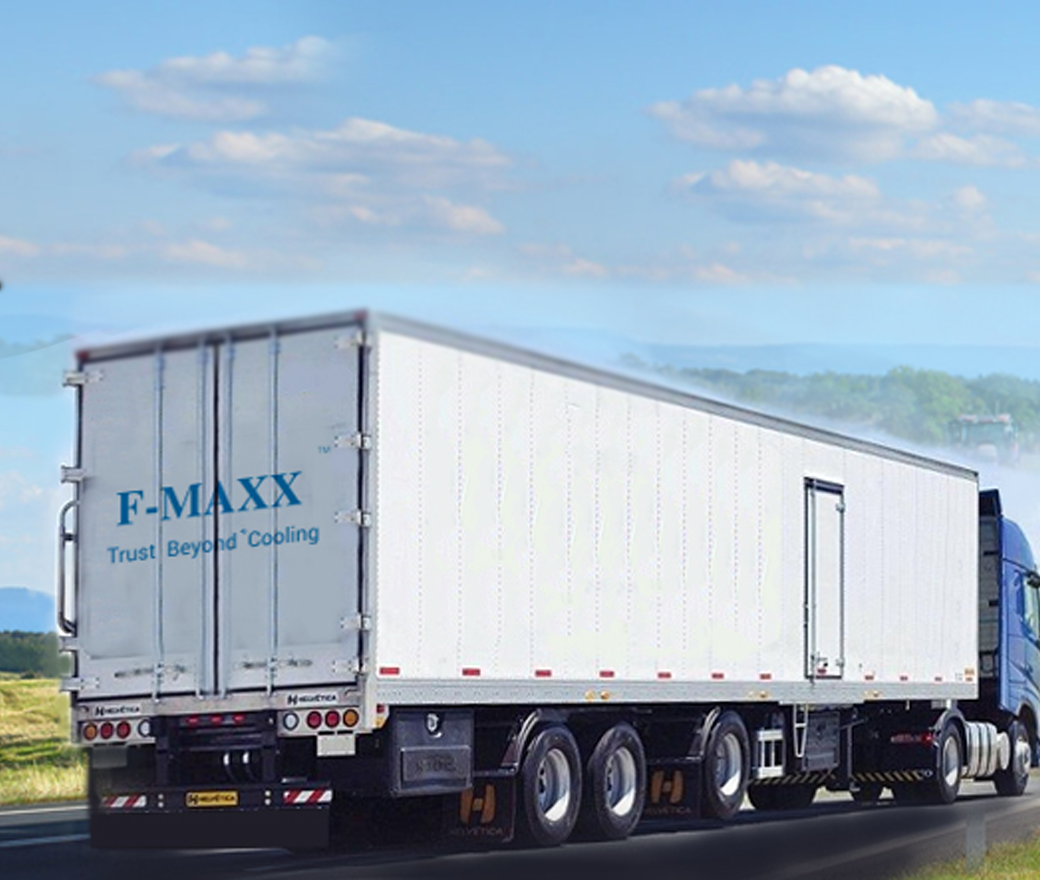
Reefer truck bodies with eutectic PCM systems for backup runtime (frozen: ~12-14 hours, chilled: ~4-5 hours)
-
Insulated swing, sliding, and hatch doors with non-corrosive hardware
Notable Clients
AAVIN Milk (Government of Tamil Nadu), Suguna Chicken, Aishwarya Eggs, Microlab Coimbatore, Fresche Foods, Cafe-Culture (Salem).
Strengths
-
Builds the entire cold room stack in-house: PUF panels, evaporators, condensing units, doors, and controls. Most competitors resell at least some subsystems. This gives F-Max tighter integration and cost control.
-
Condensing units purpose-built for Indian hot-climate conditions, not adapted from global specifications.
-
Deep customization for site constraints and commodity-specific needs across dairy, seafood, horticulture, pharmaceuticals, and hospitality.
-
Direct service network across South India with WhatsApp support for faster response.
Limitations
-
Service concentration in South India. Pan-India coverage is project-based, which could mean longer response times outside the core region.
-
Less brand recognition among retail consumers compared to Blue Star or Voltas. F-Max is primarily a B2B, project-centric manufacturer.
-
No published pricing catalogs. Buyers must engage directly for quotes and detailed scope of work.
Real-World Signal
F-Max holds a 4.1/5 rating across approximately 200+ ratings on JustDial, with praise for build quality and service. Some reviews note after-sales response times could improve, a pattern common across virtually all cold room manufacturers in India.
For buyers ready to discuss a custom project, requesting a quote directly from F-Max is the fastest path to getting specifications matched to your exact requirements.
2. Rinac India Limited
Best for: Large enterprises and MNCs needing pan-India or international turnkey cold chain projects.
Company Snapshot
-
Founded: 1994
-
Headquarters: Bangalore
-
Two manufacturing units in Bangalore, one in Murbad
-
14 branch offices across India, 600+ employees
-
Presence in 23 countries
Key Products and Capabilities
-
Turnkey cold chain solutions including design, build, and commissioning
-
Clean-room construction capability alongside cold storage
-
PUF/PIR insulated panels and modular cold rooms
-
ISO 9001, ISO 14001, and ISO 45001 certified manufacturing
-
BIS, FM, BS476, and EN 13501-1 certifications
-
5 patents awarded, 3 more in pipeline
Notable Clients
ITC, Britannia, Tata, Reliance, Nestle, Flipkart, Biocon, PepsiCo, Haldiram’s, Patanjali.
Strengths
-
Close to three decades of experience with a genuine pan-India and international footprint.
-
Multi-certification stack (ISO, FM, BIS, EN) meets stringent procurement requirements for MNCs and government projects.
-
Clean-room capability makes Rinac suitable for pharmaceutical and biotech cold chain applications.
-
Patent portfolio suggests genuine R&D investment.
Limitations
-
Premium pricing positions Rinac above the budget of most SMBs.
-
Corporate/institutional focus means smaller projects may not receive the same attention.
-
Lead times for custom builds can be longer given the enterprise project pipeline.
3. Blue Star Limited
Best for: Buyers wanting branded, standardized modular cold rooms with nationwide service and government procurement eligibility.
Company Snapshot
-
Founded: 1943
-
Headquarters: Mumbai
-
Publicly listed (BSE/NSE)
-
Approximately 32% market share in modular cold rooms
Key Products and Capabilities
-
Modular cold rooms with PUF insulated panels manufactured at Blue Star’s own facilities
-
Temperature range: +2°C to −40°C
-
Cam-lock panel assembly for quick installation
-
Refrigeration units from Blue Star’s in-house facilities
-
Strong presence across restaurants, pharmaceuticals, logistics, and warehousing
Pricing Indication
Approximately ₹1.5 lakh to ₹3.5 lakh+ for standard modular units based on aggregator listings. A 10x10x8 ft unit with 80mm PUF panels lists around ₹3,50,000 on trade platforms.
Strengths
-
Dominant market share provides confidence in product standardization and spare parts availability.
-
Nationwide service network, a significant advantage for multi-location businesses.
-
GeM-listed, making it accessible for government and PSU procurement.
-
Decades of brand equity in Indian HVAC and refrigeration.
Limitations
-
Catalog-driven approach limits customization depth for complex multi-commodity or site-constrained builds.
-
Brand premium means you pay more for the Blue Star name, particularly on standard configurations.
-
Less specialized in deep-freeze or niche applications compared to dedicated cold chain manufacturers.
4. Voltas Limited
Best for: IoT-ready cold rooms backed by Tata group trust and predictable nationwide servicing.
Company Snapshot
-
Founded: 1954
-
Headquarters: Mumbai (Tata Enterprise)
-
Extensive distribution and service network across India
Key Products and Capabilities
-
IoT-enabled cold room solutions with remote temperature monitoring
-
Standard cold rooms with 100mm PUF panels
-
Temperature capability down to −18°C
-
Integration with building management systems
Pricing Indication
₹2.1 lakh (basic) to ₹3.5 lakh+ on aggregator platforms, depending on specifications.
Strengths
-
Tata brand trust carries weight in procurement decisions, especially for institutional buyers.
-
IoT and remote monitoring capability addresses the growing demand for connected cold chain visibility.
-
Extensive distribution network ensures reasonable spare parts and service access across India.
Limitations
-
Standard temperature range tops out at −18°C, which is insufficient for deep-freeze applications (seafood, certain pharmaceuticals).
-
More standardized/catalog approach means less flexibility for custom builds.
-
IoT features may add cost without proportional value for small, single-location operations.
5. EPACK Prefab
Best for: Large-scale prefabricated cold storage warehouse projects where speed of installation is critical.
Company Snapshot
-
Founded: 1999
-
Headquarters: Greater Noida
-
Nationwide manufacturing and installation presence
Key Products and Capabilities
-
Walk-in cold rooms, blast freezers, ripening chambers, and pre-coolers
-
PUF and PIR insulated panels
-
Turnkey and panel-only supply options
-
Prefabricated panels that complete projects up to 70% faster than conventional construction
Strengths
-
Speed is the standout advantage. Prefab construction slashes project timelines significantly.
-
Nationwide presence with both turnkey execution and component supply flexibility.
-
A contributor on Quora specifically recommended EPACK for delivering “economic, quiet, thermally insulating” cold storage solutions.
-
Strong in large warehouse-format projects where standardized panel systems excel.
Limitations
-
More of a PEB/prefab generalist than a pure refrigeration engineering firm.
-
Niche applications like eutectic reefer systems or specialized deep-freeze seafood processing may require additional specialist partners.
-
Customization for unusual site constraints or commodity-specific engineering is not their primary strength.
6. Carrier
Best for: Buyers wanting globally standardized equipment with a strong spare parts ecosystem, especially for combined transport and static cold chain.
Company Snapshot
-
Founded: 1915 (Global)
-
India headquarters: Gurugram
-
Global brand presence in both commercial refrigeration and transport refrigeration (Carrier Transicold)
Key Products and Capabilities
-
Modular cold rooms with panel options: GL pre-painted, SS 304/316, plain GL
-
Panel widths: 870, 1200, 1500, and 1800 mm
-
Products for storing farm produce, poultry, seafood, fruits, and vegetables
-
Transport refrigeration (Citimax, Supra series) for integrated cold chain solutions
Strengths
-
Global standardization means predictable quality and a well-established spare parts network.
-
Dual capability in both static cold rooms and transport refrigeration, useful for end-to-end cold chain planning.
-
Multiple panel material options (GL, SS 304/316) cater to different hygiene and corrosion requirements.
Limitations
-
Premium pricing compared to regional manufacturers.
-
Global specifications may not be optimized for India’s extreme ambient temperatures without adaptation. Regional specialists often engineer specifically for 40-50°C peak conditions.
-
Less responsive to small or highly customized orders.
7. Frick India Limited
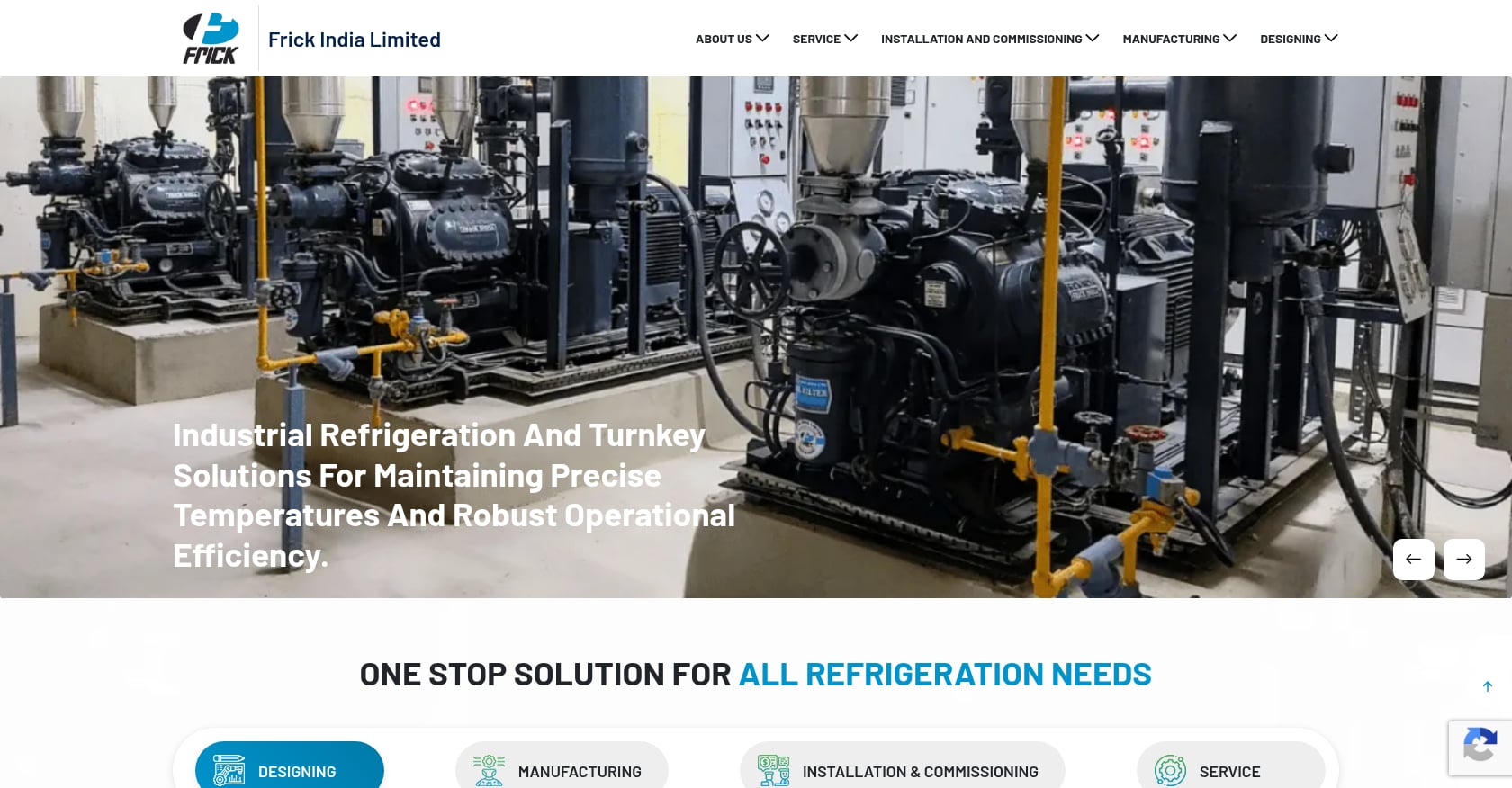
Best for: Heavy industrial refrigeration using ammonia, including dairy plants, ice factories, and large meat processing facilities.
Company Snapshot
-
Headquarters: Delhi-NCR
-
ISO certified with 60+ years of experience
-
In-house R&D facility
Key Products and Capabilities
-
Rotary screw compressors and reciprocating compressors
-
Evaporative condensers
-
Industrial chillers
-
Plate freezers and blast freezers
-
Ammonia-based refrigeration systems (their core specialty)
Strengths
-
The specialist’s specialist for ammonia refrigeration. Six decades of focused industrial experience is hard to match.
-
In-house R&D translates to genuine engineering capability, not just assembly.
-
Strong reputation in India’s dairy and ice manufacturing sectors.
-
Compressor technology that forms the backbone of many large cold chain installations.
Limitations
-
Heavy industrial focus makes Frick a poor fit for small modular cold rooms or SMB retail applications.
-
Not a full-stack cold room manufacturer. You’ll need separate suppliers for panels, doors, and controls.
-
Ammonia systems require specialized maintenance and safety protocols.
8. Ice Make Refrigeration Limited
Best for: Gujarat and West India clients, particularly in the dairy sector, wanting a BSE-listed manufacturer’s financial transparency.
Company Snapshot
-
Founded: ~2000
-
Headquarters: Ahmedabad, Gujarat
-
BSE-listed company
-
ISO 9001:2015, ISO 14001:2015, CE, and DSIR certified
Key Products and Capabilities
-
PUF cold rooms across temperature ranges
-
Solar cold rooms (a distinctive offering)
-
Dairy machinery and bulk milk chillers
-
Cold storage solutions for fruits, vegetables, and dairy
Strengths
-
BSE listing provides financial transparency that private companies often lack, a factor enterprise buyers care about.
-
Solar cold room capability addresses the growing demand for renewable energy integration.
-
Strong dairy sector credentials, with testimonials from organizations like Sumul Dairy (Surat).
-
DSIR certification signals recognized R&D capability.
Limitations
-
Regional strength concentrated in Gujarat and West India. South India presence is limited.
-
Less known for deep-freeze or blast-freezer applications compared to specialists.
-
Product range skews toward dairy, which may mean less expertise in pharmaceutical or seafood cold chain requirements.
9. Rockwell Industries Limited
Best for: Commercial and retail cold storage needs including restaurants, retail stores, and ice cream parlors.
Company Snapshot
-
Established: 1986
-
Headquarters: Delhi
-
ISO 9001:2015 certified
-
Claims 10 lakh+ happy customers over 40+ years
Key Products and Capabilities
-
Deep freezers and chest freezers
-
Visi coolers and bottle coolers
-
Water coolers
-
Walk-in cold rooms (commercial scale)
-
Retail display refrigeration
Strengths
-
Long track record in commercial refrigeration with a very large claimed customer base.
-
Product range tailored to the hospitality and retail sector.
-
Wide distribution network for standard commercial refrigeration products.
Limitations
-
More retail and commercial oriented than industrial. Not a pure cold room manufacturer.
-
Large-scale industrial cold storage projects fall outside their core competency.
-
Limited published information on custom cold room engineering for specialized applications.
10. Elanpro (with Icold Refrigeration)
Best for: Mid-size food processing and retail chains wanting BMS-compatible, HACCP-ready cold rooms.
Company Snapshot
-
Elanpro recently acquired a majority stake in Icold Refrigeration, a cold storage specialist
-
Delhi-NCR based
-
Single-source planning, design, and installation approach
Key Products and Capabilities
-
Intelligent microprocessor controllers that are BMS compatible
-
HACCP-compliant models (select range)
-
Modular cold rooms for food processing and retail
-
Integrated design-to-installation service
Strengths
-
BMS compatibility matters for food processors needing centralized monitoring across multiple cold rooms.
-
HACCP-ready configurations reduce compliance burden for food safety audits.
-
The Elanpro-Icold combination brings commercial refrigeration expertise together with cold room engineering.
Limitations
-
Newer in pure cold room manufacturing. The track record is shorter than established players with 20-30+ years of installations.
-
The investment-driven partnership is still maturing, so integration quality may vary.
-
Less visibility in industrial and heavy-duty applications.
How to Choose the Right Cold Room Manufacturer: Buyer’s Checklist
With 10 manufacturers profiled, narrowing down the right fit requires a structured approach. Here’s what to evaluate:
1. Define your temperature requirements precisely. A chilled storage at +4°C for vegetables has fundamentally different engineering needs than a blast freezer at −40°C for seafood. Make sure your shortlisted manufacturer has proven installations at your required temperature range.
2. Assess in-house vs. outsourced components. Manufacturers who build panels, refrigeration units, and controls under one roof (like F-Max or Rinac) offer tighter integration and single-point accountability. Those who assemble from multiple suppliers may struggle with finger-pointing when issues arise.
3. Check the ambient temperature rating. India’s peak conditions demand equipment tested for 40-50°C+ ambient. Ask every manufacturer what ambient temperature their condensing units are rated for. This is where regional manufacturers with India-specific engineering often outperform global catalog products.
4. Verify after-sales service coverage in your area. The best cold room is worthless if the manufacturer takes a week to send a technician when your compressor fails. Ask for service center locations and average response times. Practitioners on forums consistently flag this as the biggest pain point.
5. Calculate energy costs, not just purchase price. Electricity represents the single largest operating expense in cold storage. Features like VFD compressors (10-35% energy savings), improved insulation (40-50% savings), and high-speed doors (30-70% savings) pay for themselves quickly.
6. Confirm subsidy eligibility. If you’re setting up a new cold storage or expanding capacity, you may qualify for government subsidies of 35-50% of project cost. Ask the manufacturer if they’ve handled subsidy-backed projects before and can support the documentation process.
7. Match the manufacturer to your scale. Enterprise buyers (Rinac, Blue Star) and SMB buyers (F-Max, Ice Make) have different optimal matches. An enterprise manufacturer may deprioritize a ₹5 lakh project. A regional specialist may struggle with a 50-location pan-India rollout.
8. Request reference installations, not just brochures. Visit an existing installation if possible. Talk to current customers. No amount of marketing material substitutes for seeing a two-year-old cold room still performing to spec.
For a more detailed technical evaluation framework, the 20-point cold storage selection checklist covers panel specifications, refrigerant selection, and commissioning criteria that this overview intentionally keeps high-level.
Cold Room Pricing Guide: What to Expect in 2025
Pricing is the question every buyer asks first, yet most cold room manufacturers refuse to publish numbers. Here’s what industry data and trade platform listings indicate for 2025:
Small cold rooms (5x5x7 ft): ₹1.2 to ₹1.5 lakhs. Suitable for dairy, bakery, or small restaurant walk-in coolers. Includes basic insulation, a standard hermetic compressor, and simple digital controls. Source: Science Udyog
Medium cold rooms (10x10x8 ft): ₹2.5 to ₹4 lakhs depending on panel thickness, temperature range, and refrigeration unit specifications.
Large cold rooms (20x15x10 ft and above): ₹5 lakhs to ₹10 lakhs+. Deep-freeze or dual-zone configurations can exceed ₹10 lakhs.
Per-square-foot benchmark: Approximately ₹10,000 for cold storage room construction. A 1,000 sq ft facility typically runs ₹55-70 lakhs fully built out.
Large-scale multi-commodity stores (500 m²): Budget ₹5.6 to ₹7.2 crore turnkey, as a 2025 indicative range.
Buyers on Quora discussing cold storage investments consistently mention ₹35-45 lakhs as a common starting point for a basic commercial cold storage unit, with returns heavily dependent on location, commodity, and utilization rates.
Key Cost Drivers
-
Temperature range: Every degree below zero increases energy and equipment costs. A −40°C blast freezer costs significantly more than a +4°C vegetable store.
-
Panel thickness: Options from 50mm to 200mm directly affect both insulation performance and material cost. The insulation properties of sandwich panels guide explains how thickness choices affect long-term energy consumption.
-
Refrigerant type: Natural refrigerants (ammonia, CO2) involve different system costs than HFC-based options.
-
Automation level: Manual controls vs. PLC-based automated systems with BMS integration.
-
Subsidy availability: Government schemes under MIDH and PMKSY can offset 35-50% of eligible project costs, fundamentally changing the payback calculation.
The Bigger Picture: Why Multi-Commodity Cold Rooms Are the Real Opportunity
A critical insight that most manufacturer comparisons ignore: even when India’s total national cold capacity (around 3.2 crore tonnes in 2022) appears to meet the theoretical requirement, much of that capacity is tied up in the wrong place or used for a single crop. Nearly 90% of legacy cold storage facilities are single-commodity, energy-inefficient units primarily serving potatoes.
The real market opportunity is multi-commodity cold storage that can handle fruits, vegetables, dairy, pharmaceuticals, and frozen foods with distinct temperature zones. When evaluating the best cold room manufacturers, prioritize those with demonstrated experience in multi-commodity design. Manufacturers that only build single-temperature rooms are solving yesterday’s problem.
This shift from single-commodity to multi-commodity storage also explains why cold chain warehouse design has become more complex, demanding manufacturers with genuine engineering depth rather than simple panel assembly capability.