Individual Quick Freezing Technology: 2026 Guide & Uses

Discover how Individual Quick Freezing Technology works, key freezer types, benefits, costs, and 2026 market trends—plus tips to choose the right IQF system.

TLDR

Individual quick freezing (IQF) technology is a food preservation method that freezes individual pieces of food separately and rapidly at temperatures between –30°C and –40°C, producing free-flowing pieces instead of solid blocks. The process races through the critical 0°C to –5°C zone in minutes, forming micro ice crystals that preserve texture, color, taste, and up to 95% of nutrients. The global IQF market was valued at USD 5.75 billion in 2024 and is projected to reach USD 9.24 billion by 2033, with Asia-Pacific growing fastest at 7.24% CAGR.

What Is Individual Quick Freezing (IQF)?

Individual quick freezing technology is a food preservation method where individual pieces of food are frozen rapidly and separately, rather than in a block. The process operates at temperatures between –30°C and –40°C and completes in as little as 3 to 30 minutes depending on product size.


The key distinction from conventional freezing: each piece remains separate and free-flowing after freezing. A bag of IQF frozen peas pours like marbles. A block-frozen equivalent is a solid brick that must be thawed entirely before use.


Products processed this way are labeled “individually quick frozen.” The technology is standard across commercial food processing for fruits, vegetables, seafood, poultry, and ready-to-eat items. IQF originated in the 1960s with the introduction of freezing tray freezers, replacing block freezing methods that degraded quality through slow freeze times. Engineers added transportation belts in the 1970s and plastic belts in the 1980s, steadily improving results and expanding the range of products that could be individually frozen.


For a deeper technical walkthrough of the entire process, equipment categories, and practical benefits, read our detailed IQF freezing guide.

How Individual Quick Freezing Works: The Science of Micro Ice Crystals

The quality advantage of IQF comes down to ice crystal size.


When food freezes, water inside and between cells turns to ice. The temperature zone between 0°C and –5°C is the critical zone where ice crystals form and grow. Slow freezing (as in block freezing) means food spends a long time in this zone, allowing large ice crystals to develop. These crystals puncture cell membranes, destroying texture and causing significant moisture loss during thawing.


Individual quick freezing technology races through this critical zone in minutes. The result is micro ice crystals that fit within cell structures without rupturing them. Short freezing time prevents formation of large ice crystals, allowing the product to keep its shape, colour, smell and taste after defrost.


The practical impact shows up in measurable quality differences:


The basic process steps are straightforward. Pre-treatment (washing, cutting, blanching if needed) is followed by loading onto the freezer, rapid freezing at –30°C to –40°C with air velocities of 2–6 m/s, then packaging and transfer to cold storage maintained at –18°C or below.


A common misconception among consumers is that frozen means old or stale. IQF-focused brands have been pushing back on this, emphasizing that IQF produce is often frozen within hours of harvest and can retain more nutrients than “fresh” produce that has traveled for days in a supply chain.

Types of IQF Freezers

Four main freezer designs dominate IQF processing lines, each suited to different product types:


Fluidized bed freezers work best for small, uniform products like peas, corn kernels, and berries. Cold air blows upward through a perforated bed plate, suspending products in the airstream for even freezing on all surfaces simultaneously.


Spiral freezers handle high-volume production in a compact footprint. A conveyor belt spirals vertically inside an insulated chamber, processing 2,000+ kg/hr in just 10–16 square meters of floor space. These are common in large-scale operations where space is expensive.


Belt tunnel freezers carry medium to large products (shrimp, chicken pieces, fish fillets) through a freezing tunnel on a flat conveyor. Simple and versatile.


Impingement freezers target flat products like burger patties and fish portions. High-velocity air jets from above and below create the fastest freeze rates of any IQF method.


All of these designs need powerful refrigeration units to maintain the extreme temperatures required.

Mechanical vs. Cryogenic Systems

The industry splits between two refrigeration approaches. Mechanical IQF freezers use ammonia (R717) or CO₂ refrigerant with cold air circulation. They cost more upfront but have lower running costs. Cryogenic systems immerse products in liquid nitrogen for extremely rapid freezing but carry higher per-kilogram operating costs.


Mechanical systems dominate the IQF market, holding 66.44% share in 2024, driven by lower running costs and energy-efficient designs. Practitioners in the frozen fruit industry note that sustainability pressure is pushing the sector toward hybrid systems that combine traditional freezing with IQF for optimized energy use. Messer, an industrial gas company specializing in cryogenic solutions, acknowledges that while cryogenic IQF offers faster freezing, mechanical freezers’ lower per-kg costs make them the default choice for most continuous operations.

IQF vs. Blast Freezing vs. Block Freezing

This comparison is the most common source of confusion. Here is how the three methods differ:


Parameter

IQF

Blast Freezing

Block Freezing

Temperature

–30°C to –40°C

–30°C to –40°C

–18°C to –25°C

Freezing time

3–30 minutes

1–4 hours (batch)

2–12 hours

Product separation

Individual, free-flowing

May stick if not spaced

Solid block

Drip loss on thaw

3–8%

5–12%

10–20%

Best for

Small pieces, high-volume continuous lines

Mixed sizes, batch operations

Bulk commodities, puree, juice concentrates

Equipment cost

Highest (specialized conveyors)

Moderate

Lowest

Processing cost/kg (India)

₹3–8

₹2–5

₹1–3

The short version: choose IQF for high-volume individual pieces where quality and presentation matter. Choose blast freezing for mixed-size batch operations where flexibility is more important than throughput speed. Choose block freezing for bulk commodities that will be processed further downstream.


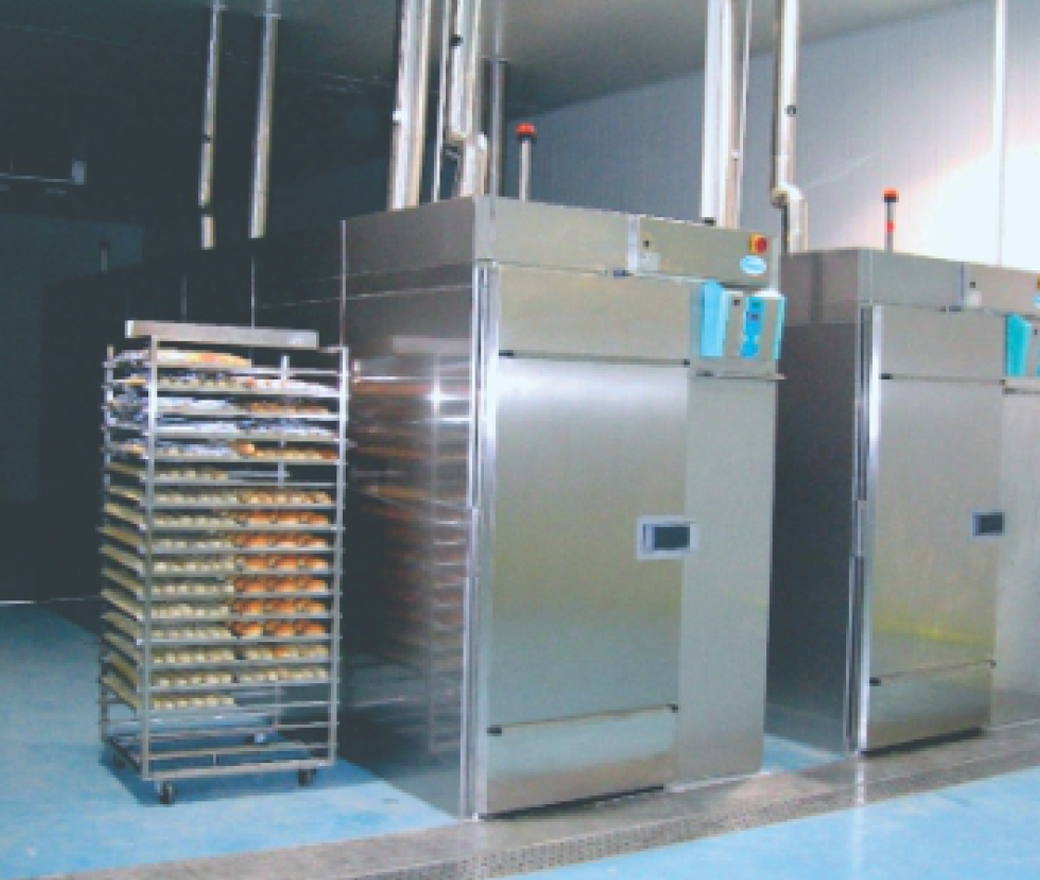
For operations that need rapid freezing down to –40°C but process in batches rather than continuous lines, F-Max blast freezers are designed specifically for Indian ambient conditions and seafood, poultry, and dairy applications.

Common Applications of Individual Quick Freezing Technology

IQF processing covers nearly every category of food:


  • Fruits and vegetables: Peas, corn, berries, mango chunks, pomegranate arils, okra, mixed vegetables

  • Seafood: Shrimp (India’s largest seafood export by volume), fish fillets, squid rings, crab meat

  • Poultry and meat: Chicken pieces, kebabs, nuggets, meatballs

  • Ready-to-eat and ready-to-cook: Parathas, samosas, momos, French fries, pasta

  • Dairy: Paneer cubes, shredded cheese

IQF is especially important for food sustainability. Because consumers can defrost and use the exact quantity needed, waste drops significantly compared to block-frozen products that require full thawing.


Once frozen, these products need temperature-controlled logistics from factory to retail. That means cold storage warehouses, refrigerated trucks for distribution, and unbroken cold chain management at every step.

IQF in India: Market Context and Growth

The Indian frozen foods market is expanding fast. It reached INR 191 billion in 2024 and is projected to grow to INR 593 billion by 2033 at a 13.4% CAGR. Individual quick freezing technology is central to this growth.


Globally, the IQF market was valued at USD 5.75 billion in 2024, expected to reach USD 9.24 billion by 2033 at a 6.2% CAGR. Asia-Pacific is forecast to register the fastest growth among all regions at 7.24% CAGR.


Several factors drive IQF adoption in India. Seafood exports (approximately ₹46,000 crores in 2023–24) have long required IQF for premium pricing in the USA, Europe, Japan, and the Middle East. The horticulture and ready-to-eat sectors are now accelerating adoption too. IQF products command a 15–30% price premium over block-frozen equivalents, making the higher processing cost worthwhile.


However, challenges remain. FlexFoods and other industry participants point out that cold chain infrastructure gaps, seasonal supply variations, and consumer education about IQF benefits still create obstacles, particularly for smaller processors in tier-2 and tier-3 cities.


Government support helps bridge some of these gaps. PMKSY subsidies cover 35–50% of project costs for cold chain infrastructure. APEDA provides market development schemes for export-oriented processors. Regulatory compliance requires FSSAI licensing, and export operations typically need HACCP and ISO 22000 certification.


For processors building out their cold chain warehouse infrastructure, getting the storage and logistics right is just as important as choosing the right freezing technology.

Key Technical Specifications at a Glance

Specification

Value

Operating temperature

–30°C to –40°C

Freezing time

3–30 minutes

Target core temperature

–18°C or below

Air velocity

2–6 m/s

Common refrigerants

Ammonia (R717), CO₂, liquid nitrogen (cryogenic)

Capacity range

500 kg/hr to 8,000+ kg/hr

Shelf life at –18°C

18–24 months

Operating cost (India)

Approximately ₹2–4/kg

Equipment investment, small scale (500–1,000 kg/hr)

₹50 lakhs to ₹1.5 crores

Equipment investment, medium scale (1,000–3,000 kg/hr)

₹1.5 crores to ₹4 crores

Equipment investment, large scale (3,000–8,000 kg/hr)

₹4 crores to ₹10 crores

Frequently Asked Questions

IQF stands for Individual Quick Freezing. It refers to both the technology and the process of freezing individual food pieces rapidly and separately at very low temperatures (–30°C to –40°C).

Very close. IQF preserves 90–95% of the vitamins and minerals found in fresh produce. Because food is typically frozen within hours of harvest, IQF products can actually retain more nutrients than “fresh” produce that has spent days in transit and on store shelves.

Both operate at similar temperatures (–30°C to –40°C), but IQF is a continuous process designed for individually freezing small pieces in 3–30 minutes. Blast freezing is a batch process where products are placed on trays or racks in a chamber and frozen over 1–4 hours. IQF produces free-flowing pieces; blast freezing works better for larger or mixed-size items. Learn more about how blast freezers work.

When stored at –18°C or below, IQF products maintain quality for 18 to 24 months. Proper packaging and unbroken cold chain management are essential for achieving this shelf life.

The primary users are seafood exporters, frozen fruit and vegetable processors, poultry and meat companies, ready-to-eat food manufacturers, and dairy processors. Quick commerce platforms are emerging as a newer demand driver for IQF products in Indian cities.

Entry-level IQF lines (500–1,000 kg/hr) range from ₹50 lakhs to ₹1.5 crores. Medium-scale systems (1,000–3,000 kg/hr) cost ₹1.5 to ₹4 crores, and large-scale installations (3,000–8,000 kg/hr) run from ₹4 to ₹10 crores. Operating costs average ₹2–4 per kg of frozen product.

Yes. Domestic operations require FSSAI licensing. Export-oriented IQF facilities typically need HACCP certification, ISO 22000 compliance, and APEDA registration. Many international buyers also require BRC or similar third-party food safety audits.

Planning a freezing or cold storage facility for your food processing operation? Talk to the F-Max team about blast freezers, cold rooms, and refrigeration systems built for Indian conditions.

🌐 Get Online Quote at www.fmax.in/contact-us

📞 Call +91 94896 08022 to speak with our team.
Reefer Maintenance 2026: India Guide To Service & Costs

Reefer maintenance in India: engine-hour schedules, costs, pre-trip checks, and heat/monsoon best practices. Cut downtime and spoilage—get the 2026 guide.

TL;DR

Reefer maintenance is the systematic inspection, servicing, and repair of refrigerated transport units, covering both the refrigeration system and the insulated body. Service intervals are tracked by engine hours (not kilometres), starting at every 500 hours for minor service. Skipping a ₹25,000 routine service can lead to emergency repairs costing ₹2,50,000 to ₹6,50,000, and a single reefer failure can destroy cargo worth ₹40 lakh or more. In India, where temperatures regularly cross 40°C and monsoons accelerate seal and insulation degradation, partnering with a responsive reefer maintenance service provider who understands local conditions is not optional, it is the foundation of cold chain reliability.

What Is Reefer Maintenance?

Reefer maintenance refers to the planned inspection, servicing, and repair of refrigerated transport units (reefer trucks, trailers, and containers) to keep them cooling reliably and efficiently. The scope covers two distinct systems that work together: the refrigeration unit itself (compressor, condenser, evaporator, expansion valve, sensors) and the insulated body it’s mounted on (PUF panels, door seals, floor channels, airflow systems).


This distinction matters when choosing a service provider. Many workshops handle only the mechanical refrigeration components but ignore the insulated body. A perfectly functioning compressor won’t save your cargo if the trailer’s door seals are cracked and leaking warm air. Similarly, pristine insulation is useless if the condenser coil is clogged with road dust and the unit overheats. Reefer maintenance covers both systems as a unified discipline, and a good service partner treats them that way.


One critical misconception that operators frequently highlight: reefer units are designed to maintain a set temperature, not to cool down warm cargo. Loading warm product and expecting the reefer to bring it down is a fast path to compressor wear and eventual failure. Pre-cooling is maintenance in disguise.


The financial stakes in India’s cold chain are enormous. A full load of frozen seafood, dairy, or pharmaceutical products can be worth ₹40 lakh to ₹4 crore or more. If the reefer fails and cargo spoils in transit, the operator may bear the full loss.

Key Components That Require Servicing

Every reefer unit contains the same core subsystems, regardless of manufacturer. Understanding what each one does helps you evaluate whether a service provider is doing thorough work or cutting corners.


Compressor. The heart of the refrigeration cycle. It pressurizes refrigerant gas so it can release heat through the condenser. Compressor failure is the most expensive single repair on a reefer unit (₹1,50,000 to ₹4,00,000), and it is almost always preventable through timely oil changes and correct refrigerant charge.


Condenser coil. Mounted on the outside of the unit, the condenser rejects heat from the refrigerant into the surrounding air. Road dust, agricultural debris, and monsoon grime are its biggest enemies across Indian highways. A dirty condenser forces the compressor to work harder, raising head pressure, increasing diesel consumption, and accelerating wear.


Evaporator coil. Inside the trailer, the evaporator absorbs heat from the cargo space. Ice buildup on evaporator coils restricts airflow, creating uneven temperatures and hot spots that spoil product unevenly. Regular defrost cycle verification during servicing catches this early.


Expansion valve. Controls the flow of refrigerant into the evaporator, regulating the pressure drop that enables cooling. When expansion valves malfunction, the entire system loses its ability to maintain set point temperature.


Temperature sensors. Calibration drift is subtle and dangerous. A sensor reading 2°C warmer than actual means the unit runs longer than necessary, wasting fuel. A sensor reading 2°C cooler than actual means your cargo sits at an unsafe temperature while the display says everything is fine. Ask your service provider about sensor calibration at every major service.


Door seals and insulation. The silent efficiency drain. There’s a simple test every driver should know: stand inside a closed trailer, and if daylight leaks through the door seals, those seals need replacing. For Indian operations running PUF insulated panels, maintaining panel integrity is especially important because damaged insulation forces the refrigeration system to compensate, burning more fuel and adding hours to the compressor.


For operations evaluating industrial refrigeration units from manufacturers who also offer after-sales service, understanding these components helps you hold service teams accountable for complete, not partial, maintenance.

Reefer Maintenance Schedule: Service Intervals by Engine Hours

Reefer units are serviced based on engine hours, not kilometres. This catches many first-time reefer operators off guard. A unit sitting idle at a loading dock with the engine running accumulates service hours just as fast as one on NH-44.


The standard service framework follows this structure:


Service Level

Interval

Estimated Cost (India)

What’s Included

Minor (A Service)

Every 500 hours

₹20,000 to ₹50,000

Oil change, filter replacement, belt inspection, fluid top-off

Intermediate (B Service)

Every 1,500 hours

₹50,000 to ₹1,00,000

All A-service items plus fuel filter, coolant analysis, valve adjustment

Major (C Service)

Every 3,000 hours

₹1,00,000 to ₹2,00,000

All B-service items plus coolant flush, compressor inspection, full electrical check

Overhaul

Every 10,000 to 15,000 hours

₹4,00,000 to ₹10,00,000

Engine rebuild, compressor rebuild, major component replacement

Full Replacement

Every 15,000 to 20,000 hours

₹12,00,000 to ₹20,00,000

New or remanufactured reefer unit

Note: Costs vary by region, unit brand, and service provider. South Indian service centres with in-house parts availability (rather than imported spares) typically offer faster turnaround and more competitive pricing.


One improvement worth noting: newer EGR systems from leading OEMs have pushed maintenance intervals from 3,000 hours to over 10,000 hours, reclaiming roughly 1.5 hours per unit per service cycle. That matters when you’re managing dozens of units and scheduling service appointments.

Daily Pre-Trip Inspection (10 to 15 Minutes)

This is the single most effective reefer maintenance practice, and it costs nothing. Every driver and fleet supervisor should follow this protocol before dispatch:


  1. Start the unit and verify it reaches set point temperature

  2. Check oil, coolant, and fuel levels

  3. Inspect belts for wear, cracking, or glazing

  4. Look at condenser and evaporator coils for debris or ice

  5. Test door seals for gaps or damage

  6. Listen for unusual noises (grinding, squealing, cycling irregularities)

  7. Verify defrost cycle operation

  8. Check battery terminals for corrosion

  9. Photograph the reefer display showing temperature and unit hours

That last step, the photo, serves as claim protection. If cargo arrives spoiled, a timestamped photo proving the unit was at temperature when you departed can save you from a multi-lakh liability dispute. Practitioners on Indian logistics forums stress this point repeatedly.

Common Reefer Problems and When to Call for Service

Most reefer breakdowns trace back to a handful of known failure modes. Knowing the symptoms helps you decide whether to handle something in-house or call your service provider immediately.


Failure

Symptoms

Can You Handle In-House?

Service Call Cost (Approx.)

Belt failure

Squealing, sudden unit shutdown

Replace if spare belt is on hand

₹8,000 to ₹25,000

Coolant leak

Low coolant alarm, engine overheating

Top-off only; get professional inspection

₹15,000 to ₹65,000

Dirty condenser

High head pressure, poor cooling

Yes, 15-minute cleaning with water jet

₹0 if done in-house

Fuel contamination

Stalling, hard starts

No, needs professional diagnosis

₹25,000 to ₹1,25,000

Compressor failure

No cooling, grinding noise, oil leak

No, requires specialist service

₹1,50,000 to ₹4,00,000

Door seal damage

Temperature swings, excessive cycling

Replace gaskets if available

₹15,000 to ₹50,000

Electrical/sensor issues

Alarm codes, erratic readings

No, needs trained technician

₹15,000 to ₹80,000

Industry service managers have noted that battery and starting issues are the most common problems service shops see. Their advice is straightforward: keep up on preventive maintenance, because it keeps small problems from becoming large ones. Dwell time for repairs has also become a growing concern, with some shops holding units for an entire day. The cost of a breakdown is not just the repair bill but also the lost productivity and potential cargo claims.


Emergency kit every reefer truck should carry: Spare drive belts, extra coolant, a battery jumper pack, and basic hand tools. A ₹1,500 belt in the toolbox can prevent a ₹2,50,000 roadside service call.

Why Reefer Maintenance in India Demands a Different Approach

Most reefer maintenance literature originates from the United States, where ambient temperatures rarely exceed 35°C and roads are paved and relatively dust-free. Indian conditions fundamentally change the maintenance equation, and any service provider you work with should understand this.

Extreme Heat

Indian summers push temperatures past 40°C across most of the country, with parts of Rajasthan, Telangana, and interior Tamil Nadu regularly hitting 45°C or higher. A reefer unit maintaining cargo at minus 18°C must overcome a temperature differential of nearly 60 degrees. That is significantly harder work than the 30 to 40 degree differentials common in temperate climates.


This means compressors cycle more frequently, condenser coils reject heat less efficiently, and every weak point in insulation becomes a bigger energy drain. Indian fleets should clean condenser coils at minimum weekly during summer (twice weekly for units running through dusty corridors like interior Karnataka or Andhra Pradesh) and monitor compressor oil quality more aggressively than standard schedules suggest.


Condensing units engineered for heavy ambient conditions (rated up to 65 to 75°C) handle this better, but they still need clean coils and proper airflow to function at those design limits.

Monsoon Humidity

Monsoons bring high humidity that causes condensation inside the truck. Excess moisture leads to mold growth that compromises food safety and pharmaceutical product quality. During monsoon months (June through September across most of South India), drain lines require more frequent clearing, electrical connections need protection from moisture intrusion, and door gaskets swell from humidity, changing their sealing characteristics.


For operators maintaining reefer bodies built with sandwich panel insulation, monsoon season is when panel joint integrity matters most. Even small gaps at cam-lock joints allow humid air to penetrate the insulation, reducing its thermal performance over time.

India’s Cold Chain Gap: The Scale of What’s at Stake

The numbers paint a stark picture:


Over 90% of India’s cold chain logistics sector is fragmented and privately owned, lacking standardization. Reefer vehicles are in short supply and prone to breakdowns. Much of this breakdown problem traces directly to inconsistent maintenance practices and the absence of reliable local service partners, not to equipment design.


Indian roads also present a unique challenge: dust, unpaved stretches, and construction debris clog condenser coils far faster than highway driving in developed markets. Pre-trip condenser cleaning is not optional here, it is essential.


For operations building out cold chain infrastructure from the ground up, connecting transport maintenance to cold storage facility design creates a complete chain of temperature control rather than isolated links that break at handoff points.

Eutectic vs. Engine-Driven Reefer Systems: What Changes in Maintenance

This distinction fundamentally changes what “maintenance” looks like day to day, and it should influence which type of service partner you choose.

Engine-Driven Systems

The traditional setup. A dedicated diesel engine (separate from the truck’s drive engine) powers a compressor that runs the refrigeration cycle continuously during transit. This is what most maintenance schedules describe, and the service intervals above apply directly.


Maintenance demands include:

  • All engine servicing (oil, belts, coolant, fuel filters)

  • Refrigeration system servicing (refrigerant, coils, valves)

  • Higher vibration leads to more electrical connection failures

  • Fuel management (approximately ₹2,500 to ₹7,000 per day at current diesel prices depending on unit size and ambient temperature)

Engine-driven systems are independent of depot infrastructure, making them suitable for long-haul routes where the vehicle may be away from base for days.

Eutectic (PCM Plate) Systems

Eutectic systems use phase-change material (PCM) plates that are “charged” (frozen) by plugging into mains power at a depot. Once charged, the plates provide passive cooling during delivery runs without any running engine on the road.

The maintenance profile is completely different:


  • No on-road diesel engine means no oil changes, belt inspections, or fuel system servicing during transit

  • Primary maintenance focuses on PCM plate integrity, the charging compressor at the depot, insulation quality, and door seals

  • Reduced vibration from the absence of a running engine means fewer electrical connection failures

  • Lower noise and zero emissions during delivery, relevant for urban multi-drop routes in cities like Chennai, Bengaluru, and Kochi

The trade-off: charging infrastructure at the depot must be maintained reliably. If the depot compressor fails, the entire fleet’s cooling capacity is compromised. Backup power protocols (generators, UPS systems) are essential, especially in parts of India with inconsistent electrical supply.


Eutectic systems make particular sense for last-mile and multi-drop distribution where the truck returns to base daily. For fleets exploring this approach, reefer truck bodies with eutectic PCM plate systems offer fast pull-down capability (to minus 24°C) and backup runtime of 12 to 14 hours for frozen cargo and 4 to 5 hours for chilled, covering typical delivery windows in South Indian cities.

Quick Comparison

Factor

Engine-Driven

Eutectic (PCM)

On-road engine maintenance

Full engine servicing required

None

Primary maintenance focus

Engine + refrigeration system

Charging unit + plates + insulation

Daily fuel cost during transit

₹2,500 to ₹7,000

Zero (charged at depot overnight)

Depot infrastructure dependency

Low

High

Best suited for

Long-haul, multi-day routes

Urban multi-drop, daily return-to-base

Service provider needs

Diesel engine + refrigeration specialist

Refrigeration + electrical specialist

How to Choose a Reefer Maintenance Service Partner in India

Finding a capable reefer maintenance service provider in India is harder than it should be. The cold chain sector’s fragmentation means service quality varies widely. Here is what to look for:

Proximity and Response Time

Reefer breakdowns are time-critical. A unit sitting dead on the side of NH-48 with ₹30 lakh of seafood inside cannot wait 48 hours for a technician to arrive from another state. Your service partner should have technicians reachable within a few hours of your primary operating routes. For South Indian fleets, having a service network spanning Tamil Nadu, Kerala, Karnataka, and Andhra Pradesh covers most major cold chain corridors.

Integrated Expertise (Body + Refrigeration)

Many workshops specialize in either mechanical refrigeration or truck body fabrication, not both. The best maintenance outcomes come from providers who understand the full system: panels, seals, doors, flooring, airflow channels, and the refrigeration unit. Manufacturers who build reefer trucks in-house and also offer after-sales service have a natural advantage here because they know exactly how the body and cooling system interact.

Spare Parts Availability

Imported spare parts can take weeks to arrive. Service providers with in-house manufacturing capabilities (particularly for PUF panels, door gaskets, and structural components) can source or fabricate parts much faster. Ask about lead times for the most common replacement items before signing any AMC.

Annual Maintenance Contracts (AMCs)

For fleets with three or more reefer units, an AMC makes financial sense. A good AMC should cover:

  • All scheduled preventive maintenance visits

  • Emergency breakdown response with defined SLAs (maximum response time in hours)

  • Parts at pre-agreed rates

  • WhatsApp or phone-based support for driver-level troubleshooting

  • Temperature log review and recommendations

Documentation and Compliance Support

FSSAI regulations govern food safety during transport, and clients in dairy, seafood, and pharmaceuticals increasingly demand temperature documentation. Your service partner should help you maintain proper records: maintenance logs with dates and engine hours, temperature records, and calibration certificates for sensors.


For operations that need both new reefer truck builds and ongoing maintenance support from a single vendor, contacting a manufacturer with a dedicated service network simplifies accountability. F-Max Systems, for example, operates from Coimbatore with service branches across South India and offers WhatsApp-based support for rapid troubleshooting.

Preventive vs. Reactive Maintenance: The Cost Reality

The math on preventive reefer maintenance is unambiguous.


A routine 500-hour service costs ₹20,000 to ₹50,000. An emergency compressor replacement on the roadside costs ₹2,50,000 to ₹6,50,000 in parts and labour, plus whatever the spoiled cargo was worth. If you add in transload costs for emergency cargo transfer (₹80,000 to ₹2,50,000) and the opportunity cost of a truck sitting idle, a single skipped service can easily cost 20 times what the service would have.


At scale, the numbers are even more compelling:

Practitioners on fleet management forums consistently report annual maintenance budgets of ₹2,50,000 to ₹5,00,000 for units on proper PM schedules, but ₹12,00,000 or more for older units that have been neglected. The pattern is consistent: money spent on prevention is always less than money spent on emergencies.


For a concrete example, skipping a ₹40,000 oil change on a reefer engine can lead to a ₹4,00,000 engine failure within 200 hours of operation. The oil doesn’t just lubricate; it carries away metal particles and combustion byproducts. Old oil becomes abrasive.

Reefer Maintenance Best Practices

Operations

  • Pre-cool trailers before loading. Run the unit for at least 30 to 60 minutes before product goes in. Loading warm cargo into an uncooled trailer and expecting the reefer to pull it down strains every component. For operations with access to blast freezing equipment, ensuring cargo is at target temperature before it ever touches the trailer is the single best thing you can do for reefer longevity.

  • Minimise door openings. Every opening floods the cargo space with warm, humid air. For multi-drop routes in cities like Chennai, Bengaluru, or Hyderabad, strip curtains inside the door opening reduce thermal exchange dramatically.

  • Use cycle mode appropriately. For chilled (not frozen) freight where minor temperature swings are acceptable, start-stop cycling reduces engine hours and fuel consumption.

Cleaning and Inspection

  • Clean condenser coils weekly. A 15-minute cleaning can reduce fuel consumption by 10 to 15%. In dusty Indian conditions, twice-weekly cleaning during summer is not excessive.

  • Clear drain lines monthly. Blocked drains cause water pooling, which leads to ice buildup and eventually damages flooring and cargo.

  • Inspect PUF panels for punctures. Even a small hole in insulation grows over time. A panel that was 100mm thick when installed but has absorbed moisture performs like 60mm or worse.

Documentation and Compliance

  • Maintain complete temperature logs. FSSAI regulations govern food safety during transport. Reefer operators must maintain temperature logs and cleaning records. Beyond compliance, these logs are your defence in cargo claims.

  • Use a CMMS or at minimum standardised forms. Consistent documentation reveals patterns. If the same belt fails on the same unit every 400 hours, that’s a mounting alignment problem, not a belt quality issue.

  • Enable telematics where possible. Continuous temperature monitoring with GPS tracking and automated alerts catches problems before drivers notice them. Set escalation rules so local teams and customers are notified quickly when alarms trigger.

Driver Training

Train every driver on the pre-trip inspection protocol and reefer alarm response procedures. A driver who ignores a high-head-pressure alarm because the cargo “still feels cold” is 200 kilometres away from a compressor seizure.


For fleet operators building a comprehensive cold chain warehouse and transport strategy, maintenance protocols should span the entire chain, from storage facility to delivery vehicle to the customer’s receiving dock.

Quick-Reference Reefer Maintenance Glossary

Term

Definition

TRU

Transport Refrigeration Unit, the complete cooling system mounted on a truck or trailer

PM

Preventive Maintenance, scheduled servicing to prevent failures

AMC

Annual Maintenance Contract, a service agreement covering scheduled and emergency maintenance for a fixed or pre-agreed fee

Condenser

External coil that releases heat from the refrigerant to the atmosphere

Evaporator

Internal coil that absorbs heat from the cargo space

Compressor

Pump that pressurises refrigerant gas to drive the cooling cycle

PCM / Eutectic

Phase Change Material, a substance that absorbs or releases energy when changing between solid and liquid states, used in eutectic plate cooling systems

Set Point

The target temperature programmed into the reefer controller

Return Air

Temperature of air returning to the evaporator from the cargo space (indicates actual cargo conditions)

Supply Air

Temperature of air blowing out of the evaporator (indicates unit performance)

Defrost Cycle

Timed heating of the evaporator to melt accumulated ice

Cycle Mode

Start-stop operation where the unit shuts off at set point and restarts when temperature rises

Continuous Mode

Unit runs non-stop to hold the tightest possible temperature range (used for frozen goods)

Pre-Trip

Automated self-test run before departure to verify all systems function

CMMS

Computerised Maintenance Management System, software for tracking maintenance schedules and history

FSSAI

Food Safety and Standards Authority of India, the regulatory body governing food transport standards

PUF

Polyurethane Foam, the insulation material used in most reefer body panels in India

FAQ

Minor service (oil change, filters, belt inspection) is due every 500 engine hours. Intermediate service at 1,500 hours adds fuel filters, coolant analysis, and valve adjustments. Major service at 3,000 hours includes coolant flush, compressor inspection, and comprehensive electrical checks. Daily pre-trip inspections (10 to 15 minutes) are non-negotiable regardless of the service schedule. In Indian summer conditions, condenser cleaning frequency should increase beyond what standard schedules recommend.

For units on a proper preventive maintenance schedule, expect ₹2,50,000 to ₹5,00,000 per year. Neglected or older units can cost ₹10,00,000 to ₹12,00,000 annually, with the added risk of catastrophic cargo loss. An AMC with a reliable service provider typically falls in the ₹3,00,000 to ₹6,00,000 range annually, depending on unit age and usage intensity.

Battery and starting issues are the most common problems seen by service centres, followed by belt failures and dirty condenser coils. The root cause in almost every case is deferred maintenance. A belt that shows wear cracks at 400 hours and gets replaced costs ₹8,000 to ₹25,000. That same belt snapping at 600 hours on a highway costs ₹2,50,000 or more in emergency service, plus the cargo risk.

Ambient temperatures above 40°C (common across India from April through June) force reefer units to work significantly harder to maintain the same set point. Compressors cycle more frequently, condenser heat rejection becomes less efficient, and every insulation weakness becomes a bigger energy penalty. Fleets should clean condenser coils at least weekly during summer, monitor compressor oil condition more frequently than standard schedules suggest, and schedule a comprehensive pre-summer service in March.

Most reefer units last 15,000 to 20,000 engine hours before they need full replacement, which translates to roughly 7 to 12 years depending on usage intensity. A disciplined maintenance programme can push equipment life 20 to 30% beyond baseline. Full replacement costs ₹12,00,000 to ₹20,00,000, so every extra year of reliable service represents significant savings.

Engine-driven reefers require full diesel engine servicing (oil, belts, coolant, fuel filters) plus refrigeration system maintenance. Eutectic systems, which use PCM plates charged at a depot, eliminate all on-road engine maintenance. Their maintenance focuses instead on charging unit reliability, plate integrity, insulation quality, and door seals. Eutectic systems have lower ongoing maintenance costs but require dependable depot power infrastructure. Your service provider should have expertise in whichever system your fleet uses.

Yes. Reefer units are designed to maintain temperature, not to cool down warm cargo. Loading product at ambient temperature into an uncooled trailer overworks the compressor and accelerates wear on every component. Run the unit for 30 to 60 minutes before loading, and verify it has reached set point before any product goes in.

At minimum: continuous temperature logs for every shipment, maintenance records with dates and engine hours, cleaning logs, and alarm/incident reports. FSSAI regulations require food transport temperature documentation. Retain these records for the full shipment life plus whatever retention period your customers or regulators require. Digital records through a CMMS are preferable to paper. A good service provider will help you maintain these records as part of their AMC.

Look for providers who understand both the refrigeration system and the insulated body, not just one or the other. Prioritise service partners with local presence in your operating region (Tamil Nadu, Kerala, Karnataka, Andhra Pradesh), fast emergency response times, in-house spare parts availability, and willingness to offer structured AMCs with defined SLAs. Manufacturers who build reefer units and offer after-sales service tend to provide better integrated maintenance because they designed the system in the first place.

Whether you’re running a single reefer truck or managing a fleet across South India, getting maintenance right is the difference between reliable cold chain delivery and preventable cargo losses. F-Max Systems, based in Coimbatore with service coverage across Tamil Nadu, Kerala, Karnataka, and Andhra Pradesh, offers both reefer truck bodies engineered for Indian conditions and ongoing maintenance support through their service network. For a consultation on new builds, AMCs, or emergency service, contact the F-Max team directly or reach them on WhatsApp for quick response.

🌐 Get Online Quote at www.fmax.in/contact-us

📞 Call +91 94896 08022 to speak with our team.
The 7 Top Refrigeration Companies in India (2025 Buyer’s Guide)

Finding the right refrigeration company in India can feel like navigating a maze. Whether you’re a business owner needing a massive cold storage facility or a family looking for a reliable air conditioner, the stakes are high. A solid refrigeration solution protects your products, ensures safety, and keeps your operations running smoothly. In a country with weather as diverse and demanding as India’s, choosing a top-tier company isn’t just a preference—it’s a necessity.


But who can you trust? To cut through the noise, we’ve compiled a list of the top refrigeration companies in India. This guide will walk you through the key players, from industrial giants specializing in custom solutions to household names that keep our homes cool.


Here are the companies leading the charge in India’s refrigeration sector.

1. F-Max Systems India Pvt. Ltd.

A large, modern multi-commodity cold storage facility built by F-Max Systems.

!Custom cold storage facility with industrial refrigeration units.


With over two decades of dedicated experience, F-Max Systems has carved out a niche as a leader in specialized industrial refrigeration and custom cold storage solutions. Unlike generalist companies, F-Max focuses on providing end-to-end, custom-engineered systems tailored to the unique needs of its clients.


Operating from a 21,000 sq. ft. manufacturing facility, the company has a strong foothold across South India. The company produces everything in-house including their signature PUF insulated panels that ensure superior thermal efficiency.


F-Max’s advanced refrigeration units are engineered to perform efficiently even in India’s challenging climate conditions.


Key Offerings:

  • Industrial refrigeration and cold storage solutions
  • Walk-in Coolers and Freezers
  • Blast Freezers & Chillers
  • Banana and Mango Ripening Chambers
  • Multi-commodity Cold Storage
  • PUF Panels, Doors & Cold Room Accessories
  • Clean Rooms for hospitals and laboratories
  • Milk Chillers and Curd Incubators

Beyond traditional cold storage, F-Max also offers innovative dairy processing solutions including curd incubation systems with precise temperature control.


Their expertise extends to specialized ripening chambers for fruits like bananas and mangoes, making them particularly valuable for agricultural businesses.


Ideal For: F-Max is the go-to partner for businesses in the food processing, pharmaceutical, agricultural, and logistics sectors. If you need a reliable, custom-built cold chain infrastructure—from a single blast freezer to a large-scale distribution hub—F-Max provides solutions designed for durability and efficiency. F-Max plays a crucial role in India’s rapidly growing cold chain industry, which has become essential for reducing food waste and preserving the quality of perishable goods across the country’s diverse climate zones.


To learn more about F-Max’s heritage and vision in revolutionizing India’s cold chain industry, their journey from a startup to an industry leader showcases remarkable growth.


For a complete overview of their comprehensive product portfolio spanning multiple industries and applications, F-Max continues to innovate in refrigeration technology.

2. Blue Star Limited

A Blue Star air conditioner unit installed on the side of a building.

A household name in India for over 75 years, Blue Star is a dominant force in both the commercial and residential sectors. The company is widely recognized as a leading air conditioning and commercial refrigeration company, offering an extensive portfolio of products and services.


For businesses, Blue Star delivers everything from VRF systems and chillers to comprehensive cold chain equipment. For consumers, they offer a popular range of air conditioners, water purifiers, and air coolers. Blue Star has evolved from its early days as a reconditioning company to become one of India’s largest providers of integrated mechanical, electrical, plumbing and firefighting solutions.


Key Offerings:

  • B2B: VRF Systems, Chillers, Packaged ACs, Cold Rooms, Supermarket Refrigeration.
  • B2C: Window and Split ACs, Air Coolers, Water Purifiers, Dishwashers.
  • Services: Offers integrated MEP (Mechanical, Electrical, and Plumbing) and HVAC&R services for infrastructure projects.

Ideal For: Blue Star is a versatile choice for a wide range of customers. Businesses of all sizes rely on their robust commercial solutions, while homeowners trust their durable and efficient consumer appliances. Blue Star’s MEP services have become particularly valuable in India’s growing construction sector, where integrated building solutions are increasingly in demand.

3. Voltas Limited

A collection of Voltas and Voltas Beko home appliances including a refrigerator, washing machine, and microwave.

As part of the prestigious TATA group, Voltas has earned its reputation as India’s No. 1 AC brand. The company is a market leader in room air conditioners and offers a wide array of cooling and home appliances. Through its partnership with Beko, Voltas also provides a comprehensive range of home appliances, including refrigerators and washing machines. Being part of the Tata empire has provided Voltas with extensive resources and a strong brand reputation that spans across multiple sectors of the Indian economy.


Key Offerings:

  • Cooling Solutions: Split, Window, Cassette, and Floor Standing ACs, as well as a variety of air coolers.
  • Commercial Refrigeration: A range of commercial refrigerators, water coolers, and water dispensers.
  • Voltas Beko Home Appliances: Refrigerators (Single Door, Double Door, Side by Side), Washing Machines, Microwaves, and Dishwashers.

Ideal For: Voltas is an excellent choice for consumers seeking reliable and innovative home appliances backed by the trust of the TATA name. Their commercial refrigeration products are also a popular pick for retail and hospitality businesses. Voltas has successfully leveraged its partnership with Beko of Arçelik Group to expand its product line while maintaining its strong position in the cooling solutions market.

4. Ice Make Refrigeration Limited

A large industrial ammonia refrigeration system manufactured by Ice Make Refrigeration Limited.

Operational since 1993, Ice Make Refrigeration Limited is a prominent player in the refrigeration equipment industry, offering a wide spectrum of cooling solutions. The company is dedicated to providing total cold chain solutions across sectors like dairy, food processing, horticulture, and pharmaceuticals.


Ice Make’s product range is extensive, covering everything from cold storage and industrial refrigeration to specialized equipment for the dairy and ice cream industries.


Key Offerings:

  • Cold Room & Storage: Cold Rooms, Ripening Chambers, Blast Freezers, and Solar Cold Storage.
  • Industrial Refrigeration: Ammonia Refrigeration Systems, Brine Chilling Plants, and Ice Building Tanks.
  • Transport Refrigeration: Refrigerated Vans & Containers.
  • Dairy & Ice Cream: Bulk Milk Coolers, Pasteurizing Tanks, and Ice Cream Hardeners.

Ideal For: Ice Make is a strong contender for businesses looking for comprehensive and specialized cooling solutions, particularly in the agricultural, dairy, and food processing industries. Their ammonia refrigeration systems represent an energy-efficient solution for large-scale industrial applications while meeting modern environmental standards for refrigeration technologies.

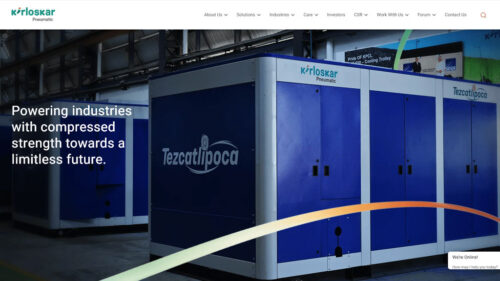
5. Kirloskar Pneumatic Company Limited (KPCL)

Industrial machinery at a Bio CNG plant, representing Kirloskar Pneumatic’s solutions.

!A Bio CNG plant showcasing Kirloskar’s industrial equipment…jpg)


A core part of the Kirloskar group, KPCL is a heavyweight in engineering solutions for air, refrigeration, and gas. The company is known for its high-tech, sophisticated products and expertise in turnkey projects, serving a multitude of heavy industries.

Their Air Conditioning & Refrigeration division provides robust solutions for sectors like food and beverage, pharmaceuticals, infrastructure, and oil and gas. They are also a key provider of Marine HVACR solutions for naval and merchant vessels.


Key Offerings:

  • Reciprocating and Screw Compressor Packages
  • Vapour Absorption Chillers
  • Solutions for Cold Chain, Comfort Cooling, and Food & Beverage industries
  • Marine HVACR Solutions
  • Process Gas Compressor Packages

Ideal For: KPCL is the choice for large-scale industrial applications requiring powerful and reliable refrigeration and gas compression systems. Their expertise is best suited for heavy industries, infrastructure projects, and marine applications. With manufacturing facilities in Pune and Saswad, KPCL has established itself as a crucial player in India’s industrial refrigeration landscape, supporting everything from food processing to critical pharmaceutical storage requirements.

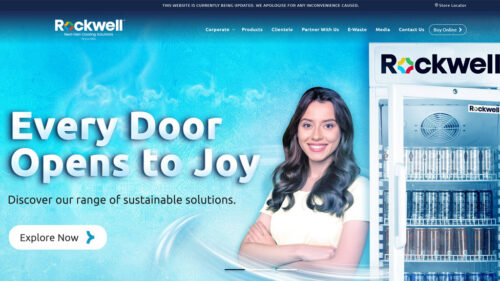
6. Rockwell Industries Ltd.

With over 37 years in the business, Rockwell Industries Ltd. is a leading manufacturer of commercial refrigeration equipment in India. A pioneer in introducing CFC-free products in the country, Rockwell is committed to innovation and eco-friendly solutions. Their early adoption of environmentally conscious refrigeration technology positioned them as market leaders when India began phasing out ozone-depleting substances in accordance with international environmental agreements.


Their products are a common sight in businesses ranging from small kirana stores to large multinational corporations, reflecting their wide appeal and reliability.


Key Offerings:

  • Chest Freezers & Coolers
  • Visi Coolers and Upright Freezers
  • Solar Powered Refrigeration Products
  • Medical and Kitchen Refrigeration
  • Ice Cream & Frozen Food Display Units

Ideal For: Rockwell is perfect for businesses in the retail, food service, and medical sectors that need dependable and efficient commercial refrigeration units for storage and display. As one of the first organizations in India to present non-ozone-depleting refrigeration solutions, Rockwell has maintained its environmental commitment while delivering reliable products to the market.

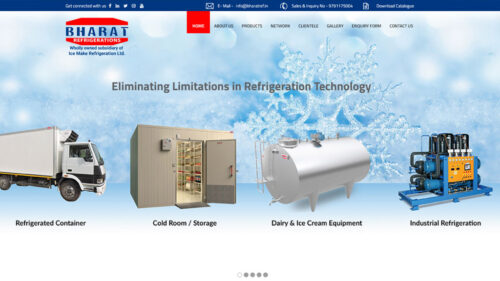
7. Bharat Refrigerations Pvt Ltd

The official logo for Bharat Refrigerations Pvt Ltd.

Established in 1980, Bharat Refrigerations has a long history of providing effective cooling solutions, particularly in southern India. Known for products with maximum cooling efficiency and low power consumption, the company was acquired by Ice Make Refrigeration Limited in 2016 to enhance its service network and offerings.


The brand continues to be recognized for its specialized products tailored for commercial and small-scale industrial use.


Key Offerings:

  • Cold Room & PUF panels
  • Glass Door Display Chillers
  • Blast Freezers & Chillers
  • Chilling Plants
  • Transport Refrigeration
  • Bulk Milk Coolers and Ice Cream Hardeners

Ideal For: Bharat Refrigerations remains a solid choice for businesses seeking reliable and energy-efficient cold rooms, chillers, and specialized equipment like ice candy machines and milk coolers. Though now operating as part of Ice Make Refrigeration Limited, the Bharat Refrigerations brand continues to serve customers with products that reflect decades of experience in the Indian refrigeration market.


As this guide illustrates, India’s refrigeration landscape is diverse. But for businesses that need more than a one-size-fits-all solution, the right partner makes all the difference. If you’re looking for a custom-engineered cold storage or industrial refrigeration system tailored to your specific operational needs, consider a specialist. Explore the custom cold chain solutions at F-Max Systems to see how deep industry expertise can protect your products and enhance your efficiency.

🌐 Get Online Quote at www.fmax.in/contact-us

📞 Call +91 94896 08022 to speak with our team.