TL;DR
Blast freezing chicken means driving the product’s core temperature to -18°C or below using forced air at -30°C to -40°C, typically within 2 to 4 hours for chicken parts. This rapid process creates small ice crystals inside muscle cells rather than the large, destructive crystals that form during slow freezing, cutting drip loss from roughly 9.3% to 7.6% and extending shelf life to 12-24 months. Indian processors must meet FSSAI’s -18°C core temperature standard, and exporters need HACCP-compliant blast freezing documentation with proof of temperature compliance.
Freezing Method Comparison at a Glance
|
Dimension |
Blast Freezing |
Regular/Still Air Freezing |
IQF |
|---|---|---|---|
|
Air Temperature |
-30°C to -40°C |
-18°C to -25°C |
-35°C to -45°C |
|
Freezing Time (chicken parts) |
2-4 hours |
12-24 hours |
Minutes |
|
Ice Crystal Size |
Small |
Large |
Very small |
|
Drip Loss (at 180 days) |
Low (~7-8%) |
High (~9-13%) |
Lowest |
|
Shelf Life |
12-24 months |
7-18 months |
12-24 months |
|
Best For |
Whole birds, bulk cuts, mixed loads |
Already-frozen stock holding |
Individual portions, retail packs |
|
Equipment Cost (India) |
₹2-25 lakh |
₹1-5 lakh (cold room) |
₹15-50 lakh+ |
India’s poultry market reached INR 2,304 billion in 2024 and is growing at roughly 12.6% annually. Yet approximately 6.7% of poultry meat goes to waste, much of it due to cold chain failures. For a country producing around 4.5 million tonnes of broiler meat per year, that waste represents staggering economic losses.
Blast freezing chicken is the critical step that bridges production and preservation. It is not the same as tossing product into a regular cold room and hoping for the best. The process, the science, and the compliance requirements all differ, and getting them wrong costs processors money, quality, and sometimes market access.
This guide covers 10 things every poultry processor needs to understand about blast freezing chicken, from the physics of ice crystal formation to FSSAI compliance and equipment selection. Whether you are scaling up a processing plant or evaluating your first blast freezer purchase, these points apply directly to your operation. For a broader overview of the technology, our guide to how blast freezers work covers the fundamentals across all food categories.
1. The Ice Crystal Science Behind Chicken Quality
This is the most important concept in blast freezing chicken, and it explains why rapid freezing produces better meat than slow freezing.
During slow freezing, water molecules migrate out of muscle cells before crystallizing. They form large ice crystals in the spaces between cells. These crystals physically rupture cell membranes and muscle fibers. When the chicken thaws, moisture escapes as drip loss, leaving the meat softer, drier, and less appealing.
During rapid freezing, ice crystals form quickly and predominantly within the cells themselves. The crystals stay small, causing significantly less structural damage. The International Institute of Refrigeration defines the threshold: freezing speeds above 5 cm/h qualify as quick freezing, while speeds below 1 cm/h count as slow. Blast freezing chicken operates well above that quick-freezing threshold.
Research quantifies the difference clearly. A study tracking chicken stored for 180 days found that slow air freezing at -18°C produced 9.30% drip loss, while quick freezing at -80°C brought that down to 7.64%. That gap of 1.66 percentage points might sound small, but across thousands of kilograms of product daily, it translates directly into yield, revenue, and customer satisfaction.
Practitioners on BBQ forums have noted that in blind tastings of cooked chicken, nobody could distinguish between blast-frozen and fresh product, but home-frozen (slowly frozen) chicken was noticeably different in texture. As one former TV chef explained on Quora, “flash frozen meat is a better way to preserve than regular freezing, as it reduces the amount of crystallization in the meat.”
2. Temperature and Time Parameters
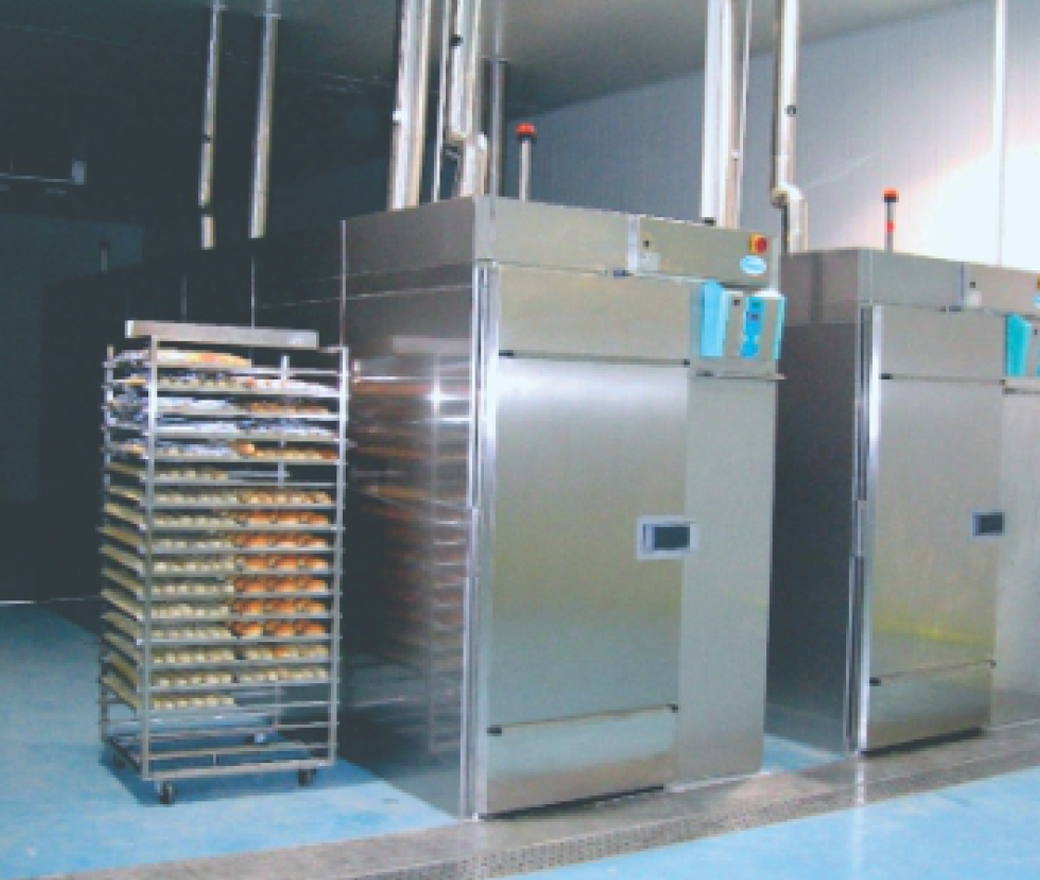
Blast freezers for chicken operate by circulating cold air at high velocity, typically between -30°C and -40°C, over the product at speeds of 1.5 to 6 m/s. The air speed matters almost as much as the temperature. Without sufficient airflow, cold spots and warm pockets develop, leading to uneven freezing.
Core target temperature: -18°C or below. At this point, roughly 80% of muscle tissue water is crystallized.
Time benchmarks by product type:
-
Boneless chicken breast or thigh: 1-2 hours
-
Chicken parts on trays: 2-4 hours
-
Whole birds: 12-24 hours, depending on size and loading density
-
Industry standard: core temperature from +70°C to -18°C within a maximum of 240 minutes (4 hours) for standard cut products
These times assume proper loading, adequate airflow, and a blast freezer operating at its rated capacity. Overloading or poor loading practices can easily double these numbers.
One important distinction that many operators miss: blast freezing and blast chilling are different processes with different temperature targets. Chilling brings product down to around +3°C for short-term holding, while freezing drives it to -18°C or below. If you are unsure which your operation needs, our comparison of blast chillers vs. blast freezers explains the practical differences.
3. The Danger Zone and Bacterial Risk
Chicken carries a higher bacterial risk than most proteins. Salmonella and Campylobacter thrive in the temperature danger zone, roughly between 4°C and 60°C according to FSSAI standards (or 5°C to 63°C under EU guidelines). Every minute chicken spends in this range increases bacterial multiplication.
This is where blast freezing chicken provides its most critical safety advantage. By driving temperatures through the danger zone in minutes rather than hours, blast freezing dramatically limits the window for pathogen growth.
A regular cold room at -18°C to -25°C may take 12 to 24 hours to freeze chicken parts fully. During much of that time, the outer surfaces are cold but the core remains in the danger zone. Blast freezing at -35°C to -40°C collapses that core transit time to a fraction of the total freeze cycle.
Food safety professionals on the IFSQN forum have discussed HACCP compliance specifically at the blast freeze step. The consensus is clear: operators must document that meat temperature is controlled to minimize time above 4°C, and the blast freeze cycle must be validated as a critical control point in the HACCP plan. This means recording core temperatures with data loggers and ensuring each product type reaches -18°C within the specified timeframe. One discussion thread outlined the entire process flow (receive, thaw, prepare, cook, cool, pack, blast freeze, store, dispatch) and emphasized that temperature monitoring must be continuous, not sampled.
4. FSSAI Compliance for Indian Processors
This is a gap that most online resources completely ignore, but it matters enormously for anyone processing chicken in India.
FSSAI requires frozen meat to be “chilled meat subjected to freezing in appropriate equipment in such a way that the product is maintained at a temperature of -18°C or lower.” The specifics:
-
Core temperature of the product must reach -18°C or below during freezing
-
All finished frozen product must pass through a metal detector before storage or dispatch
-
Meat under normal chilling conditions (0-4°C) should be consumed within 2 to 4 days
-
For long-term storage, maintenance at -18°C or below is mandatory
For exporters, the bar is even higher. Indian chicken exporters must provide proof of blast freezing and -18°C shipment compliance, alongside HACCP, Halal, and other certifications required by APEDA and importing countries. Processors who cannot demonstrate a validated blast freezing process risk losing export certifications and, in severe cases, face product recalls or import bans at the destination.
If you are building or upgrading a facility to meet these standards, get in touch with our engineering team about blast freezer systems designed for FSSAI and HACCP compliance in Indian operating conditions.
5. Blast Freezing vs. Regular Freezing
The quality gap between blast frozen chicken and conventionally frozen chicken is measurable and significant.
When foods are frozen slowly, large ice crystals damage cell walls and compromise the structure of the meat. Blast freezers force cold air to rapidly bring down the temperature, freezing the product in something much closer to its fresh state.
Shelf life comparison:
-
Blast frozen chicken: 12-24 months when stored properly at -18°C
-
Conventionally frozen chicken: 7-18 months
-
Chilled chicken (0-4°C): approximately 3-5 days
Drip loss comparison (at 180 days of storage):
-
Slow air freezing at -18°C: 9.30% centrifugal loss, 9.30% drip loss
-
Quick freezing at -80°C: 8.53% centrifugal loss, 7.64% drip loss
One poultry processor reported on the Earthworm Express forum that their operation experienced 15% drip loss and had to investigate root causes. Poor freezing method was identified among the primary factors. For processors handling hundreds or thousands of kilograms daily, even a 2-3% reduction in drip loss pays for itself quickly. Industry reports suggest that most commercial operators find a blast freezer delivers full ROI within 18 to 36 months from operational efficiencies alone.
After blast freezing, chicken moves to cold storage for long-term holding at -18°C or below. The blast freezer itself is not designed for storage. It is a throughput machine.
6. Whole Birds vs. Parts vs. Boneless Cuts
Not all chicken products freeze at the same rate. The thickness and density of the product determine how long it takes for the thermal center (the geometric core) to reach -18°C.
Whole carcasses freeze the slowest. A 1.5-2 kg whole bird has a thick thermal center and uneven geometry, meaning cold air must penetrate deep into the cavity and through bone. Expect 12-24 hours even in a properly functioning blast freezer.
Bone-in parts (thighs, drumsticks, leg quarters) freeze at a moderate rate. The bone conducts cold reasonably well, but the irregular shapes create air pockets. Typically 3-5 hours.
Boneless breast and thigh freeze fastest among chicken products, especially when laid flat in single layers on trays. Expect 1-2 hours for individual pieces, or 2-4 hours for stacked trays with spacers.
Loading arrangement tips for each format:
-
Whole birds: space at least 5 cm apart on all sides, cavity facing down for drainage
-
Parts: arrange in single layers where possible, with trays stacked using adequate spacers
-
Boneless cuts: spread flat on stainless steel trays rather than piled in boxes
The key principle: cold air must reach every surface. Anything that blocks airflow extends the freeze time and creates quality inconsistencies within the same batch.
7. IQF vs. Blast Freezing Chicken
IQF (individually quick frozen) and blast freezing are often confused, but they serve different purposes and work differently.
IQF systems freeze products piece by piece using high-speed cold air and vibrating or fluidized beds that keep individual items separated. Air temperatures typically range from -35°C to -45°C, and small items like chicken wings or paws can freeze in minutes. For a full breakdown of the technology, see our guide to IQF freezing.
Blast freezing uses forced-air circulation in a room or tunnel to freeze products on trays, racks, or pallets. It produces slightly larger ice crystals than IQF, but for dense items like whole poultry or large cuts, the effect on texture is minimal because dense tissue distributes freezing stress more evenly.
When to choose blast freezing:
-
Whole birds and large bone-in cuts
-
Bulk export cartons
-
Mixed loads with varied product sizes
-
Operations prioritizing lower equipment costs and flexibility
When to choose IQF:
-
Individual portions for retail packaging
-
Small cuts (wings, paws, tenderloins)
-
Products requiring quick thawing and portion control
-
Operations targeting premium retail or quick-commerce channels
Blast freezers are simpler and significantly cheaper than IQF lines. They handle a variety of products with minimal adjustments, making them cost-effective for storage or bulk exports. If your customers require portion control, quick thawing, or retail-ready packaging, IQF is the better choice, but at a considerably higher capital investment (₹15-50 lakh+ vs. ₹2-25 lakh for blast freezers).
8. Loading Mistakes That Ruin Results
Even the best blast freezer cannot compensate for poor loading practices. These five mistakes are the most common reasons chicken fails to reach -18°C in the required timeframe.
Overloading the room. Stuffing more product into the blast freezer than its rated capacity can handle slows everything down. The refrigeration system cannot pull enough heat from the room, and products in the center barely freeze while perimeter products overcool.
Stacking without spacers. When trays or cartons sit directly on top of each other, airflow between layers drops to near zero. Cold air needs to circulate around every surface. Use 25-50 mm spacers or stacking rails between every layer.
Skipping pre-chilling. Loading warm product (15-25°C) directly into the blast freezer overloads the system and extends cycle times. Pre-chilling or staging at near 0°C reduces the heat load and improves throughput. This is one of the simplest efficiency gains available.
Inconsistent loading across racks. Loading one side of the trolley heavily while leaving the other side sparse creates airflow imbalances. Cold air follows the path of least resistance, bypassing the denser sections entirely.
Opening doors during the cycle. Every door opening introduces warm ambient air and disrupts the internal temperature profile. In Indian conditions, where ambient temperatures can reach 40-45°C, even a 30-second door opening introduces significant heat. Plan loading to minimize door openings, and use strip curtains or rapid-close doors where possible.
9. Packaging Before Blast Freezing
Packaging choices made before blast freezing chicken directly affect freeze rate, product quality, and shelf life.
Vacuum packing vs. poly bags:
-
Vacuum packing removes air, reducing freezer burn and oxidation. It also slightly improves heat transfer by eliminating the insulating air layer. The tradeoff: vacuum seals on very wet, unfrozen chicken can be unreliable. Some processors do a brief pre-freeze before vacuum sealing for a cleaner seal.
-
Standard polyethylene bags are cheaper and faster for high-volume operations. They work well for bulk packs intended for further processing but offer less protection against freezer burn during extended storage.
Material requirements:
-
Packaging must withstand -40°C without cracking or becoming brittle
-
Moisture barrier properties matter for extended storage periods
-
Food-grade certification is non-negotiable
Labeling requirements:
-
Date of freezing and best-before date
-
Batch/lot number for traceability
-
Net weight
-
Product description and storage instructions
-
For export: additional labeling per destination country requirements
One practical tip from experienced processors: if using corrugated cartons for blast freezing, leave carton flaps open during the freeze cycle so cold air can reach the product directly. Close and seal them only after the product has reached -18°C core temperature.
10. Choosing the Right Blast Freezer for Your Chicken Business
Selecting the right blast freezer involves matching capacity, configuration, and build quality to your specific operation.
Capacity matching:
-
Small operations (up to 500 kg/day): A batch-type blast freezer room handles most needs
-
Medium operations (500-2,000 kg/day): Consider larger batch rooms or small continuous tunnels
-
Large plants (2,000+ kg/day): Continuous tunnel or spiral freezers for maximum throughput
Configuration types:
-
Batch rooms: Product loaded on trolleys, door closed, cycle runs. Simplest and most flexible for mixed loads.
-
Continuous tunnels: Product enters one end on a conveyor and exits frozen at the other. Higher throughput, but less flexibility.
-
Spiral freezers: Compact footprint, continuous operation, good for individual portions on belts.
Key specifications to evaluate:
-
Pull-down time (how fast the room reaches operating temperature from a loaded state)
-
Air velocity (1.5-6 m/s; higher is generally better for chicken)
-
Insulation thickness (100-200 mm PUF insulated panels for -40°C operation)
-
Refrigerant type and energy efficiency
-
Door quality and sealing
India-specific considerations:
Ambient temperatures of 35-45°C across much of India place enormous stress on refrigeration systems. A blast freezer rated to -40°C in a temperate climate may struggle to hit -30°C during an Indian summer if the condensing unit is not engineered for high-ambient operation. This is where locally engineered equipment outperforms imported units designed for European or North American conditions. Condensing units need to be rated for ambient temperatures well above 45°C to maintain reliable performance year-round.
Indicative pricing in India:
-
Mini/small units (50-500L): ₹1.9-3.5 lakh
-
Medium capacity (500-1,000 kg): ₹5-15 lakh
-
Large plant-scale (1,000+ kg): ₹15-25 lakh and above
Pricing varies based on capacity, temperature range, build quality, insulation thickness, and customization level. The cheapest option is rarely the best value when energy consumption and maintenance costs are factored in over 5-10 years.
For a step-by-step walkthrough of facility setup, our cold room installation guide covers the full process from planning through commissioning.
Bonus: Blast Freezer Maintenance Checklist
A blast freezer that is not properly maintained will gradually lose performance, increasing freeze times and energy costs while reducing product quality.
-
Refrigerant levels: Check monthly. Low refrigerant means inadequate cooling capacity and longer freeze cycles.
-
Evaporator coils: Clean regularly. Ice buildup reduces heat transfer and airflow. Defrost cycles should be validated and never skipped.
-
Condenser coils: Dust, grease, and cotton fibers (common in poultry plants) clog condenser fins. Clean at least every two weeks.
-
Door seals and insulation: Inspect for cracks, gaps, and ice buildup around door frames. Damaged seals allow warm air infiltration and dramatically increase energy consumption.
-
Fan and motor performance: Listen for unusual sounds. Reduced fan speed means reduced airflow and longer freeze cycles.
-
Temperature sensors and data loggers: Calibrate quarterly. Inaccurate sensors can mean non-compliant product leaving your facility.
-
Drainage: Ensure defrost water drains freely. Blocked drains lead to ice buildup on the floor, hygiene issues, and potential slip hazards.
For details on the refrigeration units behind your blast freezer (evaporators and condensing units), understanding their specifications helps with informed maintenance and replacement decisions.
The Bottom Line
Blast freezing chicken is not optional for any serious poultry operation in India. It is essential for quality, food safety, regulatory compliance, and market access. The science is straightforward: rapid freezing preserves cellular structure, reduces drip loss, and extends shelf life to 12-24 months. The regulations are equally clear: FSSAI mandates -18°C core temperatures, and export markets require documented blast freezing with HACCP validation.
India’s cold chain infrastructure is growing rapidly, and poultry processors who invest in proper blast freezing now will be positioned to capture that growth rather than losing product to waste. The numbers support it: with roughly 6.7% of poultry meat currently wasted due to cold chain gaps, the opportunity cost of not investing is substantial.
F-Max Systems manufactures blast freezers rated to -40°C, built in-house at our Coimbatore facility with PUF insulated panels and refrigeration units engineered for Indian ambient conditions. With over 2,000 installations and more than two decades of experience, we build systems that perform reliably in the conditions your facility actually operates in.
Explore our blast freezer solutions or contact us for a consultation tailored to your poultry processing requirements.
Frequently Asked Questions
Chicken parts on trays typically take 2-4 hours in a blast freezer operating at -35°C to -40°C. Boneless cuts can freeze in as little as 1-2 hours when laid flat in single layers. Whole birds take the longest, anywhere from 12 to 24 hours depending on size and loading density. The industry standard requires reaching -18°C core temperature within 4 hours for most cut products.
The air temperature inside the blast freezer should be -30°C to -40°C. The target is to bring the core temperature of the chicken down to -18°C or below. Temperatures warmer than -30°C will still freeze the product, but the process will be slower and ice crystal damage will be greater, defeating much of the purpose.
Yes. Blast frozen chicken has smaller ice crystals, less cell damage, lower drip loss (roughly 7-8% vs. 9-13% for slow-frozen product at 180 days), and better texture retention upon thawing. It also achieves a longer shelf life of 12-24 months compared to 7-18 months for conventionally frozen chicken stored at the same temperature.
FSSAI mandates that frozen chicken must be maintained at a core temperature of -18°C or below. All finished frozen product must also pass through a metal detector. For short-term chilled storage (0-4°C), consumption should occur within 2-4 days. Exporters face additional requirements including HACCP documentation and proof of blast freezing compliance.
IQF freezes pieces individually at -35°C to -45°C, producing free-flowing separate portions ideal for retail packs and small cuts. Blast freezing uses forced cold air at -30°C to -40°C and is better suited for larger items, bulk cartons, and mixed loads. IQF equipment costs significantly more (₹15-50 lakh+) compared to blast freezers (₹2-25 lakh).
No. Blast freezing does not kill bacteria. It stops bacterial growth by taking the product below the danger zone (4-60°C) rapidly. Bacteria like Salmonella become dormant at -18°C but are not destroyed. Proper cooking to safe internal temperatures is still necessary after thawing.
Prices range from approximately ₹1.9 lakh for small units (50-500L capacity) to ₹25 lakh and above for large plant-scale systems handling 1,000+ kg per batch. The actual cost depends on capacity, temperature range, insulation thickness, build quality, and whether the system needs customization for your facility layout.
Technically yes, but the results are inferior. A regular freezer at -18°C to -20°C without forced air circulation freezes chicken slowly, creating large ice crystals that damage muscle tissue and increase drip loss. The product spends far more time in the bacterial danger zone. For commercial operations, especially those requiring FSSAI compliance or export certification, a regular freezer does not meet the standards required for safe, high-quality frozen chicken.
🌐 Get Online Quote at www.fmax.in/contact-us
📞 Call +91 94896 08022 to speak with our team.