When comparing an air cooled vs water cooled condensing unit, the right choice depends entirely on your priorities. For large-scale industrial applications, water-cooled units deliver superior energy efficiency and more stable performance. However, air-cooled systems offer a simpler, more cost-effective solution with a lower upfront investment, making them ideal for smaller operations or in regions where water is scarce. This decision will impact everything from your budget to your monthly electricity bills, especially in the demanding climate of South India.
This guide breaks down the comparison across key factors like efficiency, cost, and maintenance to help you determine which technology is the smart, informed choice for your business.
What is an Air Cooled Condensing Unit?
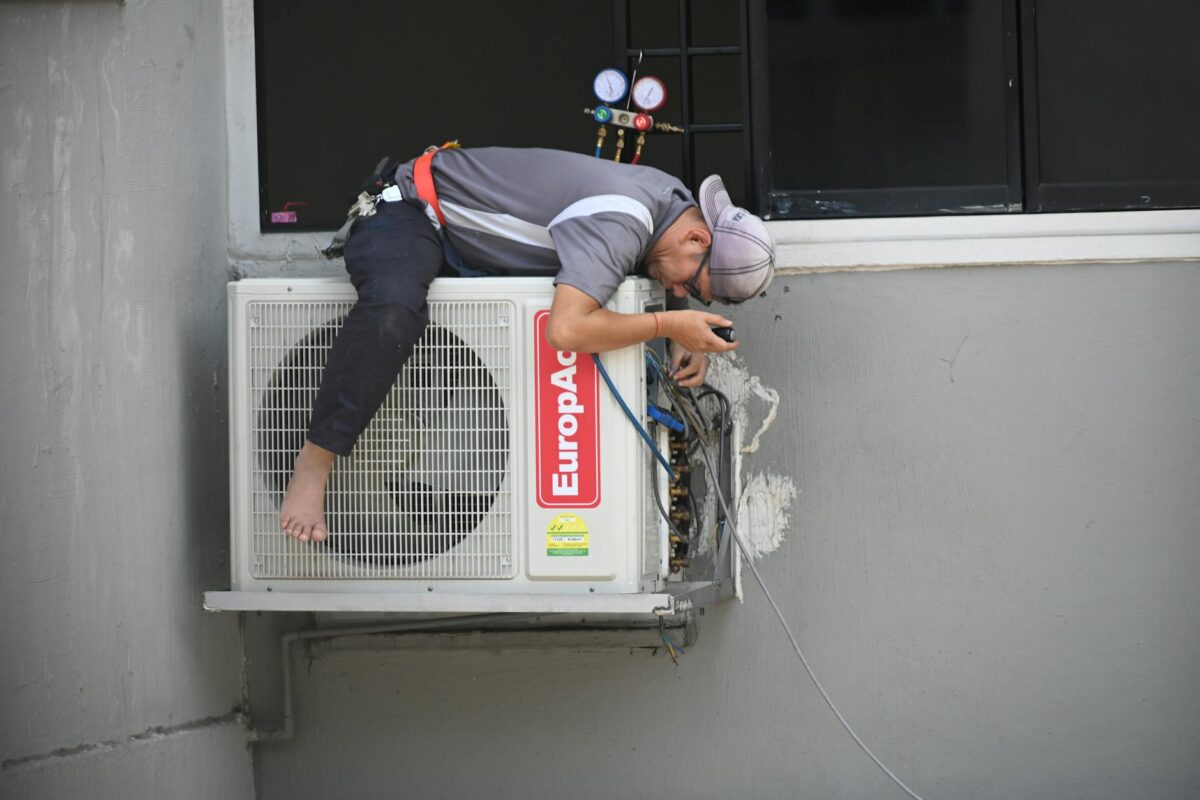
An air cooled condensing unit is a refrigeration component that uses the surrounding air to cool down and condense hot refrigerant gas back into a liquid. Think of the outdoor unit of a typical home air conditioner. A large fan blows ambient air across a series of finned coils containing the hot refrigerant, transferring the heat from the refrigerant into the atmosphere.
These units are popular because they are self contained. They don’t require any water hookups or complex plumbing, which makes installation simpler and keeps the initial cost down. This simplicity makes them a common choice for smaller applications like residential AC, walk in coolers, and businesses where water is either unavailable or expensive.
What is a Water Cooled Condensing Unit?
A water cooled condensing unit uses water instead of air as its cooling medium. In these systems, the hot refrigerant gas passes through a heat exchanger (often a shell and tube or plate type) where it transfers its heat to circulating water. This heated water is then pumped to an external device, usually a cooling tower, to release the heat.
Because water is much better at absorbing and transporting heat than air, water cooled units are incredibly efficient. This makes them the go to choice for large scale commercial and industrial applications like food processing plants, high rise buildings, and large cold storage warehouses where high capacity and energy efficiency are top priorities.
Cooling Medium and Method: Air vs. Water
The fundamental difference in the air cooled vs water cooled condensing unit debate comes down to the cooling medium and the method used to reject heat.
Cooling Medium: This is the substance that carries heat away from the refrigerant. For an air cooled system, the medium is air. For a water cooled system, it’s water. Water has far superior thermal properties; it can absorb and remove much more heat per unit of volume compared to air. In fact, air has relatively poor thermophysical properties as a coolant, which is why air cooled systems need larger surfaces and more airflow to do the same job.
Cooling Method: This describes how heat is rejected. Air cooled units use a direct or “dry” cooling method. Water cooled systems typically use an “evaporative” cooling method. The water that absorbs heat in the condenser is cooled in a cooling tower, where a small portion evaporates, dramatically cooling the rest of the water. This evaporative process is the secret to their high efficiency.
Performance in the Real World: Temperature and Stability
How a unit performs on the hottest day of the year is a critical consideration, especially for businesses in regions like Tamil Nadu or Andhra Pradesh.
Condensing Temperature: The Key to Efficiency
Condensing temperature is the temperature at which the refrigerant turns from a gas to a liquid. The lower this temperature, the less work the compressor has to do, which means lower energy consumption.
Air Cooled: The condensing temperature is directly tied to the ambient (dry bulb) air temperature. For heat to transfer effectively, the refrigerant must be significantly hotter than the air, often around 11 to 17 °C (20 to 30 °F) higher. So on a 35 °C day, the condensing temperature might be as high as 46 to 52 °C, forcing the system to work very hard.
Water Cooled: The condensing temperature is linked to the wet bulb temperature of the air, which is the lowest temperature that can be reached through evaporation. The wet bulb temperature is almost always lower than the dry bulb temperature. This allows a cooling tower to produce cool water even on a hot day, resulting in a much lower and more stable condensing temperature for the system.
Performance Stability Across Conditions
Because of their reliance on ambient air, the performance of air cooled systems can fluctuate significantly with the weather. Their cooling capacity drops and their energy use spikes on very hot days.
Water cooled units offer far more stable and consistent performance. Since they rely on the more stable wet bulb temperature, they are less affected by daily temperature swings, ensuring reliable cooling capacity when you need it most, like during peak summer heatwaves. For critical applications like pharmaceutical storage, blast freezing, or food processing, this stability is a massive advantage.
The Bottom Line: Initial Cost vs. Operating Costs
Your budget is always a key factor. Here’s how the two options stack up financially.
Upfront Investment (Initial Cost)
Generally, air cooled systems have a lower initial cost. They are simpler, packaged units that don’t require the extra equipment and complex installation that water cooled systems do.
A water cooled system requires a cooling tower, water pumps, extensive piping, and water treatment equipment, all of which add to the upfront price. The initial capital cost for a water cooled system can be 20% to 40% higher than an air cooled system of the same capacity.
Long Term Expenses (Operating Costs)
This is where water cooled systems shine. Thanks to their superior efficiency, water cooled units have significantly lower operating costs, driven primarily by lower electricity consumption. They can consume roughly half the energy of a comparable air cooled unit to produce the same amount of cooling. Over the lifespan of the equipment, these energy savings can be substantial. One study showed a 200 ton water cooled system saving about $20,000 per year in electricity, paying back its higher initial cost in just a few years.
However, water cooled systems do have other operating costs to consider, namely water consumption from the cooling tower and the cost of water treatment chemicals. For most large applications, the energy savings far outweigh these additional costs.
At F-Max Systems, we help our clients analyze these trade offs to find the most cost effective solution for their specific needs. Get a customized cost analysis for your project from F-Max Systems.
Practical Considerations: Installation, Space, and Upkeep
Beyond performance and cost, you need to consider the practical logistics of installing and maintaining your system—including the quality of PUF panels and insulated doors that determine overall insulation performance.
Installation and Space Requirements
Air Cooled: Installation is relatively simple. The unit is placed outdoors on a roof or pad, connected to power and the refrigerant lines. However, the units themselves are physically larger and require significant open space for proper airflow.
Water Cooled: Installation is more complex, requiring skilled technicians to install the condensing unit, cooling tower, pumps, and all the associated water piping. While the condensing unit itself is often more compact, the entire system requires both indoor mechanical room space and outdoor space for the cooling tower.
Maintenance Needs
Air Cooled: Maintenance is straightforward. The main task is regularly cleaning the condenser coils to remove dust and debris, which can hinder airflow and reduce efficiency (see our guide on preventive maintenance of cold rooms).
Water Cooled: Maintenance is more involved. It requires a consistent water treatment program to prevent scale, corrosion, and biological growth like algae. The cooling tower also needs periodic cleaning, and the condenser tubes may need to be brushed clean annually to maintain peak performance. While more demanding, a well maintained water cooled unit often has a longer lifespan, potentially lasting 25 years or more compared to about 15 years for an air cooled unit.
Key Factors You Can’t Ignore
A few more critical factors can influence your decision in the air cooled vs water cooled condensing unit debate.
Water Availability and Consumption
This is a non negotiable point. Water cooled systems continuously consume water through evaporation. If your facility is in an area with scarce, expensive, or unreliable water, an air cooled system is the practical choice, as it uses zero water.
Noise Levels
Air cooled units are generally louder due to the large fans needed to move massive volumes of air. Water cooled systems tend to be much quieter, as the condenser is often located indoors and the cooling tower, while it has a fan, can be placed away from noise sensitive areas.
Environmental Impact
There’s a trade off here.
Water Cooled systems are more energy efficient, which means a smaller carbon footprint from electricity generation. However, they consume significant amounts of water.
Air Cooled systems conserve water but use more electricity, leading to higher indirect greenhouse gas emissions.
Air Cooled vs Water Cooled Condensing Unit: How to Choose
The best choice depends entirely on your specific circumstances. There is no single right answer. Here are the key selection criteria to weigh:
Climate: In very hot climates, the efficiency and stability of water cooled systems are a major advantage.
Initial Budget: If upfront capital is tight, the lower initial cost of an air cooled system is attractive.
Operating Costs: For large systems with high run hours, the long term energy savings from a water cooled unit often provide the best return on investment.
Water Availability: If water is scarce or expensive, an air cooled unit is the clear winner.
Space: Consider your available indoor and outdoor space. Do you have a spot for a cooling tower or a large open area for an air cooled unit?
Maintenance Capability: Be realistic about your team’s ability to handle the water treatment and maintenance required for a water cooled system.
Making this decision requires careful consideration of all these factors. For a deeper dive into facility planning, see our cold-chain warehouse guide. Consulting with experienced refrigeration professionals can provide clarity and ensure you select a system that delivers reliable performance and value for years to come.
The team at F-Max Systems specializes in designing and manufacturing refrigeration solutions engineered for the tough conditions of South India. Reach out to us today to discuss your project and get an expert recommendation tailored to your needs.
Frequently Asked Questions
1. Which is better, an air cooled or water cooled condensing unit?
Neither is universally “better”. The best choice depends on your specific application, climate, budget, and local resources. Water cooled units are more efficient and stable in hot climates for large loads, while air cooled units are simpler, cheaper upfront, and ideal for smaller applications or where water is limited.
2. Are water cooled condensers more expensive?
Yes, water cooled systems have a higher initial cost, typically 20% to 40% more than air cooled systems. This is due to the need for additional equipment like a cooling tower, pumps, and piping. However, their lower energy consumption often makes them cheaper to run over their lifespan.
3. How much more efficient are water cooled systems?
Water cooled systems are significantly more energy efficient. They can often produce the same amount of cooling while consuming about half the energy of a comparable air cooled system.
4. Do air cooled condensing units use any water?
No, air cooled condensing units use zero water for their operation. Their independence from water is a major advantage in regions with water scarcity.
5. What is the biggest disadvantage of an air cooled condensing unit?
The biggest disadvantage is that its efficiency and cooling capacity decrease significantly as the outdoor air temperature rises. On very hot days, they have to work much harder, which increases energy consumption and can strain the equipment.
6. Can you use a water cooled unit if you don’t have a lot of water?
It is not recommended. Water cooled systems rely on a continuous supply of make up water for the cooling tower to function. In water scarce areas, an air cooled vs water cooled condensing unit comparison heavily favors the air cooled option.