TL;DR
A banana ripening chamber is an airtight, insulated room that controls temperature (15–18°C), humidity (90–95% RH), ethylene concentration (100–150 ppm for 24–48 hours), and CO2 levels (below 1%) to ripen mature-green bananas uniformly in 3–7 days. In India, FSSAI permits ethylene up to 100 ppm and bans calcium carbide outright. The difference between a mediocre chamber and a great one comes down to airflow, specifically whether conditioned air moves through the boxes or just around them.
India processes millions of tonnes of bananas annually, and the gap between “turned yellow” and “uniformly ripened with shelf life” is the ripening chamber. Whether you’re validating a vendor’s spec sheet, planning your first installation, or troubleshooting uneven color in an existing room, this banana ripening chambers guide covers the parameters, compliance requirements, and operational details that matter.
What Is a Banana Ripening Chamber?
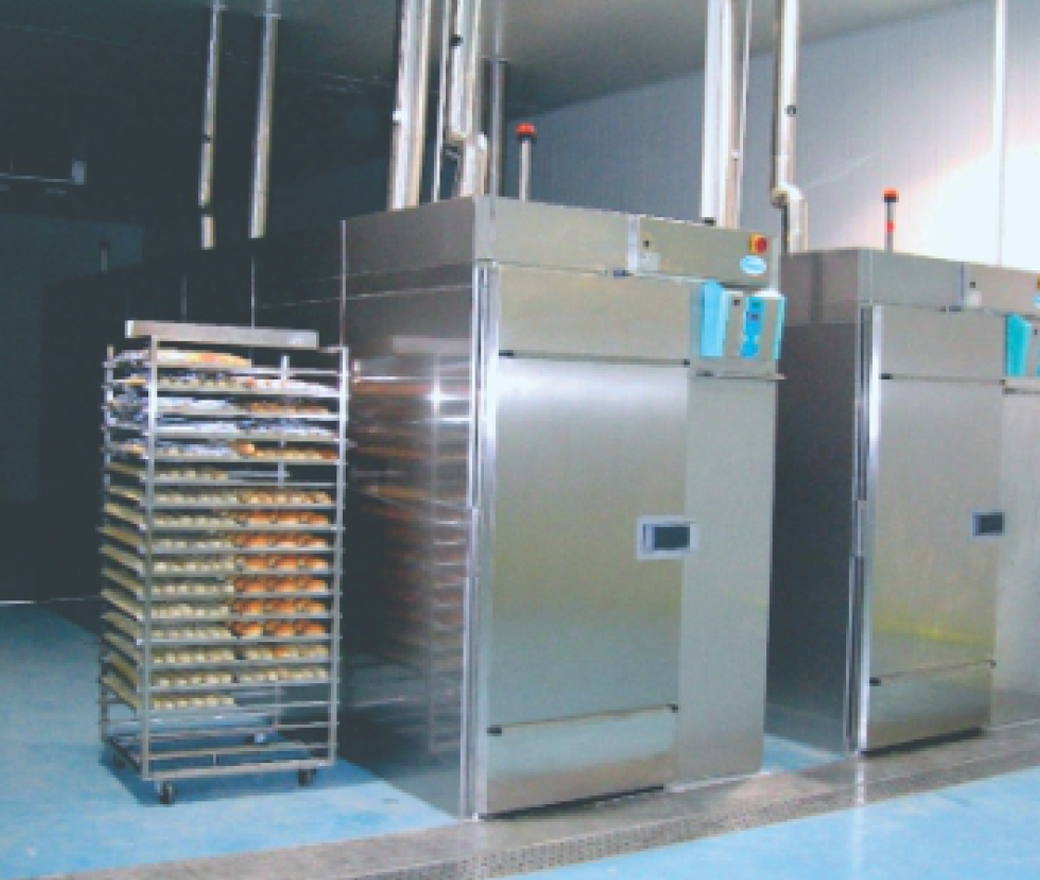
A banana ripening chamber is an airtight, insulated cold room engineered to manage four variables simultaneously: temperature, relative humidity, ethylene concentration, and CO2/ventilation. The goal is to take mature-green bananas (color stage 1) and bring them to a marketable yellow (typically color stage 4–5) in a controlled 3–7 day cycle.
The fruit already produces ethylene on its own. A ripening chamber simply introduces a precise dose of exogenous ethylene (100–150 ppm for 24–48 hours) at the right temperature (15–20°C) and humidity (90–95% RH) to trigger the climacteric ripening response uniformly across every box in the room (UC Davis Postharvest). CO2, a byproduct of respiration, is actively vented to stay below approximately 1% (10,000 ppm) so it doesn’t suppress the very ripening you’re trying to initiate.
This is fundamentally different from a general-purpose cold storage, which is designed to slow biological activity and extend storage life. A ripening chamber accelerates a specific biological process under tight control.
India Compliance at a Glance: What’s Allowed, What’s Banned, What You Must Log
Before getting into technical details, any banana ripening chambers guide for Indian operators needs to address the regulatory picture clearly.
Allowed: Ethylene gas for artificial ripening, up to 100 ppm, applied through generators, cartridges, or cylinders of 5% ethylene-in-nitrogen (“banana gas”). FSSAI’s Guidance Note on Artificial Ripening of Fruits (revised February 2020) explicitly permits this (FSSAI Guidance Note).
Banned: Calcium carbide (which releases acetylene). This is not a grey area. Carbide is prohibited under FSSAI regulations, and enforcement has increased.
Required logs and records: Temperature, RH, ethylene ppm, and CO2 ppm should be displayed and recorded. Ethylene source details and labels must be maintained. Vent schedules or controlled-atmosphere setpoints need documentation. Analyzer calibration records should be kept current. An auditor visiting your site expects to see all of these (FSSAI Guidance Note).
CO2 limits: FSSAI emphasizes keeping CO2 below 5,000 ppm for worker safety. For fruit quality, the practical ceiling is even tighter: keep it below 1% (10,000 ppm) to avoid suppressing ethylene action (UC Davis Postharvest).
NHB’s technical standards provide the baseline ripening setpoints that most state horticulture departments reference: ethylene 100–150 ppm for 24–48 hours, 15–18°C, and 90–95% RH (NHB Technical Standards). CII-FACE adds practical design and process economics on top of these (CII-FACE Standard).
The Standard Operating Window: Quick-Reference Setpoints
|
Parameter |
Target Range |
Why It Matters |
|---|---|---|
|
Pulp temperature |
15–18°C (initiation); taper after |
Too cold locks fruit; too hot “cooks” it |
|
Relative humidity |
90–95% |
Prevents peel scuffing, splitting, weight loss |
|
Ethylene |
100–150 ppm for 24–48 h |
Triggers uniform climacteric ripening |
|
CO2 |
Below ~1% (below 5,000 ppm for workers) |
Excess CO2 suppresses ethylene action and creates off-flavors |
|
Minimum safe temperature |
Never below 13°C |
Chilling injury causes dull, smoky peel 18–24 h later |
Sources: UC Davis Postharvest, NHB Technical Standards, FSSAI Guidance Note
Note the FSSAI legal limit for ethylene is 100 ppm, while global postharvest references cite 100–150 ppm. Indian operators should stay within the FSSAI ceiling and document compliance accordingly.
Room Anatomy: Why Each Component Matters
A ripening chamber isn’t just a cold room with gas. Each component serves a specific function within the four-lever framework (temperature, humidity, ethylene, ventilation). Understanding what each part does helps you evaluate vendor proposals and spot cost-cutting that will hurt fruit quality.
Airtight, Insulated Enclosure
The shell needs to hold temperature, trap ethylene during the initiation phase, and prevent uncontrolled air exchange. This means insulated panels (typically PUF, 80–120 mm thickness) with gasketed, sealed doors.
Airtightness isn’t optional. Practitioners on ripening forums consistently identify air leaks as the single most common reason ethylene treatment fails. If the room leaks, you’re dosing gas into the atmosphere instead of into your fruit (Catalytic Generators). PUF panels with cam-lock joints create the tight envelope needed, and the quality of panel-to-panel seals matters as much as the insulation R-value itself. For a deeper understanding of insulation physics, the sandwich panel insulation properties guide covers the technical details.
CII-FACE’s analysis shows that near-cubic room geometry reduces exposed surface area by roughly 19% compared to elongated rectangular rooms at the same volume, which directly reduces heat leakage, capital cost, and energy consumption (CII-FACE Standard). Something to consider during design.
Refrigeration and Heating
The refrigeration system must hold pulp temperature at 15–18°C during initiation, then taper it down 0.5–1°C per day during the finishing phase. In Indian conditions, where ambient temperatures regularly exceed 35°C, the cooling load is substantial.
Equally important: the system must avoid creating cold spots below 13°C anywhere in the room. Even a few hours of chilling can cause latent injury that shows up as dull, smoky peel 18–24 hours later (UC Davis Postharvest). High-ambient refrigeration units designed for Indian conditions need to balance cooling capacity with temperature uniformity.
Some cycles also require gentle heating during initial warm-up if fruit arrives colder than the target initiation temperature.
Humidification
Maintaining 90–95% RH prevents peel damage and reduces weight loss. In many installations, the evaporator coil itself pulls moisture out of the air, so active humidification (foggers, spray systems) may be needed to compensate. Low humidity causes scuffing and splitting; high humidity without good airflow promotes mold.
Airflow and Pressurization
This is the component that separates adequate chambers from excellent ones.
In a pressurized room, fans push conditioned air through a plenum (often using air bags or “locksocks”) that forces it through the vent holes in each box, not just around the pallets. This delivers uniform temperature, ethylene, and humidity to every hand of bananas in the room.
In non-pressurized rooms, operators rely on cross-stacking (alternating box orientation on pallets) to create air channels. It helps, but it’s less uniform and more labor-intensive (Catalytic Generators).
The contrast is similar to how blast freezers use forced air to achieve rapid, uniform heat removal, though the temperature targets and purposes are very different.
Ethylene Dosing System
Three common India-compliant options:
-
Ethylene generators that catalytically convert ethanol to ethylene
-
Ethylene cartridges (single-use, measured dose)
-
Cylinder gas (5% ethylene in nitrogen, “banana gas”)
Whichever method you choose, the gas must disperse evenly throughout the load. Concentrated pockets near the source and low concentrations at the far wall produce uneven ripening (Bihar Horticulture Guideline). The circulation fans and pressurization system do the actual work of distribution.
Automated systems with ethylene analyzers and centralized cycle controllers reduce operator error and improve batch-to-batch consistency.
CO2 Monitoring and Exhaust
As bananas ripen, they produce CO2. If it accumulates above roughly 1%, it actively suppresses the ethylene response you’re paying to create. Several practitioner guides stress that keeping CO2 under control is as important as dosing ethylene correctly. Venting cadence and sensors pay for themselves in color uniformity and flavor quality (UC Davis Postharvest).
Install calibrated CO2 sensors, automate exhaust/inlet dampers where budget allows, and document readings in your logs.
Sizing and Airflow: The Numbers That Matter
Room sizing and airflow are where many first-time operators make costly mistakes. This section of the banana ripening chambers guide translates standards into operator-ready heuristics.
Volume Per Capacity
A practical public-sector rule of thumb used by Indian state horticulture departments: allocate approximately 11 m³ of chamber volume per metric tonne of banana capacity (Bihar Horticulture Guideline). This ensures adequate space for air circulation and safe gas distribution. Rooms that are packed too tightly restrict airflow and concentrate CO2.
NHB’s technical standards include layout diagrams for 5–30 MT rooms with specific sensor placement recommendations (NHB Technical Standards).
Airflow Targets
Through the fruit, not around it. This principle drives every airflow calculation.
-
State guidance: 2,000 m³/h per MT of bananas as a coarse-check minimum (Bihar Horticulture Guideline)
-
Practitioner target (from UC Davis): 0.3 cfm per pound of bananas (UC Davis Ask-the-Experts)
These are starting points. The real validation comes from measuring outcomes, not just fan specs.
The “Measure What Matters” Tip
UC Davis postharvest experts advise against chasing a universal pressure number for ripening rooms. Instead, they recommend a more practical approach: aim for a pulp temperature spread of 1°F (about 0.5°C) or less near peak respiration. Once you achieve that uniformity, note the pressure drop across your pallets that produced it for your specific box type, liner, and vent geometry. That becomes your reference (UC Davis Ask-the-Experts).
This is high-signal advice. A room with perfect fan specs but misaligned box vents or plastic liners blocking airflow will still produce uneven fruit. Measure pulp temperatures at multiple points in the load. The thermometer tells the truth.
Venting Cadence
After the first 24 hours of ethylene exposure, vent the room every approximately 12 hours, or use continuous low-rate flow-through ventilation to keep CO2 in check. Automated sensor-based exhaust is preferred over manual venting, both for consistency and for worker safety compliance (Catalytic Generators).
The Ripening Cycle: Day-by-Day Checkpoints
The total cycle runs 3.5–8 days depending on fruit maturity, box type, and target color for dispatch (CII-FACE Standard). Here’s a typical sequence for a 4–5 day cycle targeting color stage 4–5.
Day 0: Receiving and Stabilization
-
Inspect incoming fruit for maturity (must be mature-green, not immature)
-
Load pallets with proper spacing for airflow; align box vents if using pressurized rooms
-
Bring pulp temperature to the initiation setpoint (15–18°C)
-
Seal the room and verify airtightness
Day 1: Ethylene Initiation
-
Dose ethylene to 100–150 ppm (stay within FSSAI’s 100 ppm legal ceiling for Indian operations)
-
Hold pulp temperature at 15–18°C
-
Maintain RH at 90–95%
-
Monitor CO2; it will start rising as fruit responds
Day 1–2: Active Gassing Period (24–48 Hours)
-
Maintain ethylene concentration
-
After the first 24 hours, begin venting every ~12 hours (or activate flow-through ventilation)
-
Keep CO2 below 1%
-
Check pulp temperatures at multiple points to verify uniformity
Day 2–3: Post-Gassing Transition
-
Stop ethylene supply; ventilate the room
-
Begin gradually stepping down pulp temperature (0.5–1°C per day)
-
Continue CO2 monitoring and venting
-
Color should be progressing from stage 2 toward stage 3
Day 3–5: Finishing and Dispatch Prep
-
Continue temperature taper
-
Monitor color progression toward target (usually stage 4–5 for dispatch)
-
RH remains at 90–95%
-
Verify pulp temperature spread is within 1°F across the load
-
Document final color, pulp temperature, and any observations
The cycle can be stretched to 7–8 days for slower, gentler ripening (lower temperature, longer taper) or compressed to 3.5 days for urgent market demand with slightly higher initiation temperatures. Each approach has trade-offs in shelf life and peel quality.
Safety Envelope: What Operators Need to Know
Ethylene Flammability
Ethylene’s lower explosive limit (LEL) is approximately 2.75% by volume, which is 27,500 ppm (OSHA Chemical Data). Ripening rooms operate at 100–150 ppm. That’s roughly 200 times below the flammability threshold. The safety margin is enormous when the room is operated correctly.
Still, basic precautions apply: no open flames or ignition sources inside or near the room, proper cylinder/generator handling per SOPs, and emergency ventilation capability.
Worker CO2 Exposure
The OSHA/NIOSH 8-hour time-weighted average (TWA) limit for CO2 is 5,000 ppm (OSHA Chemical Data). This is also the threshold FSSAI references. Before any worker enters a ripening room (for inspection, restacking, or maintenance), verify CO2 levels are safe. Automated ventilation with sensor interlocks is the most reliable approach.
General Safety Practices
-
Calibrate ethylene and CO2 analyzers on a documented schedule
-
Post operating procedures and emergency contacts at the room entrance
-
Train every operator, not just supervisors
-
Log all safety-relevant readings
Adopting a documented preventive maintenance routine for the refrigeration, ventilation, and sensing systems reduces both safety incidents and costly fruit losses.
Troubleshooting: Common Problems, Causes, and Fixes
|
Symptom |
Likely Cause |
Fix |
|---|---|---|
|
Uneven ripening across pallets |
Insufficient through-box airflow, blocked vents, plastic liners restricting air |
Verify box vent percentage and alignment (aim for 3–5% vent area); tune fan speed or pressurization sleeves; validate with ≤1°F pulp temperature spread |
|
Green-nose or green-tip on otherwise yellow fruit |
CO2 too high during early phase, or cold corners in the room |
Increase or automate venting; check for cold spots near evaporator; confirm RH is 90–95% |
|
Peel splitting or “cooked” appearance |
Over-temperature (pulp above 20°C) or low humidity |
Reduce room temperature; verify RH; check for heat from motors or sunlight on panels |
|
Fruit won’t start ripening (“locked” fruit) |
Immature harvest, or fruit suffered chilling injury below 13°C during transport/storage |
Ethylene exposure won’t fix immaturity or CI damage; trace the supply chain and address upstream |
|
Dull, smoky peel that appears 18–24 h after treatment |
Chilling injury from cold spots or transport below 13°C |
Map room temperatures to find cold zones; adjust evaporator placement or airflow baffles; verify transit temperature records |
Sources: UC Davis Postharvest, Catalytic Generators
The underlying theme in nearly every failure mode is airflow. A pressurized room with properly vented boxes, calibrated sensors, and automated controls eliminates most of these problems before they start.
Vendor Evaluation: What Good Looks Like
If you’re using this banana ripening chambers guide as part of your buying process, here’s what to check in a vendor proposal:
-
Airtightness specification: Ask for the method of panel joining, door gasket type, and leak testing procedure
-
Airflow design: Pressurized plenum with locksocks or air bags, not just ceiling-mounted fans
-
Refrigeration sizing: Designed for your specific ambient conditions (critical in South India where ambient regularly exceeds 40°C)
-
Ethylene system: Clear dosing method, analyzer included, and automated cycle control preferred
-
CO2 management: Sensors, automated dampers, and documented venting schedules
-
Controls and logging: Centralized controller that records temperature, RH, ethylene, and CO2 with exportable data for compliance
-
Panel quality: PUF density, thickness, and cam-lock joint integrity
-
After-sales support: Calibration services, spare parts availability, and response time commitment
A vendor who can explain how their design addresses each of the four levers (temperature, humidity, ethylene, ventilation) with specific numbers for your capacity and climate is worth a serious conversation.
If you’re evaluating options for banana ripening chambers with automated ethylene control, F-Max Systems’ ripening chamber solutions are worth reviewing, particularly for operations in South India where high-ambient conditions demand locally engineered refrigeration. The vendor selection checklist for cold storage units also provides a transferable decision framework.
Standards and Further Reading
For operators who want to go deeper, these are the primary references used across this guide:
-
NHB Technical Standards and Protocol for Fruit Ripening Chamber in India covers setpoints, layout diagrams, sensor placement, and documentation requirements for 5–30 MT rooms (NHB Technical Standards)
-
FSSAI Guidance Note on Artificial Ripening of Fruits (revised 2020) is the definitive India compliance document (FSSAI Guidance Note)
-
CII-FACE Ripening Chamber Standard provides design economics, geometry optimization, and day-by-day process guidance (CII-FACE Standard)
-
UC Davis Postharvest Technology Center is the global reference for banana ripening science and applied postharvest practice (UC Davis Banana Facts)
For teams adding ripening capacity to an existing cold-chain operation, the complete guide to cold-chain warehouse technology and operations provides useful context on how ripening fits into the broader infrastructure.
Frequently Asked Questions
Ethylene is a natural plant hormone that every banana produces on its own as it ripens. Applying exogenous ethylene simply triggers the same biological process in a controlled, uniform way. FSSAI explicitly permits ethylene for fruit ripening up to 100 ppm. What’s banned is calcium carbide, which releases acetylene and can contain harmful contaminants like arsenic and phosphorus (FSSAI Guidance Note).
Typically 3.5 to 8 days, depending on fruit maturity at arrival, target color stage for dispatch, and the temperature profile used. A faster cycle (3.5–4 days) uses slightly higher temperatures but may reduce shelf life. A slower, gentler taper (6–8 days) often produces better peel quality and longer retail life (CII-FACE Standard).
As a starting heuristic, allocate about 11 m³ of chamber volume per metric tonne of banana capacity, with airflow of at least 2,000 m³/h per MT (Bihar Horticulture Guideline). NHB provides detailed layout tables for 5–30 MT rooms. Actual sizing should account for your specific box dimensions, stacking pattern, and pallet configuration.
In theory, yes, but the modifications are significant. A standard cold room lacks airtightness for gas retention, pressurized airflow for uniform distribution, ethylene dosing and monitoring equipment, and automated venting for CO2 control. Converting often costs nearly as much as building purpose-built, and compromises on airtightness are difficult to fix after the fact. If considering this route, a cold room installation guide can help you assess the gap between your current setup and what’s required.
No, when operated correctly. Ripening rooms use 100–150 ppm of ethylene. Ethylene’s lower explosive limit is approximately 27,500 ppm, roughly 200 times higher than operating concentration (OSHA). Standard precautions (no ignition sources, proper cylinder handling, emergency ventilation) are sufficient.
The best validation method is measuring pulp temperature at multiple points in the load during peak respiration. If the spread is 1°F (0.5°C) or less, your airflow is doing its job. A target of 0.3 cfm per pound of bananas provides a useful starting point for fan sizing (UC Davis Ask-the-Experts).
At minimum: continuous or batch-logged temperature, RH, ethylene ppm, and CO2 ppm readings; ethylene source details and labels; ventilation schedules; and analyzer calibration records. Display current parameters visibly on or near the chamber. Detailed, timestamped logs demonstrate due diligence during audits (FSSAI Guidance Note).
Green tips (or green nose) usually indicate that CO2 was too high during the early phase of ripening, which partially suppressed ethylene action in the most resistant tissue. It can also result from cold corners in the room. The fix is more aggressive or automated venting and elimination of temperature dead zones near the evaporator (UC Davis Postharvest).
Planning a ripening chamber installation or upgrading an existing setup? Get in touch with F-Max Systems to discuss engineering specifications, compliance requirements, and capacity planning for your operation.
🌐 Get Online Quote at www.fmax.in/contact-us
📞 Call +91 94896 08022 to speak with our team.