TLDR
Banana ripening technologies are controlled post-harvest systems that turn mature-green bananas into market-ready yellow fruit by managing five variables together: temperature, ethylene, airflow, CO₂, and humidity. Commercial ripening typically uses 100 to 150 ppm ethylene for 24 to 48 hours at 15 to 20°C and 90 to 95% relative humidity inside insulated, airtight chambers. India’s FSSAI permits ethylene as a safe ripening agent while banning calcium carbide outright. The right ripening chamber, matched to your fruit variety, batch size, and cycle needs, is what separates consistent dispatch-ready fruit from unpredictable market arrivals.
What Are Banana Ripening Technologies?
Banana ripening technologies are controlled post-harvest systems used to turn mature-green bananas into market-ready yellow fruit by managing ethylene exposure, temperature, humidity, airflow, CO₂ ventilation, and ripening time.
Bananas are harvested mature-green and ripened after arrival at destination markets because fruit ripened on the plant can split and develop poor texture. UC Davis notes that commercial banana ripening is usually performed in insulated ripening rooms using ethylene under controlled temperature and humidity.
The goal is not just faster ripening. The goal is uniform color, sweetness, texture, shelf life, safety, and predictable dispatch timing. A banana ripening chamber is not a “hot room with gas.” It is a controlled environment where ethylene dosing, refrigeration, air movement, humidity, CO₂ ventilation, loading pattern, and fruit maturity work together.
When any one of these variables goes wrong, the result can be green-ripe fruit, starchy yellow bananas, uneven cartons, excessive spotting, or safety risk. Understanding how banana ripening technologies actually work is the first step toward avoiding these problems.
If you are evaluating banana ripening chambers for a commercial operation, this guide covers the science, the equipment, the compliance rules, and the practical questions worth asking before you buy.
Why Bananas Are Ripened After Harvest, Not on the Plant
This is the question most people skip. Why not let bananas ripen naturally on the tree?
The answer is practical. Tree-ripened bananas split, bruise easily, and have inconsistent texture. They cannot survive the days or weeks of transport between farm and market. So the global banana supply chain harvests fruit at a specific maturity stage (mature-green) and then triggers ripening in a controlled environment near the destination.
India is the world’s largest banana producer, with approximately 35,246 thousand tonnes in 2023-24. South Indian states alone, including Andhra Pradesh (5,831 thousand tonnes), Tamil Nadu (4,720 thousand tonnes), and Karnataka (3,122 thousand tonnes), contribute about 13.67 million tonnes. That volume of fruit moving through supply chains makes professional ripening infrastructure commercially necessary.
UC Davis explains that more mature fruit gives better quality when ripe. Immature-green bananas may fail to ripen properly even with ethylene exposure. This means ripening technology starts working well before the chamber, at harvest, by selecting fruit that has actually reached physiological maturity.
The TEACH Framework: Five Controls Behind Good Banana Ripening
Think of banana ripening technologies through five controls that must work together. Get one wrong, and you get uneven, unsafe, or commercially useless fruit.
T: Temperature
Ripening speed and quality depend on fruit temperature, not just room air temperature. UC Davis gives 13 to 14°C for storage and transport, and 15 to 20°C for ripening. FSSAI’s banana guidance lists 15 to 18°C as the ripening range.
Below about 13°C, bananas can suffer chilling injury: dull, smoky peel color, browning, and failure to ripen properly. Above 30°C, the pulp can ripen while the peel stays green, creating what the industry calls “green-ripe” fruit.
E: Ethylene
Ethylene is a natural plant hormone that triggers ripening in climacteric fruits like bananas. UC Davis recommends 100 to 150 ppm ethylene for 24 to 48 hours at 15 to 20°C and 90 to 95% RH. FSSAI recognizes ethylene as safe at up to 100 ppm depending on crop, variety, and maturity.
A: Airflow
Forced-air or pressurized airflow helps equalize temperature and ethylene concentration across cartons and pallets. Without adequate airflow, boxes in the center of the room may not reach target temperature or ethylene levels, causing uneven ripening. UC Davis states that forced-air systems provide more uniform cooling, warming, and ethylene concentration.
C: CO₂ Control
Bananas release carbon dioxide during respiration. CO₂ buildup delays ethylene action and can cause the peel and pulp to ripen out of sync. UC Davis recommends keeping CO₂ below 1% because higher concentrations can slow peel color change more than pulp ripening. FSSAI recommends keeping CO₂ below 5,000 ppm in ripening chambers.
H: Humidity
Bananas are commonly ripened at 90 to 95% relative humidity. Low humidity increases dehydration and scarring risk. A humidifier is not a comfort accessory in a ripening chamber; it prevents weight loss and surface damage during high-airflow ripening.
Banana Ripening Technologies Glossary
This glossary covers the terms that matter when evaluating, operating, or troubleshooting banana ripening systems. Terms are grouped by category rather than alphabetically, so related concepts sit together.
Fruit Biology and Ripening Basics
Climacteric fruit. A fruit that continues ripening after harvest and shows a rise in respiration and ethylene production during ripening. Banana is climacteric, which is why controlled ethylene exposure can trigger ripening after harvest.
Mature-green banana. A banana harvested after physiological maturity but before visible yellow ripening. Ethylene cannot fix immature fruit. Immature-green bananas may fail to ripen properly even with treatment, while mature-green fruit responds reliably and develops better eating quality.
Green-life. The period during which bananas remain green before ripening begins. Cold storage, controlled atmosphere, and ethylene scrubbers extend green-life before the planned ripening cycle. UC Davis notes that mature-green bananas can last 2 to 4 weeks in air and 4 to 6 weeks in controlled atmosphere at 14°C.
Ripening cycle. The planned sequence from loading green bananas into a chamber to dispatching them at the target color stage. A commercial cycle includes temperature stabilization, ethylene exposure, CO₂ ventilation, continued color development, and post-ripening holding. A study published in the Journal of Food Science and Technology found that Grand Naine bananas treated with 100 ppm ethylene achieved adequate ripening after 4 days with uniform color, pleasant flavor, and desirable firmness.
Color stage (banana color index). A visual scale describing banana peel color from green to yellow to brown-flecked. Color is useful but incomplete. UC Davis explains that peel color and pulp ripeness can go out of sync due to temperature extremes, CO₂, or 1-MCP exposure. A yellow banana can still taste starchy if pulp ripening lagged behind peel color change.
Ethylene and Ripening Agents
Ethylene. A natural plant hormone (C₂H₄) used commercially to trigger ripening in bananas and other climacteric fruits. It is not a synthetic chemical added to food. Bananas produce ethylene on their own during ripening; commercial systems simply introduce it at the right time and concentration for uniform results.
Ethylene ppm. Parts per million measurement of ethylene concentration in the ripening room. Too little may not trigger uniform ripening. Too much does not help and creates safety risk. A typical banana ripening dose of around 100 ppm is about 0.01% ethylene, far below the explosive range, but controlled dosing still matters.
Ethylene generator. A device that produces controlled ethylene gas inside or for a ripening chamber, often by converting a ripening liquid or ethanol-based mixture. Generators are useful for sequential ripening and multi-chamber operations. They provide a controlled, portable supply without the logistics of large gas cylinders.
Ethylene cylinder dosing. Ripening method where ethylene gas is introduced from a compressed cylinder through a regulator or dosing system. Useful for larger commercial chambers when paired with analyzers, regulators, leak safety systems, and trained operators. FSSAI allows ethylene gas cylinders as a source and requires monitoring of temperature, RH, ethylene concentration, and CO₂.
Ethylene aerosol (ripening can). A compressed ethylene source used in a closed chamber according to label directions. Suitable for smaller setups where proper chambers exist. FSSAI states the gas should be sprayed into open chamber space, not directly on fruits.
Ethephon. A chemical compound that releases ethylene under suitable conditions. FSSAI permits certain ethephon-based sources under defined protocols, but restricts direct contact between the ethylene-releasing agent and the fruit.
Ethephon sachet. A sachet-based ethylene-releasing system used in cartons or temporary structures where full ripening chambers are unavailable. FSSAI requires that sachets generate ethylene gas only, must not contain calcium carbide or acetylene gas, and should be removed after treatment.
Calcium carbide. A banned ripening agent that releases acetylene gas when it reacts with moisture. FSSAI prohibits calcium carbide for artificial fruit ripening and warns that it can leave harmful residues including arsenic and phosphorus. This is the unsafe practice that gives “artificial ripening” a bad reputation.
Acetylene. A gas released from calcium carbide that can mimic some ripening effects but is not the approved method for fruit ripening in India. Ethylene ripening under controlled conditions is fundamentally different from calcium carbide ripening.
Chamber and Room Technologies
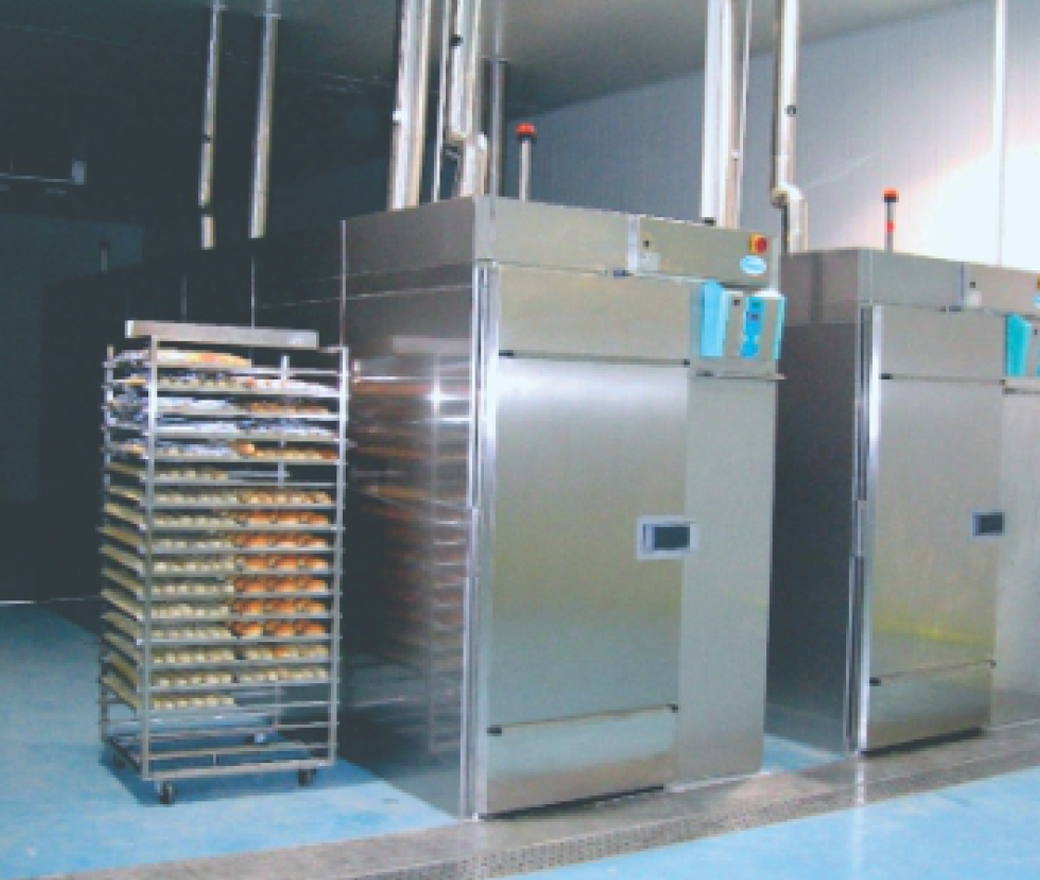
Ripening chamber. An insulated, controlled room used to ripen climacteric fruits by managing ethylene, temperature, humidity, airflow, ventilation, and time. FSSAI lists requirements including an airtight room, temperature regulation, humidity regulation, air circulation and ventilation, ethylene generation or injection, power supply, and display of temperature, RH, ethylene, and CO₂ concentration.
Banana ripening chamber. A ripening chamber designed specifically for bananas, usually sized for crates, boxes, pallets, or multi-tier stacking. Banana chambers must handle respiration heat and maintain uniform pulp temperature across the entire load. Refrigeration and airflow are therefore as important as ethylene dosing. The insulation quality of the room itself, typically built from PUF panels designed for thermal stability, directly affects energy use and temperature uniformity.
Cold room vs. ripening room. A cold room primarily slows deterioration by holding produce at a target temperature. A ripening room actively triggers and manages ripening. Since UC Davis lists different temperatures for storage (13 to 14°C) and ripening (15 to 20°C), a cold storage facility and a ripening chamber serve different operational purposes, even if both use insulated rooms and refrigeration.
PUF panels (polyurethane foam panels). Insulated sandwich panels used to build cold rooms and ripening chambers. PUF panels help maintain chamber temperature and reduce refrigeration load. Panel thickness varies depending on the target temperature and ambient conditions. For chambers operating in South India’s high-ambient environments, panel quality and cam-lock joint integrity matter more than they might in cooler climates.
Airtightness. The chamber’s ability to limit leakage of ethylene, humidity, and conditioned air. Poor airtightness wastes gas, increases energy costs, and creates uneven conditions. Catalytic Generators, a leading ripening equipment manufacturer, states that rooms must be as airtight as possible to prevent excessive ethylene leakage.
Temperature and Refrigeration Terms
Pulp temperature. The temperature inside the banana pulp. This is the number that actually controls ripening speed and quality. Catalytic Generators warns that ripening chart temperatures are pulp temperatures, not room air temperatures. An operator who sets the room to 16°C but loads warm field fruit may still have pulp temperatures well above the target for hours.
Room setpoint. The temperature programmed into the chamber controller. The setpoint is not automatically the fruit temperature. Operators should verify pulp temperature with probes or manual checks, especially after loading fresh batches.
Pull-down time. The time required to bring fruit and room temperature down to the target range. Slow pull-down increases variation between cartons and can cause inconsistent ripening. FSSAI recommends that fruits should be transferred to the ripening chamber once ripening temperature is attained after pre-cooling. The refrigeration system’s capacity directly determines how fast pull-down happens.
Chilling injury. Low-temperature damage that causes dull or smoky peel color, browning, and failure to ripen. UC Davis says chilling injury can occur below 13°C depending on cultivar, maturity, and exposure duration.
Heat injury (cooking). Damage from excessive ripening temperature. Fruit temperatures above 30°C can cause pulp to ripen while peel remains green, producing green-ripe bananas that confuse buyers and retailers.
Airflow, Ventilation, and CO₂ Terms
Forced-air ripening. A chamber design where conditioned air is actively circulated to equalize temperature and gas concentration across the room. UC Davis confirms forced-air systems assure more uniform cooling, warming, and ethylene concentration.
Pressurized ripening room. A ripening room that forces conditioned air through banana boxes or pallets, rather than just around them. Catalytic Generators calls this a major advancement because the system passes air through pallets before returning to the evaporator. This reduces the need for labor-intensive air-stacking and improves uniformity.
Air-stacking (cross-stacking). A stacking method that offsets cartons to create air channels in non-pressurized rooms. Pressurized rooms eliminate most of this need. Non-pressurized rooms must rely on careful stacking to avoid dead zones where air, and ethylene, cannot reach.
High-CFM evaporator. An evaporator designed to move high air volume through the chamber. Multiple Indian chamber manufacturers list high-CFM evaporators as a core feature for achieving uniform airflow.
Ventilation. Controlled exchange of chamber air to remove CO₂ and excess ethylene and bring in fresh air. Essential after the initial ethylene exposure phase when respiration ramps up and CO₂ accumulates.
CO₂ buildup. Accumulation of carbon dioxide from fruit respiration during ripening. CO₂ delays ethylene action and can cause peel and pulp to develop at different rates. UC Davis explains that CO₂ above 5% can slow peel color change more than pulp ripening.
CO₂ scrubber. A device or system that actively removes CO₂ from the chamber atmosphere. FSSAI notes that CO₂ below 5,000 ppm can be maintained through scrubbing devices or periodic air exchange.
CO₂ analyzer and ethylene analyzer. Instruments that measure gas concentrations inside the ripening room. These matter because excess CO₂ or insufficient ethylene creates hidden quality problems before visual defects become obvious.
Humidity and Water Management
Relative humidity (RH). The amount of moisture in air relative to the maximum it can hold at that temperature. UC Davis and FSSAI both target 90 to 95% RH for banana ripening.
Humidifier. Equipment used to maintain RH inside the chamber. Catalytic Generators recommends using humidifiers when humidity is too low, but warns that wetting floors instead can create sanitation issues.
Condensation. Water droplets forming when moist air contacts cold surfaces. Uncontrolled condensation supports microbial growth and creates slippery conditions. Chamber design should minimize condensation through proper insulation and airflow management.
Automation and Controls
PLC controller. A programmable logic controller that automates temperature, humidity, ethylene dosing, ventilation, alarms, and cycle timing. Automation reduces operator error, especially in facilities running multiple rooms simultaneously.
Centralized ripening controller. A system that controls multiple rooms or a gas-cylinder bank from a central interface. This is where automation becomes a genuine operational advantage: one trained operator can manage several chambers through programmed cycles rather than manually adjusting each room.
Gas leakage monitoring. Safety systems that detect gas leakage around cylinders, dosing lines, or chambers. FSSAI recommends gas leakage monitoring in commercial ripening chambers.
BMS compatibility. The ability to connect chamber controls to a building management system for monitoring and reporting. Useful for larger cold-chain operations that need centralized oversight.
Ripening Delay and Logistics Technologies
Not all banana ripening technologies are about triggering ripening. Some exist to delay it.
Controlled atmosphere (CA). Atmosphere-controlled storage that adjusts oxygen and CO₂ to slow respiration. UC Davis lists optimum CA for bananas as 2 to 5% O₂ and 2 to 5% CO₂, extending green-life to 4 to 6 weeks at 14°C compared with 2 to 4 weeks in regular air.
Modified atmosphere packaging (MAP). Packaging that changes gas composition around produce through film permeability and fruit respiration. ICAR-NRCB reports that modified atmosphere packaging and ethylene scrubbers can prolong green-life depending on cultivar and conditions.
Ethylene scrubber (scavenger). A material or system that removes ethylene to delay ripening and extend green-life. This is the opposite of ethylene dosing. It is useful during storage and transport when the goal is to keep bananas green until the planned ripening window. IIT Roorkee has developed mineral-based ethylene scavenger technology using sillimanite and bentonite, claiming up to 86% efficacy in controlling ethylene levels.
1-MCP (1-methylcyclopropene). A compound that blocks ethylene action and slows ripening. UC Davis notes that prior exposure to 1-MCP can cause peel color and pulp ripeness to diverge during later ripening, so operators need to account for it.
In-transit ripening. Ripening technology used inside reefer containers during transport. Maersk’s StarRipe system uses smart algorithms to manage banana ripening inside containers so customers can choose target ripeness on arrival. This is emerging technology more relevant to international shipping than to regional Indian distribution, where temperature-controlled reefer transport focuses on maintaining conditions rather than actively ripening en route.
Types of Banana Ripening Systems Compared
Different banana ripening technologies suit different scales, budgets, and operational realities. Here is how the main options compare.
Manual ethylene cylinder dosing works for small to mid-size chambers with trained operators. An operator introduces ethylene from a cylinder, verifies concentration with an analyzer, and manages the cycle manually. Lower automation cost, but the outcome depends entirely on operator skill. FSSAI allows cylinders under its standard operating procedures.
Ethylene generators produce ethylene in controlled quantity from a ripening concentrate. They suit sequential ripening and multi-chamber operations that want to avoid handling large gas cylinders. Portable options are available. They still need correct sizing and maintenance.
Aerosol or can systems release a measured amount of ethylene into a closed chamber. Simple and accessible for smaller setups. Less precise than automated dosing. Must match room volume, and FSSAI requires spraying into open space, not directly on fruit.
Ethephon sachets release ethylene inside boxes or crates. Useful for decentralized situations where chambers are unavailable. But control is limited, and the market has seen fake sachets and calcium carbide contamination. FSSAI requires that sachets generate only ethylene and contain no calcium carbide.
Practitioners on LinkedIn have noted that centralized ethylene chambers can create cost and operating challenges for smaller farmers and retailers. One post argued that these frictions sometimes push operators toward unsafe alternatives. The takeaway: compliance needs to be operationally easy, not just technically possible.
Fully automated ripening chambers control temperature, humidity, ethylene, ventilation, cycle timing, and alarms with minimal manual intervention. They suit commercial traders, exporters, modern retail suppliers, and farmer producer organizations. Higher upfront investment, but they deliver repeatability, logging, and lower operator error.
Pressurized ripening rooms force conditioned air through cartons and pallets rather than just around them. This is a significant quality upgrade for palletized operations. Better airflow through the load means better uniformity with less manual stacking work.
Controlled atmosphere and ethylene scrubbers operate on the other side of the equation. They delay ripening during transport and storage, extending green-life until the planned ethylene treatment.
How a Typical Banana Ripening Cycle Works
Understanding the workflow helps buyers see where equipment decisions actually matter.
Step 1: Harvest mature-green fruit. Maturity at harvest determines everything downstream. Immature fruit will not ripen properly regardless of the technology used.
Step 2: Sort, grade, and pack in ventilated crates or cartons. FSSAI recommends ventilated plastic crates or stackable fruit boxes.
Step 3: Pre-cool or stabilize fruit near ripening temperature. FSSAI says fruit should be transferred to the ripening chamber once the appropriate temperature is attained after pre-cooling.
Step 4: Load without blocking airflow. FSSAI requires that fruit should not occupy more than 75% of chamber or crate volume during treatment. Overloading is one of the most common causes of uneven ripening.
Step 5: Reach target pulp temperature. Track pulp temperature, not just room air temperature. Room air can reach 16°C while the fruit inside a loaded pallet is still at 22°C.
Step 6: Dose ethylene. Common targets are 100 to 150 ppm for 24 to 48 hours per UC Davis. FSSAI permits controlled ethylene up to 100 ppm depending on crop, variety, and maturity.
Step 7: Maintain humidity and airflow. Target 90 to 95% RH with forced-air circulation for uniform conditions across the load.
Step 8: Vent or scrub CO₂. CO₂ builds during the climacteric phase and must be kept low. Ventilation after the initial ethylene exposure is critical.
Step 9: Continue ripening to target color stage. Fruit may continue color development for 3 to 4 additional days after the initial ethylene phase, depending on initial condition and target ripeness.
Step 10: Dispatch or hold. UC Davis lists 13 to 14°C for banana storage and transport after ripening. The quality of the cold-chain from this point, including preventive maintenance of controlled rooms along the way, determines how much shelf life reaches the retail shelf.
Ethylene Ripening vs. Calcium Carbide: What Indian Buyers Must Know
This distinction matters because confusion between the two damages trust in the entire banana supply chain. Practitioners on Reddit and LinkedIn frequently blur ethylene, “chemicals,” calcium carbide, and natural ripening into one undifferentiated concern. Some consumers treat all artificial ripening as unsafe. Others correctly note that ethylene is naturally produced by fruit and used commercially worldwide.
Here is the straightforward comparison.
Ethylene ripening uses a natural plant hormone under controlled conditions. FSSAI recognizes it as safe. It is the standard method used globally, from Chiquita’s facilities in Central America to ripening rooms in Tamil Nadu. When managed properly (correct ppm, temperature, humidity, airflow, ventilation), it produces fruit that is safe, uniform, and commercially viable.
Calcium carbide ripening uses an industrial chemical that releases acetylene gas and can leave arsenic and phosphorus residues on fruit. FSSAI explicitly prohibits it. Enforcement actions continue across India. A LinkedIn post about a new banana ripening chamber in Pune drew comments about calcium carbide misuse, and a Reddit thread documented a raid on a fruit warehouse in Hyderabad for the same practice.
The point for operators: invest in compliant ethylene-based banana ripening technologies. The point for consumers: ethylene-ripened bananas are not the same as carbide-ripened bananas.
Ethylene Safety in Numbers
Ethylene is flammable at high concentrations, which is why FSSAI warns about it. But context matters.
A typical banana ripening dose is around 100 ppm, which is 0.01% ethylene. OSHA lists ethylene’s lower explosive limit at 2.75%, which is about 27,500 ppm. The ripening dose is roughly 275 times lower than the explosive threshold.
That said, ripening rooms still need leak monitoring, controlled dosing, ventilation, no-smoking policies, safe electrical systems, and trained operators. Gas accumulation from poor handling, cylinder leaks, or ventilation failure can create real risk even though the intended dose is safe.
Common Banana Ripening Problems and How to Fix Them
This section connects technical terms to the problems traders, retailers, and consumers actually see. Practitioners on Reddit report bananas staying green for one to four weeks, going straight from green to brown, or developing peel that will not separate from the flesh. These are not mysteries. They are process failures with identifiable causes.
Bananas stay green for too long. Likely causes: immature harvest, missed ethylene exposure, chilling injury during transport, or low ripening temperature. Verify fruit maturity at harvest, confirm ethylene actually reached the target ppm, and check the cold-chain history for temperatures below 13°C.
Peel is yellow but pulp tastes starchy. The peel and pulp have gone out of sync. Common causes include high CO₂ in the chamber, temperature that was too low during ripening, or prior 1-MCP treatment. Do not rely only on color. Manage CO₂ and pulp temperature throughout the cycle.
Pulp is soft but peel stays green (green-ripe). Fruit temperature was too high. UC Davis notes this can occur above 30°C. Monitor pulp temperature and keep the chamber within the 15 to 20°C range.
Uneven ripening across the room. Poor airflow, overloading, blocked carton vents, or bad stacking patterns. Use forced-air or pressurized designs, leave air gaps between rows, and stay within the 75% loading limit.
Grey or dull peel. Chilling injury from exposure below about 13°C. This can happen during transport before the fruit even reaches the ripening room.
Overripe fruit with short shelf life. Excess temperature, poor ventilation after the ethylene phase, delayed dispatch, or fruit that was too mature at loading. Control pulp temperature, vent CO₂ on schedule, and time the dispatch window.
Fruit dehydrates or scars. Low humidity or excessive airflow without humidification. Maintain 90 to 95% RH and use a humidifier if the system cannot hold that range passively.
Cold-chain logistics practitioners on LinkedIn emphasize that ethylene-producing fruits like bananas should be separated from ethylene-sensitive items during storage and transport. Strategic stowage, pre-cooling, and ventilation all affect what happens before and after the ripening chamber.
How to Choose a Banana Ripening Chamber
Not all chambers are equal. These questions help commercial buyers evaluate options based on their actual operation rather than just price.
Capacity and loading method. What is the batch capacity in metric tonnes? How is capacity calculated: crates, boxes, pallets, or floor loading? Make sure the stated capacity accounts for the 75% volume rule that FSSAI requires.
Fruit scope. Is the chamber banana-only, or can it handle mango, papaya, tomato, and other climacteric fruits? Multi-fruit capability adds flexibility but may require different cycle programs.
Airflow design. Does it use forced-air, reverse-airflow, or pressurized airflow? How does conditioned air reach cartons in the center of the load? The airflow pattern is often the difference between uniform and patchy results.
Temperature monitoring. Does the system measure room temperature only, or does it also support pulp temperature checks? Room temperature alone is not enough for serious operations.
Ethylene source. How is ethylene dosed: cylinder, generator, aerosol, sachet, or centralized bank? Each method has different operator skill requirements, safety provisions, and costs.
Gas measurement. Is there an ethylene analyzer, or does the system rely only on timer-based dosing? Without measurement, you are guessing.
CO₂ management. How is CO₂ measured and vented? This is the most commonly overlooked control in budget chambers.
Data logging. Does the controller log temperature, RH, ethylene, CO₂, alarms, and cycle history? Logs matter for compliance, troubleshooting, and quality assurance.
Safety provisions. Leak detection, ventilation, electrical safety, no-smoking signage, cylinder storage, emergency procedures, and power failure backup all need to be part of the design, not afterthoughts.
FSSAI compliance. Is the system compliant with FSSAI guidance on ethylene sources, no direct contact, CO₂ limits, and the calcium carbide prohibition?
Service support. What local service infrastructure exists? For operations in Tamil Nadu, Kerala, Karnataka, or Andhra Pradesh, a manufacturer with a regional service footprint can resolve issues faster than a distant supplier.
If you need help sizing a chamber to your variety, batch volume, and cycle requirements, talk to F-Max about your ripening chamber project. F-Max offers manual ethylene dosing with analyzer, ethylene generators, and fully automated centralized controllers handling 4-day cycles with minimal intervention, all manufactured and supported from Coimbatore.
India Compliance: FSSAI Rules for Fruit Ripening
FSSAI’s Guidance Note on Artificial Ripening of Fruits is the key compliance document for anyone operating banana ripening technologies in India. The main rules:
Calcium carbide is prohibited. No exceptions, no workarounds.
Ethylene is recognized as a safe ripening agent, with use up to 100 ppm depending on crop, variety, and maturity.
No ethylene-releasing source should come in direct contact with the fruit.
Ripening chambers must have an airtight insulated room, temperature regulation, humidity regulation, air circulation and ventilation, ethylene generation or injection, power supply, and display units for temperature, RH, ethylene, and CO₂.
Fruit should not occupy more than 75% of chamber or crate volume.
CO₂ should be maintained below 5,000 ppm through scrubbing or periodic air exchange.
Gas leakage monitoring systems are recommended.
Operators who search agriculture forums for low-cost plant setups and chemistry shortcuts need to understand that these guardrails exist for good reason. Compliance protects the operator’s business, not just the consumer.
Where Banana Ripening Fits in a Broader Cold-Chain Operation
Banana ripening is one stage in a longer cold-chain workflow. Before the ripening chamber, there is harvest handling, pre-cooling, transport, and storage. After it, there is holding, dispatch, distribution, and retail display.
Each stage has different temperature targets, different equipment needs, and different failure modes. A comprehensive cold-chain warehouse operation integrates these stages rather than treating each one in isolation.
For South Indian banana traders, exporters, and FPO packhouses operating across Tamil Nadu, Kerala, Karnataka, and Andhra Pradesh, the practical question is whether ripening infrastructure can be locally sourced, locally supported, and engineered for the varieties, volumes, and ambient conditions specific to the region. India’s banana production scale (first globally, with a 26.22% share per APEDA) makes this infrastructure commercially essential rather than optional.
FAQs About Banana Ripening Technologies
Yes, when ethylene is used under controlled conditions and within permitted limits. FSSAI recognizes ethylene as a safe ripening agent at up to 100 ppm depending on crop, variety, and maturity. The unsafe practice is calcium carbide ripening, which FSSAI bans outright.
UC Davis lists 100 to 150 ppm ethylene for 24 to 48 hours at 15 to 20°C and 90 to 95% RH for most commercial banana cultivars. FSSAI’s Indian guidance recognizes ethylene use up to 100 ppm depending on the specific crop, variety, and maturity.
UC Davis lists 15 to 20°C for ripening and 13 to 14°C for storage and transport. FSSAI’s banana-specific guidance lists 15 to 18°C for the ripening phase. Always track pulp temperature, not just room air temperature.
Possible causes include immature harvest, missed ethylene exposure, chilling injury from temperatures below 13°C, or ethylene inhibitors. High fruit temperature above 30°C can also cause pulp to ripen while peel stays green, which looks like the banana “never ripened.”
A cylinder supplies ethylene gas through a regulator or dosing system. A generator produces ethylene in a controlled way, often from a ripening concentrate. Both require correct sizing, monitoring, and ventilation. FSSAI allows multiple approved ethylene sources under its standard operating procedure.
No. FSSAI prohibits calcium carbide for artificial fruit ripening. It can leave harmful residues including arsenic and phosphorus on fruit surfaces.
The most common causes are poor airflow, overloading beyond the 75% volume limit, blocked carton vents, inconsistent stacking, uneven pulp temperature across the load, ethylene leakage, and CO₂ buildup. Forced-air and pressurized designs address many of these issues.
Only if it gains the required ripening controls: airtight insulation, temperature and humidity regulation, forced airflow, ventilation, ethylene dosing and generation, and gas monitoring. A storage cold room alone lacks the active ethylene and CO₂ management that ripening demands. Understanding the differences between cold room types is the first step in making that decision.
Conclusion
For banana traders, exporters, FPOs, cold-chain operators, and modern retail suppliers, banana ripening technologies are quality-control systems. Ethylene starts the process, but chamber design decides the result. Temperature, airflow, CO₂ management, humidity, and automation all shape whether the fruit that leaves the chamber is consistent and sellable, or a loss waiting to happen.
The right chamber should match the fruit variety, batch size, target cycle, airflow pattern, automation level, compliance needs, and service conditions of the specific operation. For South Indian businesses handling significant banana volumes, a locally manufactured and supported ripening chamber can make the difference between uncertain market arrivals and consistent dispatch-ready fruit.
Planning a banana or mango ripening chamber in South India? Explore F-Max ripening chamber solutions or request a consultation for a system designed around your fruit variety, batch size, cycle time, and site conditions.
🌐 Get Online Quote at www.fmax.in/contact-us
📞 Call +91 94896 08022 to speak with our team.