TL;DR
Commercial and industrial refrigeration covers everything from small walk-in cold rooms for restaurants to warehouse-scale ammonia plants handling thousands of tons. India’s commercial refrigeration market stands at USD 2.8 billion and its industrial refrigeration segment is growing at 8.3% CAGR, yet 30-40% of the country’s perishable produce still goes to waste. This guide breaks down 10 essential refrigeration system types, explains who needs each one, and gives you the India-specific specs and tradeoffs that matter when ambient temperatures regularly cross 40°C.
Why This Guide Exists
India has a refrigeration problem that is also a refrigeration opportunity. The country’s commercial refrigeration market hit USD 2.8 billion in 2025, while the industrial refrigeration segment is projected to reach USD 1,817 million by 2030 at an 8.3% compound annual growth rate. Cold chain logistics alone is a $23.28 billion market heading toward $33 billion by 2031.
Yet the infrastructure gap remains stark. India loses 30-40% of its perishable produce annually because of insufficient cold storage, unscientific warehousing, and outdated handling. Users on Quora discussing India’s cold storage challenges consistently cite unreliable power supply, high electricity costs, and difficulty finding trained technicians in Tier-2 and Tier-3 cities as top pain points. One thread referenced a “90% shortfall in cold storages” per the National Horticulture Board.
The gap between demand and capacity means businesses across dairy, seafood, horticulture, pharmaceuticals, and quick commerce all need cold chain warehouse infrastructure, and they need to choose the right commercial and industrial refrigeration systems to build it.
This guide covers the 10 major system types. Each section explains what the system is, who needs it, the key specifications, India-specific design considerations, and honest tradeoffs.
At-a-Glance Comparison Table
|
System Type |
Temp Range |
Best For |
Scale |
Energy Profile |
|---|---|---|---|---|
|
Walk-In Cold Rooms |
+2°C to +8°C |
Hotels, dairy, pharma, retail |
Small to Large |
Moderate |
|
Blast Freezers & Chillers |
-30°C to -40°C |
Seafood, meat, ready-to-eat |
Medium to Large |
High (intermittent) |
|
Display Refrigeration |
+1°C to +10°C |
Supermarkets, bakeries, QSRs |
Small to Medium |
Moderate-High (continuous) |
|
Walk-In Freezers |
-18°C to -25°C |
Food processing, ice cream, pharma |
Medium to Large |
High (continuous) |
|
Condensing Units |
-25°C to +5°C |
Core cooling engine for any cold room |
Small to Medium |
Varies by configuration |
|
Evaporator Units (HT/MT/LT) |
+8°C to -25°C |
Multi-commodity cold storage |
Custom |
Varies by temp class |
|
Ripening Chambers |
+14°C to +18°C |
Banana, mango, avocado traders |
Medium |
Low-Moderate |
|
Refrigerated Transport |
-24°C to +8°C |
Distribution, logistics, last-mile |
Vehicle-mounted |
Variable |
|
PUF Insulated Panels & Doors |
Enables +4°C to -40°C |
Anyone building cold rooms |
Custom |
Determines system efficiency |
|
Industrial Ammonia Systems |
-60°C to +8°C |
Large warehouses, processing plants |
Very Large |
High efficiency at scale |
The 10 Essential System Types
1. Walk-In Cold Rooms and Cold Storages
Best for: Hotels, restaurants, supermarkets, dairy processors, pharmaceutical storage, and floral businesses needing daily temperature-controlled storage.
Walk-in cold rooms are the most common form of commercial and industrial refrigeration. They range from a few square meters behind a restaurant kitchen to warehouse-scale facilities holding thousands of metric tons. Temperature is typically maintained between +2°C and +8°C for chilled storage.
Key specifications:
-
Panel thickness: 50mm to 200mm PUF insulation
-
Door types: swing, sliding, or hatch depending on access frequency
-
Temperature gradient and humidity control settings
-
Split-type refrigeration units that avoid hot-air ingress at floor level
India-specific considerations:
In ambient conditions regularly hitting 35-45°C, insulation quality becomes everything. PUF panels with cam-lock joints are the industry standard for airtight assemblies. According to practitioners at Rinac, upgrading insulation from rockwool to PUF panels can reduce envelope heat loss by 40-50%, with energy payback typically within 3-4 years.
This matters because approximately 80% of electricity consumption in a cold storage facility comes from refrigeration systems. Proper insulation directly cuts your operating costs.
Tradeoffs:
-
Higher panel thickness improves thermal performance but increases construction cost and reduces usable floor area
-
Split-type units are better for Indian conditions but cost more than monoblock alternatives
-
Oversizing the system wastes energy; undersizing causes temperature excursions
If you are evaluating a cold storage unit for your operation, start with the product type, daily throughput, and your region’s peak ambient temperature. These three factors drive nearly every downstream specification.
2. Blast Freezers and Blast Chillers
Best for: Seafood processors, meat plants, dairy facilities, and ready-to-eat food manufacturers that need rapid temperature pull-down.
Blast freezers bring product temperature down to -18°C or below within hours, operating at air temperatures of -30°C to -40°C. Blast chillers handle the less extreme task of rapidly cooling cooked food from +70°C to +3°C.
The difference matters. Understanding whether you need a blast chiller or a blast freezer depends on your product and your compliance requirements.
Why rapid freezing matters:
Quick freezing creates smaller ice crystals within the food matrix. This preserves texture, flavor, and nutritional value. Slow freezing in a conventional freezer produces large crystals that rupture cell walls, leading to mushy thawed product and higher drip loss.
Key specifications:
-
Pull-down time (faster = better product quality but higher peak energy draw)
-
Batch capacity in kg
-
Air temperature at coil vs. product core temperature
-
Energy consumption per batch cycle
India-specific considerations:
India’s seafood export market requires blast freezing to meet international HACCP standards. Chennai and Kerala-based seafood processors are among the largest buyers. The country’s seafood exports are worth roughly $7 billion annually, and international buyers simply will not accept slow-frozen product.
Tradeoffs:
-
High peak energy demand during pull-down cycles
-
Requires adequate electrical infrastructure (three-phase supply, backup power)
-
More expensive than conventional freezers, but the product quality difference justifies the investment for export-grade operations
3. Display Refrigeration
Best for: Supermarkets, convenience stores, bakeries, and quick-service restaurants where product visibility drives sales.
Display refrigeration includes glass-fronted upright coolers, chest coolers, deli cases, and multi-deck open merchandisers. These are designed for consumer-facing environments where the refrigeration system doubles as a sales tool.
Key specifications:
-
Glass quality and visibility (anti-fog coatings, LED lighting)
-
Temperature consistency during frequent door openings
-
BEE energy efficiency rating
-
Footprint relative to display capacity
India market context:
Growth in organized retail, cloud kitchens, and quick commerce is pushing display refrigeration demand. A report from Logistics Insider notes that quick commerce platforms are forcing a rethink of dark store floor space allocation, with platforms investing in distributed cold infrastructure closer to consumption clusters. Multi-temperature display units are becoming standard in these environments.
Tradeoffs:
-
Open-front merchandisers offer the best product visibility but consume significantly more energy than glass-door units
-
Chest-type coolers are energy efficient but harder for customers to browse
-
In high-humidity Indian environments, anti-fog and condensation management features are not optional extras
Honest limitation: Display units are not designed for long-term storage. They maintain temperature for retail presentation. Pair them with a back-of-house cold room for proper inventory management.
4. Walk-In Freezers (Frozen Storage Rooms)
Best for: Food processing companies, ice cream manufacturers, frozen food distributors, and pharmaceutical cold chain operations requiring long-term frozen storage.
Walk-in freezers maintain temperatures of -18°C to -25°C continuously, with deep-freeze variants going down to -40°C. Unlike blast freezers that rapidly pull temperature down, walk-in freezers are designed to hold already-frozen product at stable temperatures over extended periods.
Key specifications:
-
Continuous operating temperature range
-
Insulation thickness (typically 150mm+ PUF for frozen applications)
-
Door sealing quality (frozen storage is unforgiving of air leaks)
-
Condensing unit capacity rated for high-ambient discharge
India-specific considerations:
Maintaining -18°C when outdoor temperatures exceed 40°C is demanding work for any refrigeration system. Condensing units engineered for heavy ambients (handling discharge temperatures up to 65-75°C) are essential. Standard imported units designed for temperate climates frequently underperform in Indian conditions. For deeper detail, see this walk-in cold room buyer’s guide.
India’s frozen food market is growing rapidly, fueled in part by quick commerce. Dairy and frozen desserts alone accounted for 23.89% of India’s cold chain logistics market in 2025.
Tradeoffs:
-
Frozen storage consumes significantly more energy than chilled storage at the same volume
-
VFD compressors can save 10-35% on refrigeration energy, making them worth the upfront premium
-
Floor heating systems are needed to prevent frost heave in ground-level installations, adding to construction costs
5. Condensing Units
Best for: Any cold room, walk-in cooler, or freezer installation across commercial and industrial refrigeration applications. This is the “engine” that powers the system.
A condensing unit is the outdoor component containing the compressor and condenser. It pumps refrigerant, rejects heat, and drives the cooling cycle. Available in air-cooled and water-cooled configurations, every cold storage system depends on one.
Key specifications:
-
Cooling capacity matched to room size and temperature requirement
-
Refrigerant type (R404A, R290, R134a, ammonia at industrial scale)
-
Air-cooled vs. water-cooled configuration
-
HP/LP safety cut-outs for compressor protection
-
Ambient temperature rating
India-specific considerations:
This is where many Indian cold storage projects fail. A condensing unit rated for 35°C ambient (common in European-designed equipment) will struggle in Chennai’s 42°C summers. Units designed for Indian conditions use grooved copper tubes with aluminum fins, large liquid receivers, and safety cut-outs calibrated for high-ambient operation. Pre-charged units for common refrigerants also simplify installation, particularly in locations where skilled refrigeration technicians are scarce.
HVAC technician forums consistently identify compressor overwork in high-ambient conditions as one of the most common commercial refrigeration failures. A properly rated condensing unit prevents this.
Air-cooled vs. water-cooled:
-
Air-cooled units are simpler and cheaper to install. Good for most small and medium applications.
-
Water-cooled units deliver better efficiency in extreme heat but require a water supply and cooling tower infrastructure, adding complexity and cost.
Browse refrigeration units to compare condensing and evaporating unit options engineered for Indian ambient conditions.
6. Evaporator Units (HT/MT/LT)
Best for: Specifiers designing multi-commodity cold storage where different chambers need different temperatures.
The evaporator is the indoor cooling element that extracts heat from the cold room. Evaporators are classified by temperature application:
-
High Temperature (HT): +2°C to +8°C, for fruits, vegetables, dairy
-
Medium Temperature (MT): 0°C to -5°C, for meat, poultry
-
Low Temperature (LT): -18°C to -25°C and below, for frozen goods
Key specifications:
-
Fin spacing (wider for low-temp applications to reduce ice buildup)
-
Fan type and noise level (external rotor fans run quieter for 24/7 operations)
-
Defrost mechanism (electric, hot gas, or off-cycle)
-
Air throw distance matched to room dimensions
India-specific considerations:
Ice buildup from improper defrosting is one of the most common maintenance headaches cited by cold storage technicians. Automatic defrost systems with properly timed cycles prevent this. Low-decibel external rotor fans matter for 24/7 operations, especially in facilities adjacent to residential areas.
Common failure modes practitioners report:
-
Incorrect thermostat settings causing temperature swings
-
Blocked airflow from overstocking product too close to the evaporator
-
Refrigerant charge imbalances (both over and undercharging) causing short cycling
-
Poor defrost scheduling leading to ice-encased coils
A well-designed evaporator system with automated controls prevents most of these issues.
7. Ripening Chambers
Best for: Banana distributors, mango traders, avocado importers, and horticulture businesses that need controlled, uniform ripening.
Ripening chambers are controlled-atmosphere rooms that use ethylene gas to trigger and manage fruit ripening. Temperature is maintained between 14°C and 18°C with precise humidity control. Modern systems use either manual ethylene dosing with an analyzer or fully automatic ethylene generators running programmed multi-day cycles.
Key specifications:
-
Ethylene concentration control (ppm-level precision)
-
Temperature uniformity across the chamber (avoiding hot/cold spots)
-
CO2 monitoring and ventilation
-
Cycle duration programming (typically 4-day cycles for bananas)
India-specific considerations:
India is the world’s largest banana producer, with horticulture output exceeding 330 million metric tons annually. Yet ripening infrastructure remains grossly underdeveloped. Many traders still use calcium carbide for ripening, despite it being banned due to health risks from arsenic and phosphorus residues.
Automated ripening chambers with centralized controllers offer process safety, uniformity, and repeatability that calcium carbide simply cannot match. They also help traders meet FSSAI requirements and fetch better prices through consistent product quality.
Tradeoffs:
-
Higher upfront cost compared to traditional methods
-
Requires trained operators to manage ethylene concentrations safely
-
Chamber utilization planning is critical since ripening cycles lock up the room for days at a time
8. Refrigerated Transport (Reefer Trucks and Containers)
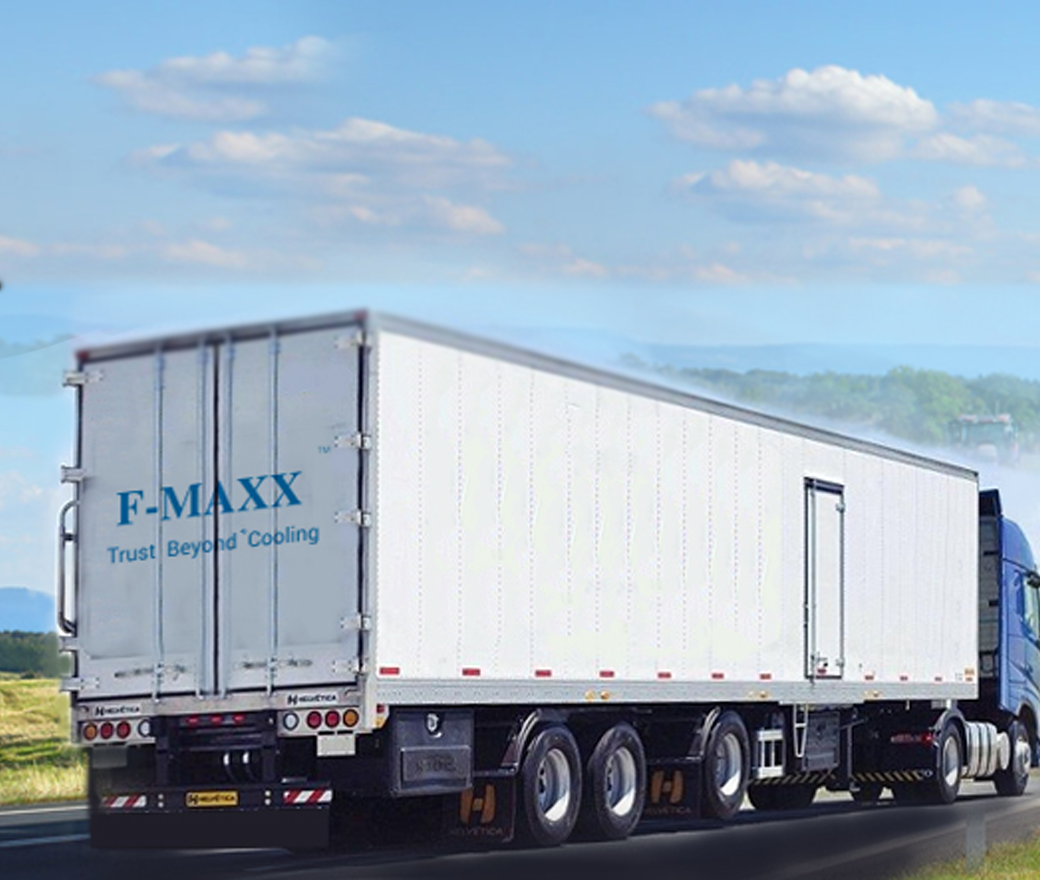
Best for: Dairy distributors, seafood suppliers, pharmaceutical logistics companies, and quick commerce platforms handling last-mile and mid-mile cold chain distribution.
Refrigerated transport includes insulated vehicle bodies with either active mechanical refrigeration or passive cooling systems (eutectic plates using phase-change materials). These keep product at target temperatures during transit and multi-drop delivery.
Key specifications:
-
Wall thickness: 80mm for LCVs, 100mm for medium vehicles, 125mm for larger trucks
-
Active refrigeration range: -24°C to +8°C
-
Eutectic backup runtime: approximately 12-14 hours for frozen, 4-5 hours for chilled
-
Door seal quality and loading/unloading speed
India-specific considerations:
GRP (Glass Reinforced Plastic) panel containers offer corrosion resistance that is critical in coastal and humid regions. Eutectic systems with non-toxic PCM (phase-change materials) provide backup cooling during power failures or mechanical issues, which is essential for multi-drop routes where the door opens repeatedly.
Quick commerce platforms now handle a significant share of perishables in metro cities. As one cold chain practitioner noted in Logistics Insider, the industry is shifting “from speed-led supply chains to precision-led ones,” with platforms investing in multi-temperature micro-fulfilment centers and demanding tighter transport temperature control.
Tradeoffs:
-
Thinner insulation means more cargo space but faster temperature rise during stops
-
Active mechanical systems are reliable but add weight and fuel cost
-
Eutectic systems are simpler but need pre-charging at a facility and have limited runtime
Explore reefer truck configurations including GRP containers and eutectic systems designed for Indian distribution routes.
9. PUF Insulated Panels and Doors
Best for: Anyone building, expanding, or upgrading a cold room. PUF panels are the foundational component of virtually every commercial and industrial refrigeration installation.
Polyurethane Foam (PUF) sandwich panels and insulated doors form the thermal envelope of any cold storage. They are not a refrigeration “system” in themselves, but they determine whether your refrigeration system works efficiently or bleeds energy through the walls.
Key specifications:
-
Panel thickness: 50mm to 200mm depending on temperature application
-
Thermal resistance: R-values of 4.5 to 6.8 m²K/W for 100-150mm panels
-
Joint type: cam-lock systems for airtight assembly and faster installation
-
Door hardware: non-corrosive fittings, proper gaskets, and viewing windows where needed
India-specific considerations:
In high-ambient India, panel thickness directly impacts your electricity bill. Since electricity represents 9-18% of total operating revenue in cold storage, and 80% of that electricity goes to refrigeration, improving insulation is one of the highest-ROI investments a facility can make.
PUF vs. PIR:
PIR (Polyisocyanurate) panels offer better fire resistance but cost 15-25% more. For most Indian food-grade applications, PUF with appropriate fire ratings is the standard choice. Read a detailed PUF vs. PIR panel comparison to determine which suits your application.
Tradeoffs:
-
Thicker panels cost more and reduce usable interior volume
-
Cam-lock systems are faster to install but require precise manufacturing tolerances
-
Cheaper panels with poor foam density lose thermal performance within a few years
For a deeper look at how panel properties affect cold room performance, see this sandwich panel insulation guide.
10. Industrial Ammonia Refrigeration Systems
Best for: Cold storage warehouses exceeding 500 MT capacity, large food processing plants, ice plants, and logistics hubs requiring centralized, high-efficiency refrigeration.
Ammonia (R-717) refrigeration is the workhorse of large-scale industrial cold storage worldwide, and India is no exception. The country has over 8,000 registered cold storage facilities, the majority using ammonia. These centralized systems handle temperature ranges from +8°C down to -60°C in cascade configurations.
Why ammonia dominates at scale:
-
Zero Global Warming Potential (GWP = 0)
-
Zero Ozone Depletion Potential (ODP = 0)
-
Cost-effective refrigerant (abundant, cheap to produce)
-
Self-alarming (its pungent smell alerts to leaks before dangerous concentrations build)
Key specifications:
-
System capacity matched to total cooling load across all chambers
-
Secondary loop systems (brine or glycol) for added safety in occupied spaces
-
Ventilation and gas detection systems
-
PESO licensing and compliance with IS 660 and Gas Cylinders Rules 2016
Honest tradeoffs:
-
Ammonia is toxic at high concentrations and mildly flammable. Safety infrastructure is mandatory, not optional.
-
Requires trained operators and regular maintenance by certified technicians
-
Not suitable for small commercial installations (the safety overhead does not justify itself below a certain scale)
-
Initial capital cost is higher than HFC systems, though lifetime operating cost is lower
Industry trend: For smaller commercial installations where ammonia is impractical, R290 (propane) and CO2 (R744) are gaining ground as natural refrigerants with ultra-low GWP. India’s eventual F-Gas phasedown will accelerate adoption of these alternatives.
How to Choose the Right Commercial or Industrial Refrigeration System
Picking the right system comes down to six factors. Work through them in order.
1. Product type and temperature requirement. Fresh produce at +4°C, frozen seafood at -25°C, and deep-freeze lab samples at -40°C all demand fundamentally different equipment. Start here.
2. Scale and throughput. A restaurant cold room serving 200 covers is a different conversation than a 5,000 MT multi-commodity warehouse. Volume determines whether you need a simple condensing unit or a centralized ammonia plant.
3. Ambient conditions. India’s climate is not uniform. Designing for 45°C+ ambient temperature is non-negotiable in most of peninsular and northern India. Equipment rated for temperate European climates will underperform and fail prematurely.
4. Energy efficiency. The average cold storage facility spends Rs 8-15 lakh annually on electricity. Strategic upgrades (VFD compressors, EC fans, better insulation, high-speed doors) can save Rs 2.4-4.5 lakh per year with an 18-36 month payback. BEE Star Rating becomes mandatory for new cold storage from January 2026, making energy-efficient equipment a regulatory requirement.
5. Government subsidies. Under PMKSY’s Integrated Cold Chain scheme, general areas receive 35% of eligible project cost as subsidy while difficult areas and SC/ST/FPO/SHG projects receive 50%, with a maximum cap of Rs 10 crore per project. The Union Cabinet approved an additional outlay of Rs 1,920 crore for PMKSY in July 2025, raising total allocation to Rs 6,520 crore. Factor this into your financial planning.
6. Single-vendor accountability. When the panel manufacturer blames the refrigeration unit supplier who blames the installer, nobody fixes your temperature excursion. Working with a single provider for design, manufacture, installation, and service eliminates this finger-pointing. It is the single most underrated factor in successful cold chain projects.
For businesses evaluating a complete cold storage project (from PUF panels to condensing units to ripening chambers), F-Max’s product portfolio covers the full stack with in-house manufacturing in Coimbatore and service coverage across South India.
Ready to scope a project? Contact F-Max for a consultation with specifications tailored to your product type, throughput, and regional conditions.
Frequently Asked Questions
Commercial refrigeration serves retail-facing environments like restaurants, supermarkets, and convenience stores. The equipment tends to be smaller, designed for frequent access, and often doubles as product display. Industrial refrigeration covers large-scale operations such as cold storage warehouses, food processing plants, and logistics hubs. These use centralized systems (often ammonia-based) handling thousands of tons of product at precise temperatures around the clock. The dividing line is not always sharp, as many facilities use both types of equipment in different zones.
Costs vary enormously based on capacity, temperature range, and complexity. A small walk-in cold room for a restaurant might start at Rs 3-5 lakh. A multi-commodity cold storage warehouse can run into several crores. Government subsidies under PMKSY cover 35-50% of eligible project costs (up to Rs 10 crore), which can significantly reduce the net investment. The best approach is to get a detailed scope and quotation based on your specific product, throughput, and site conditions.
Ammonia (R-717) remains the dominant choice for large-scale industrial cold storage. It delivers 10-20% better energy efficiency than HFC alternatives, has zero environmental impact (GWP and ODP both equal zero), and is cost-effective at scale. India’s 8,000+ cold storage facilities predominantly run on ammonia. For smaller commercial installations, R290 (propane) and R404A are common, with CO2 (R744) gaining traction as natural refrigerant adoption grows.
BEE Star Rating becomes mandatory for new cold storage facilities from January 2026. This makes energy-efficient equipment a regulatory compliance requirement, not just a cost-saving measure. Buyers planning new installations should ensure their selected refrigeration systems, insulation, and controls meet the upcoming efficiency thresholds.
Based on what HVAC technicians and cold storage operators consistently report, the top issues are: incorrect thermostat settings causing temperature fluctuations, blocked airflow from overstocking product near evaporator coils, refrigerant charge imbalances causing compressor short cycling, ice buildup from inadequate defrost scheduling, and compressor overwork in high-ambient conditions where the equipment was not rated for Indian summers.
Refrigeration systems account for approximately 80% of electricity consumption in a typical cold storage facility. Annual electricity costs range from Rs 8-15 lakh for mid-size operations, representing 9-18% of total operating revenue. VFD compressors alone can reduce refrigeration energy consumption by 10-35%, and upgrading insulation from older materials to modern PUF panels cuts envelope heat loss by 40-50%.
The Pradhan Mantri Kisan Sampada Yojana (PMKSY) Integrated Cold Chain scheme provides capital subsidies of 35% for general areas and 50% for difficult areas, SC/ST, FPO, and SHG projects, with a cap of Rs 10 crore per project. The Union Cabinet increased the total PMKSY outlay to Rs 6,520 crore in 2025, signaling strong government commitment to closing India’s cold chain infrastructure gap.
🌐 Get Online Quote at www.fmax.in/contact-us
📞 Call +91 94896 08022 to speak with our team.