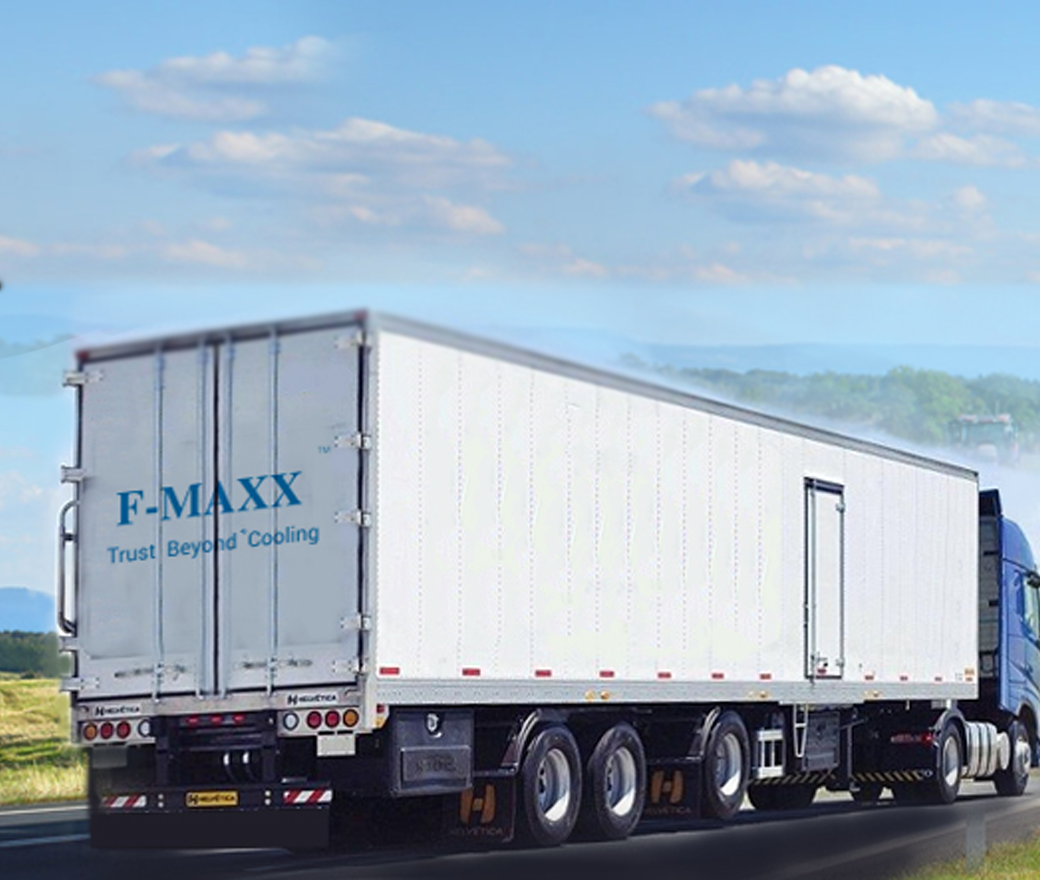
The Cold Chain in Motion
Storage is just one piece of the puzzle. The true challenge of the cold chain is maintaining temperature integrity as products move from the warehouse to their final destination.
The End to End Journey: The Cold Chain Procedure
The cold chain procedure is the complete, unbroken series of refrigerated events that moves a product from origin to consumer. It starts with precooling at the production site, continues through packaging, transportation, and storage, and ends with last mile delivery. A disruption at any one of these stages can compromise the entire chain.
Protecting Products on the Go: Temperature Controlled Packaging
When products leave the controlled environment of a warehouse or truck, specialized packaging becomes their lifeline. This typically involves a combination of:
- Insulation: Materials like polyurethane foam or vacuum insulated panels slow the transfer of heat.
- Refrigerants: Cooling agents like frozen gel packs, dry ice (solid carbon dioxide), or phase change materials (PCMs) absorb heat and maintain a low temperature inside the package.
This packaging is essential for last mile delivery and for shipments that may not have active refrigeration at every step.
Moving the Chill: Cold Chain Transportation
This is the most dynamic part of the cold chain, involving specialized vehicles to move goods across land, sea, or air.
- Refrigerated Trucks (Reefers): These are insulated trucks with their own refrigeration units, used for most overland transport.
- Reefer Containers: For international shipping, these are large, self powered refrigerated containers that can be loaded onto ships, trains, or trucks.
- Air Cargo: High value or highly perishable items are often flown using active temperature controlled containers or passive insulated shippers.
The Final Step: Last Mile Delivery
This is the last and often most complex leg of the journey, moving goods from a local distribution center to a store, restaurant, or a customer’s home. It relies on smaller refrigerated vans or insulated boxes with ice packs to ensure products like groceries or medicine arrive safely at their destination.
Crossing Borders: Customs Clearance
For international shipments, efficient customs clearance is vital. A delay at the border due to incorrect paperwork can leave a refrigerated container sitting without power, jeopardizing the entire shipment. Cold chain logistics experts ensure all documentation is perfect and work with customs brokers to expedite the process, keeping perishable cargo moving.
Ensuring Unbroken Performance
Reliability is the currency of the cold chain. Modern warehouses use multiple layers of technology and planning to guarantee that temperatures remain stable and products stay safe.
Always On: Temperature Control, Tracking, and Monitoring
You can’t manage what you don’t measure. Continuous tracking and monitoring are the eyes and ears of the cold chain.
- IoT Sensors: Smart sensors placed inside warehouses, trucks, and even individual packages record temperature and humidity in real time.
- GPS Tracking: This provides the exact location of a shipment, allowing for route optimization and accurate ETAs.
- Real Time Alerts: If the temperature in a truck starts to drift out of its safe range, the system can automatically send an alert to the logistics manager, who can take immediate corrective action before any damage is done.
This data also creates an auditable record, providing proof that the cold chain was maintained, which is often required for regulatory compliance.
Staying Compliant: Regulatory Standards and Certifications
The food and pharmaceutical industries are heavily regulated. A cold chain warehouse must adhere to standards set by bodies like the FDA (Food and Drug Administration) and follow principles like HACCP (Hazard Analysis and Critical Control Points) and GMP (Good Manufacturing Practices). This involves maintaining meticulous records, undergoing regular audits, and ensuring all equipment is calibrated and validated to prove it can hold the required temperatures reliably.
Expecting the Unexpected: Risk Mitigation and Contingency Planning
What happens if a truck breaks down or a natural disaster strikes? A resilient cold chain has contingency plans in place. This includes identifying backup storage locations, having alternative transportation routes planned, and maintaining clear communication protocols for emergencies. The goal is to minimize disruption and protect the product, no matter what happens.
The Ultimate Failsafe: Power Reliability and Backup
A power outage is one of the biggest threats to a cold storage facility. Even a few hours without cooling can lead to catastrophic losses. To prevent this, every reliable cold chain warehouse has:
- Backup Generators: These are typically diesel powered generators that automatically kick on within seconds of a grid failure, ensuring the refrigeration systems never stop.
- Uninterruptible Power Supply (UPS): These battery systems provide instantaneous power to critical control and monitoring systems, bridging the gap until the generator starts.
- Redundant Equipment: Many facilities have multiple compressors or cooling units, so if one fails, another can take over the load.
Ready for Growth: Operational Scalability
A business’s needs change over time. A scalable cold chain warehouse is designed to grow with them. This might mean a modular design that allows for easy expansion, or using racking systems that can be added to as inventory volumes increase. This future proofing prevents a company from outgrowing its infrastructure and facing costly bottlenecks down the road.
Choosing the Right Partner
Building or managing a cold chain is complex. The right partner can make all the difference.
Location, Location, Location
The physical location of a cold chain warehouse has a major impact on efficiency and cost. A facility that is strategically located near highways, ports, or airports reduces transit times and transportation costs. Good access for large trucks is also essential for smooth loading and unloading operations.
Trust Through Time: A Provider’s Track Record
In a high stakes industry like the cold chain, experience matters. When choosing a partner to build or manage your cold infrastructure, you want a team with a proven track record of reliability and excellence. Look for a provider with years of experience, a strong portfolio of successful projects, and positive client testimonials.
With over 25 years of industry experience, F-Max Systems has established itself as a leader in refrigeration solutions across South India. Our track record is built on delivering customized, high quality systems for diverse industries, from food processing to pharmaceuticals. We provide end to end services, from design and manufacturing to installation and support, ensuring your cold chain is in expert hands.
Conclusion
The modern cold chain warehouse is a marvel of engineering, logistics, and technology. It is the critical infrastructure that underpins our access to safe food, effective medicines, and countless other temperature sensitive products. From robust refrigeration and smart monitoring to meticulous inventory management and contingency planning, every element must work in perfect harmony.
Building a reliable and efficient cold chain operation is a significant investment. Partnering with an experienced expert ensures that investment is protected. If you are looking to build, expand, or upgrade your cold storage capabilities, the team at F-Max Systems is here to help.