TL;DR
This refrigerated trucks and vans guide defines 50+ cold chain transport terms, from PUF panel insulation to eutectic refrigeration systems, organized by category for quick reference. India loses roughly 40% of its food before it reaches consumers, and only about 10,000 reefer vans currently serve 17 million tonnes of perishable produce. Understanding the terminology behind reefer vehicles, body construction, refrigeration systems, and regulatory compliance is the first step toward closing that gap, whether you are a fleet operator, a food business scaling distribution, or a newcomer evaluating cold chain investments.
Why This Refrigerated Trucks and Vans Guide Exists
India’s cold chain has a math problem. The Food and Agriculture Organization estimates that 40% of food produced in India is lost, with nearly 30% of fruits and vegetables spoiling before they ever reach a consumer. Out of 105 million tonnes of perishable goods transported annually, only about 4 million tonnes move via refrigerated vehicles. That is a staggering supply-demand mismatch: roughly 10,000 refrigerated vans serving 17 million tonnes of perishable produce.
The market is responding. India’s refrigerated truck market, valued at INR 8.51 billion in 2025, is projected to reach INR 28.58 billion by 2034 at a CAGR of 14.41%. Quick commerce platforms like Blinkit, Zepto, and Swiggy Instamart are creating entirely new demand categories for small reefer vans that barely existed five years ago. And the broader India cold chain logistics market is expected to grow from USD 23.28 billion in 2025 to USD 33.12 billion by 2031.
Yet over 90% of India’s cold chain logistics sector remains fragmented and privately owned, lacking standardization. For anyone entering this space, the vocabulary itself can be a barrier.
This guide cuts through that barrier. Every term is defined in plain language, placed in practical context, and tied to real-world decisions. Use the category sections below to jump directly to what you need.
Core Vehicle Terms
These are the foundational terms you will encounter in any refrigerated trucks and vans guide, covering vehicle types and their key specifications.
Refrigerated Truck (Reefer Truck)
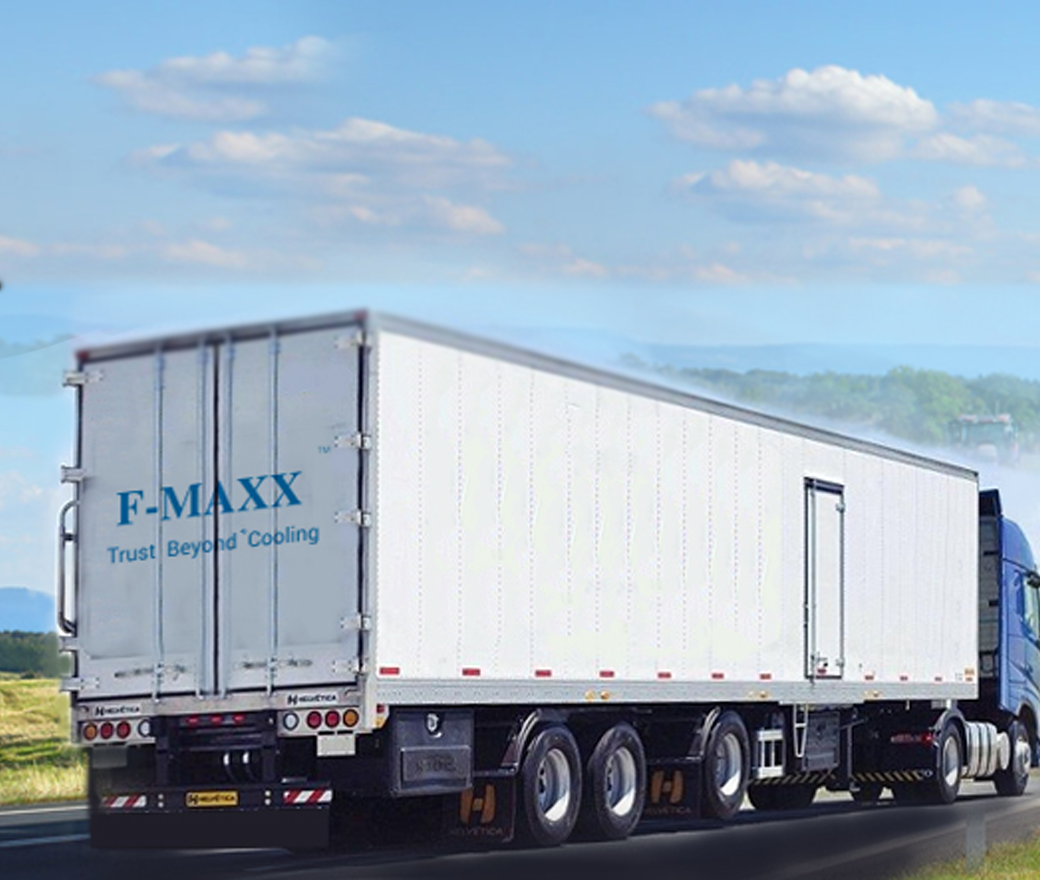
A truck fitted with an insulated cargo body and an active refrigeration system capable of maintaining specific temperatures during transit. Reefer trucks range from small 2-ton urban delivery vehicles to 35-ton long-haul carriers. In India, the 11-12 ton GVW class dominates regional distribution, while the rapid growth of quick commerce is pushing demand toward smaller 1-3 ton vehicles for last-mile routes.
Refrigerated Van (Reefer Van)
A smaller refrigerated vehicle, typically under 4.5 tons GVW, designed for urban and last-mile delivery. Reefer vans are the workhorses of dairy routes, pharmaceutical distribution, and quick commerce fulfillment. According to JCBL’s buying guide, the practical lifespan of a reefer van is roughly 7 years, with the first 3 years delivering peak cooling performance and the remaining years offering “satisfying” but gradually declining service. That lifecycle estimate matters for ROI calculations.
Reefer
Industry shorthand for any refrigerated transport vehicle. You will hear it used interchangeably for trucks, vans, trailers, and even shipping containers with active cooling.
Reefer Trailer / Semi-Trailer
A refrigerated cargo body mounted on a detachable trailer chassis, pulled by a tractor unit. Common in long-haul national distribution (28.5-35 ton GVW class) where the trailer can be pre-loaded at a warehouse while the tractor handles another run.
Insulated Vehicle
A vehicle with an insulated cargo body but no active refrigeration system. Insulated vehicles rely entirely on passive thermal resistance to slow heat ingress. They work for short trips with pre-cooled cargo or when paired with gel packs, but they cannot maintain temperature over extended periods, especially in Indian ambient conditions that regularly exceed 40°C.
GVW (Gross Vehicle Weight)
The total permissible weight of the vehicle including chassis, reefer body, refrigeration equipment, fuel, driver, and cargo. GVW determines which Indian vehicle registration category applies and what roads the vehicle can access. Here is how GVW classes map to typical reefer applications in India:
|
GVW Class |
Typical Use Case |
|---|---|
|
2 to 4.5 tons |
Last-mile delivery, urban routes, quick commerce |
|
7 to 7.5 tons |
Intra-city distribution, dairy collection routes |
|
11 to 12 tons |
Regional distribution (dominant segment in India) |
|
18.5 tons |
Inter-city medium haul |
|
28.5 to 35 tons |
Long-haul national distribution |
Payload Capacity
The weight of cargo a reefer vehicle can actually carry after accounting for the weight of the body, insulation panels, refrigeration unit, and all fittings. Thicker insulation and heavier refrigeration systems eat into payload, so there is always a trade-off between thermal performance and cargo capacity.
Chassis
The base frame and mechanical drivetrain of the vehicle onto which the reefer body is mounted. Buyers typically select a chassis from vehicle OEMs (Tata, Ashok Leyland, BharatBenz, Mahindra, EICHER) and then have a reefer body built and fitted by a specialized manufacturer.
Fully Built Vehicle (FBV)
A reefer truck delivered as a complete, ready-to-deploy unit with the chassis, insulated body, and refrigeration system pre-integrated. FBVs reduce the coordination burden on buyers but limit customization compared to ordering a chassis and body separately.
Body and Insulation Terms
The reefer body is arguably more important than the refrigeration unit. A poorly insulated body forces the cooling system to work harder, consume more energy, and still fail to hold temperature. This section of our refrigerated trucks and vans guide covers the materials and construction methods that determine thermal performance.
PUF Panel (Polyurethane Foam Panel)
A rigid insulation panel with a polyurethane foam core bonded between two outer skins (typically metal or FRP). PUF panels are the most widely used insulation in Indian reefer bodies and cold storages due to their low thermal conductivity and relatively affordable cost. Panel thickness for reefer trucks typically ranges from 80mm to 125mm depending on the vehicle class and target temperature.
Why thickness matters more than most buyers realize: a detailed analysis from Newbase found that standard 50mm insulation can see internal temperatures spike to 0°C within 2-3 hours of power loss, while 100mm insulation extends holdover time dramatically. In Indian conditions where ambient temperatures routinely hit 40°C or higher, thicker panels are not a luxury. They are essential. For a deeper look at PUF insulated panels and their cold chain applications, including cam-lock joint systems, the specifications vary by temperature requirement.
PIR Panel (Polyisocyanurate Panel)
A close relative of PUF with improved fire resistance and slightly better thermal performance at the same thickness. PIR panels cost more but meet stricter fire safety standards, making them preferred for pharmaceutical and export-grade builds. If you are evaluating both options, this PUF vs PIR panel comparison breaks down the trade-offs in detail.
XPS Panel (Extruded Polystyrene Panel)
A moisture-resistant insulation board sometimes used in reefer flooring. XPS handles compression better than PUF, making it suitable for areas subjected to forklift traffic and heavy pallet loads. However, its thermal performance per millimeter is slightly lower than PUF.
Sandwich Panel
A composite panel consisting of two outer skins (metal, GRP, or FRP) with an insulating core (PUF, PIR, or mineral wool) bonded between them. Sandwich panels are the building blocks of modern reefer bodies. Their pre-fabricated nature allows faster assembly, consistent quality, and clean interior surfaces that are easier to sanitize. Learn more about sandwich panel insulation properties for cold chain applications.
GRP (Glass Reinforced Plastic)
A composite material made from glass fibers embedded in a polyester or vinyl ester resin. GRP is popular for reefer body outer skins and full container construction because it resists corrosion, weighs less than steel, and maintains a smooth, washable surface. These properties make GRP containers particularly well suited for dairy, seafood, and pharmaceutical transport where hygiene is non-negotiable.
FRP (Fibre Reinforced Plastic)
Often used interchangeably with GRP in the Indian market. Technically, FRP is the broader category (the reinforcing fiber could be glass, carbon, or aramid), but in reefer body discussions, FRP almost always means glass-fiber reinforced plastic.
PPGI (Pre-Painted Galvanized Iron)
A coated steel sheet used as the exterior skin on some reefer body sandwich panels. PPGI is cheaper than GRP but heavier and more susceptible to corrosion over time, especially in coastal or high-humidity regions.
MS Corrugated (Mild Steel Corrugated)
A corrugated mild steel sheet sometimes used for reefer body exteriors or flooring. Offers good structural strength but is the heaviest option and requires regular anti-corrosion treatment.
Cam-Lock Joint
A mechanical locking system used to connect adjacent sandwich panels during reefer body assembly. Cam-lock joints create tight, insulated seams without thermal bridging (cold spots where heat leaks through metal fasteners). They also allow panels to be disassembled and reassembled, which matters for maintenance and repair.
Wall Thickness
The total thickness of the insulated reefer body wall, measured in millimeters. In the Indian market, common wall thicknesses for reefer truck bodies are 80mm, 100mm, and 125mm. Thinner walls (80mm) suit chilled applications on smaller vehicles; thicker walls (100mm or 125mm) are necessary for frozen cargo and larger vehicles exposed to higher ambient heat loads.
Thermal Conductivity (K-Value)
A measure of how easily heat passes through a material, expressed in W/mK (watts per meter-kelvin). Lower K-values mean better insulation. PUF typically has a K-value around 0.020-0.024 W/mK, while PIR sits slightly lower. When comparing insulation materials, K-value is the single most important number.
R-Value
The resistance of an insulation assembly to heat flow, essentially the inverse of thermal conductivity scaled by thickness. Higher R-values mean better insulation. R-value is useful for comparing complete wall assemblies (including inner skin, core, and outer skin) rather than just the foam material alone.
Door Gasket / Seal
The compressible rubber or silicone strip around reefer body door frames that creates an airtight seal when doors are closed. Damaged or worn gaskets are one of the most common and underappreciated causes of temperature excursions. Every preventive maintenance check should include gasket inspection.
Strip Curtain
Overlapping PVC strips hung inside reefer body doorways that reduce cold air escape during loading and unloading. Strip curtains are especially important for multi-drop delivery routes where doors open frequently. In the dairy industry, where practitioners emphasize that “even half a day is critical” for perishable products, every door opening counts.
Refrigeration System Terms
This is the most technically dense section of the refrigerated trucks and vans guide. The refrigeration system is what actively removes heat from the cargo space. Different system types suit different routes, budgets, and operational needs.
Mechanical Compression (VCR, Vapour Compression Refrigeration)
The most common refrigeration technology in reefer vehicles. A compressor circulates refrigerant through a closed loop: the refrigerant absorbs heat inside the cargo space (via the evaporator), carries it outside, and releases it to the atmosphere (via the condenser). VCR systems can achieve and maintain any temperature from cool (+15°C) down to deep freeze (-30°C), making them versatile across commodities.
Direct Drive System
A refrigeration system powered directly by the vehicle’s engine through a belt or PTO (power take-off) connection. The critical limitation that most guide-level content glosses over: direct drive refrigeration only works while the truck engine is running. When the vehicle is parked at a loading dock or overnight, cooling stops completely. This makes direct drive unsuitable for operations that involve extended stationary periods.
Independent System
A refrigeration system with its own dedicated engine (usually a small diesel motor), independent of the truck’s drivetrain. Independent systems keep cooling regardless of whether the vehicle is moving, parked, or being loaded. They cost more upfront but eliminate the engine-dependency problem of direct drive units.
Eutectic Refrigeration / PCM System
A system that uses eutectic plates filled with Phase Change Material (PCM) to store and release cold energy. The plates are “charged” (frozen) using an external power source or a vehicle-mounted compressor, and then they gradually absorb heat from the cargo space as the PCM melts. Eutectic systems offer significant advantages over diesel-powered units: no fuel consumption during transit, zero emissions on the road, silent operation, and lower maintenance costs.
Practitioners and industry analysts highlight eutectic systems as a green alternative. When charged to temperatures as low as -24°C, eutectic plates can provide backup runtime of roughly 12-14 hours for frozen cargo and 4-5 hours for chilled cargo, depending on insulation quality and ambient conditions.
Eutectic Plate
The individual heat-exchange element inside a eutectic refrigeration system. Each plate is a sealed metal container filled with PCM solution. Plates are mounted on the ceiling or walls of the reefer body. When fully frozen (charged), they act as a thermal battery, absorbing heat from the cargo space as the PCM transitions from solid to liquid.
Phase Change Material (PCM)
A substance engineered to absorb or release large amounts of thermal energy at a specific temperature as it changes phase (typically solid to liquid or vice versa). In reefer applications, non-toxic PCM formulations are tuned to specific temperature set points (for example, -21°C for frozen goods or +2°C for chilled pharmaceuticals).
Cryogenic Refrigeration
A system that uses liquid nitrogen (LN2) or liquid carbon dioxide (CO2) sprayed directly into the cargo space for ultra-rapid cooling. Cryogenic systems achieve extremely fast pull-down and can reach temperatures below -30°C easily. The trade-off: they consume expendable cryogen that must be refilled, making operating costs higher for routine daily routes. Best suited for ultra-cold pharmaceutical shipments or emergency scenarios.
Thermoelectric (Peltier) Cooling
A solid-state cooling technology using the Peltier effect to move heat across a semiconductor junction. Thermoelectric coolers have no moving parts, are silent, and are extremely compact. However, their cooling capacity is very limited, making them practical only for small containers, sample transport, or auxiliary cooling in specific zones of a multi-temperature vehicle.
Compressor
The mechanical pump that pressurizes refrigerant gas in a VCR system, driving the refrigeration cycle. The compressor is the primary energy consumer in any mechanical refrigeration unit. For a breakdown of evaporators, condensing units, and other refrigeration components, the specifications vary by temperature class (HT, MT, or LT).
Condenser
The heat exchanger (usually mounted on the vehicle exterior) where hot, high-pressure refrigerant releases its heat to the outside air. In Indian ambient conditions, condenser sizing is critical. Units engineered for heavy ambient temperatures (some rated for external conditions up to 65-75°C) ensure reliable performance even during summer peaks.
Evaporator
The heat exchanger mounted inside the reefer body’s cargo space. Refrigerant absorbs heat from the air as it passes through the evaporator, cooling the cargo space. Evaporators are classified by temperature range: HT (high temperature, 0°C and above), MT (medium temperature, 0°C to -5°C), and LT (low temperature, -18°C to -25°C and below).
Expansion Valve
A metering device that controls the flow of liquid refrigerant into the evaporator. By reducing pressure, the expansion valve allows the refrigerant to expand and absorb heat. Proper valve sizing affects system efficiency and temperature stability.
Refrigerant
The working fluid in a VCR system that absorbs and releases heat as it cycles between liquid and gas phases. Common reefer refrigerants include R404A and R134a, though the industry is gradually shifting away from high-GWP (Global Warming Potential) refrigerants under environmental regulations. Newer alternatives like R452A and natural refrigerants are gaining traction.
Pull-Down Time
The time required for the refrigeration system to bring the cargo space from ambient temperature down to the target set point. Shorter pull-down times matter for operations that load warm product or need rapid recovery after door openings. Blast freezers achieve extremely rapid pull-down at facility level before goods are loaded onto reefer trucks, reducing the burden on vehicle-mounted systems.
Holdover Time
The duration a reefer body can maintain its target temperature after the refrigeration system is turned off or loses power. Holdover time depends directly on insulation thickness, ambient temperature, door seal quality, and cargo thermal mass. For eutectic systems, holdover time is the core performance metric, since the system is designed to operate passively after charging.
Defrosting
The process of removing ice buildup from the evaporator coils. Ice accumulation reduces airflow and cooling efficiency. Reefer units use electric heaters, hot gas bypass, or timed off-cycles for defrosting. Improper defrost scheduling can cause temperature spikes inside the cargo space.
Nose-Mount Unit
A refrigeration unit mounted on the front wall (nose) of the reefer body. This is the most common configuration for medium and large reefer trucks. Nose-mount units are typically self-contained, with the compressor, condenser, and evaporator integrated into a single housing.
Rooftop Unit
A refrigeration unit mounted on the roof of the reefer body, common on smaller vans where nose space is limited. Rooftop units save interior cargo height but may increase vehicle center of gravity and complicate maintenance access.
Electric Standby
An auxiliary power connection that allows a reefer unit to run on mains electricity (typically 3-phase power) while parked at a warehouse or depot. Electric standby eliminates the need to idle the vehicle engine or run a diesel genset for overnight pre-cooling and holding. It reduces fuel costs, emissions, and noise, making it especially relevant for urban depots with night-time noise restrictions.
Temperature and Cold Chain Terms
Temperature control is the entire purpose of refrigerated transport. This section of the guide covers the terminology around temperature management, monitoring, and the cold chain concept itself.
Cold Chain
The unbroken series of temperature-controlled storage and transport steps that keep perishable goods within a specified temperature range from production to consumption. Every handoff point (farm to cold storage, cold storage to reefer truck, reefer truck to retail) is a potential failure point. For a comprehensive look at how cold chain warehouses work alongside reefer fleets, the warehouse-to-vehicle integration is where many temperature breaks occur.
Temperature Zone
A defined temperature range maintained for a specific category of perishable goods. The table below consolidates the standard zones used across the cold chain industry:
|
Zone |
Temperature Range |
Typical Products |
|---|---|---|
|
Deep Freeze |
-28°C to -30°C |
Seafood exports, meat exports |
|
Frozen |
-16°C to -20°C |
Frozen meat, poultry, ice cream |
|
Chilled |
0°C to +4°C |
Fresh fruits, vegetables, dairy, fresh meat |
|
Pharma |
+2°C to +8°C |
Vaccines, insulin, biologics |
|
Cool |
+8°C to +15°C |
Some beverages, confectionery |
|
Controlled Ambient |
+15°C to +25°C |
Chocolate, certain pharmaceuticals |
Sources: Transport Geography, FSSAI cold chain standards via FoodSafetyMantra
Multi-Temperature Truck
A reefer truck with its cargo space divided into two or more compartments, each maintained at a different temperature. For example, one zone at -18°C for frozen goods and another at +4°C for fresh produce. Multi-temperature trucks are common in retail and foodservice distribution where a single vehicle delivers mixed product categories to the same stops.
Temperature Excursion
Any deviation from the specified temperature range during storage or transport. Even brief excursions can compromise product safety and shelf life. A 2024 NielsenIQ survey found that 68% of Indian consumers would abandon a quick commerce platform after a single spoiled delivery. For operators, every excursion is a direct hit to customer retention and profitability.
Data Logger
An electronic device that continuously records temperature (and sometimes humidity) inside the reefer body throughout a trip. Modern data loggers transmit readings in real time via IoT connectivity, enabling remote monitoring and automated alerts when temperatures drift. FSSAI compliance increasingly requires documented temperature records for perishable food transport.
Pre-Cooling
The practice of bringing the reefer body to its target temperature before loading cargo. Pre-cooling is critical because most vehicle-mounted refrigeration units are designed to maintain temperature, not to cool warm cargo down rapidly. Loading warm product into a non-pre-cooled reefer is a common operational mistake that causes excursions early in the journey. Facility-level pre-cooling using cold room infrastructure before loading further reduces this risk.
Air Circulation / Airflow
The movement of cooled air throughout the cargo space. Proper airflow ensures uniform temperatures across all cargo, not just near the evaporator. Loading patterns that block airflow channels, overpacking, or stacking cargo against walls can create hot spots where spoilage begins. Best practice: leave at least 5-10 cm clearance between cargo and reefer body walls, floor, and ceiling.
Industry and Regulatory Terms
Regulations and industry standards shape how refrigerated trucks and vans operate. This section of the guide covers the frameworks that matter most for Indian operators.
FSSAI (Food Safety and Standards Authority of India)
India’s regulatory body for food safety. FSSAI sets standards for temperature-controlled transport of food products, including requirements for vehicle hygiene, temperature monitoring, and documentation. Any business transporting food in India must comply with FSSAI licensing and, increasingly, with their cold chain handling guidelines.
ATP Agreement
The Agreement on the International Carriage of Perishable Foodstuffs, administered by the United Nations Economic Commission for Europe. ATP classifies refrigerated vehicles by their insulation quality and refrigeration capacity, assigning type codes (FRC, FNA, etc.) that determine which commodities a vehicle can legally transport across international borders. While India is not a full ATP signatory, exporters shipping perishables to ATP-member countries must comply.
GDP (Good Distribution Practice)
A quality management framework for the pharmaceutical supply chain, covering the proper distribution and handling of medicinal products. GDP mandates temperature mapping, calibrated monitoring, deviation handling procedures, and staff training. Any reefer vehicle transporting pharmaceuticals should meet GDP requirements, particularly the +2°C to +8°C range for vaccines and biologics.
HACCP (Hazard Analysis Critical Control Points)
A systematic approach to identifying, evaluating, and controlling food safety hazards. In the context of refrigerated transport, HACCP means defining critical control points (like loading temperature, in-transit temperature monitoring, and door-open duration) and establishing corrective actions when limits are breached.
Last-Mile Delivery
The final leg of the supply chain, from a distribution hub or dark store to the end consumer or retail outlet. Last-mile reefer delivery in India is being reshaped by quick commerce platforms. Mordor Intelligence notes that their geographic sprawl forces logistics providers to manage dense networks of sub-50 km routes, raising demand for smaller 1-3 ton reefer trucks and predictive routing software.
Hub-and-Spoke Model
A distribution network where a central hub (cold storage warehouse or distribution center) feeds multiple smaller spoke locations via reefer vehicles. This model dominates organized cold chain logistics in India, with regional hubs servicing city-level distribution points. The hub’s cold storage infrastructure and the spoke vehicles must maintain matching temperature standards for the chain to hold.
Quick Commerce (Q-Commerce)
Ultra-fast delivery platforms (Blinkit, Zepto, Swiggy Instamart) promising delivery within 10-30 minutes. Quick commerce has become a major demand driver for small reefer vans in urban India. With margins often below 5%, every spoiled delivery directly devastates profitability, making reliable refrigerated last-mile transport a business-critical investment rather than an operational nicety.
Pradhan Mantri Kisan Sampada Yojana (PMKSY)
A central government scheme that provides financial assistance for cold chain infrastructure, including refrigerated transport. PMKSY offers capital subsidies for setting up integrated cold chain projects, making it a relevant funding source for businesses investing in reefer fleets and cold storage facilities.
COP (Coefficient of Performance)
The ratio of cooling output to energy input in a refrigeration system. A COP of 3.0 means the system delivers 3 kW of cooling for every 1 kW of electrical energy consumed. Higher COP means better energy efficiency. In India, where refrigerated transport accounts for a significant share of cold chain energy consumption, COP directly affects operating economics.
GWP (Global Warming Potential)
A measure of how much heat a greenhouse gas traps in the atmosphere relative to carbon dioxide. Refrigerants are rated by GWP: R404A has a GWP of nearly 3,922, while newer alternatives like R452A sit around 2,140. Regulatory pressure globally and in India is pushing the industry toward lower-GWP refrigerants.
Practical Buyer Decision Framework
Knowing the terminology is step one. Applying it to an actual purchase decision is step two. Here is the decision sequence that experienced fleet operators follow when selecting refrigerated trucks and vans:
Step 1: Commodity. What are you transporting? Dairy, seafood, pharmaceuticals, frozen meat, fresh produce, and confectionery each have different temperature and handling requirements. Start here because everything downstream depends on this answer.
Step 2: Temperature requirement. Match your commodity to the temperature zone table above. A fresh dairy route at +2°C to +4°C requires very different equipment than a frozen seafood haul at -25°C.
Step 3: Route type. Urban multi-drop delivery? Regional inter-city haul? Long-haul national? Route type determines vehicle size, door-opening frequency (which affects insulation demands), and whether you need a direct drive, independent, or eutectic system.
Step 4: Vehicle class (GVW). Match the GVW class table to your cargo volume and route type. Quick commerce last-mile routes rarely need anything above 4.5 tons. Regional dairy distribution typically sits at 11-12 tons.
Step 5: Body type and insulation. Select wall thickness (80mm, 100mm, or 125mm) based on your temperature requirement and ambient conditions. Choose outer skin material (GRP for corrosion resistance and hygiene, PPGI for budget, MS corrugated for structural strength). Select floor type based on loading method (aluminum T-profile for pallet loads, checkered plate for manual handling).
Step 6: Refrigeration system. Mechanical VCR for maximum flexibility. Eutectic/PCM for lower operating costs, zero transit emissions, and silent operation. Independent system if you need cooling while parked. Direct drive only if the vehicle will never stop during delivery.
Multiple practitioners on Quora emphasize that cold chain logistics is “certainly a good business but capital intensive.” The upfront cost is consistently the top concern for new entrants. Planning each step carefully, rather than over-specifying or under-specifying, is how you control that capital investment.
Maersk’s 2024 India report notes that reefer vehicles are in short supply and prone to breakdowns, leading to inventory disruptions. This is not a fringe issue. It is a structural problem. Choosing the right body construction, insulation thickness, and refrigeration system from the outset reduces breakdown risk and extends vehicle productive life.
For businesses evaluating reefer body options, a practical next step is to explore reefer truck body specifications including eutectic systems, GRP containers, and sandwich panel builds across different GVW classes. If you need help matching your commodity, route, and vehicle requirements, get in touch with the F-Max team for a tailored recommendation.
Frequently Asked Questions
A refrigerated truck has both an insulated body and an active refrigeration system (mechanical, eutectic, or cryogenic) that maintains a set temperature throughout transit. An insulated vehicle has only the passive insulation with no active cooling. Insulated vehicles can slow heat ingress for short trips with pre-cooled cargo, but they cannot maintain temperature over longer distances or in high ambient conditions.
Industry buying guides suggest a practical lifespan of roughly 7 years. The first 3 years generally deliver optimal cooling performance, while the remaining years provide adequate but gradually declining service. Actual lifespan depends heavily on maintenance discipline, insulation quality, ambient conditions, and operational intensity.
For chilled applications (+2°C to +4°C) on smaller vehicles, 80mm panels may suffice. For frozen cargo (-18°C and below) or vehicles operating in high-ambient regions (common across most of India for 8+ months per year), 100mm or 125mm panels are strongly recommended. Thicker insulation directly extends holdover time and reduces energy consumption.
A eutectic system uses plates filled with Phase Change Material that are “charged” (frozen) before the trip and then passively absorb heat during transit. Choose eutectic systems when you need silent operation (urban night deliveries), zero fuel consumption during transit, lower maintenance costs, and reduced emissions. They are particularly well suited for fixed, predictable delivery routes where charging infrastructure is available at the depot.
Yes. Any business involved in food transport must hold appropriate FSSAI licensing. FSSAI guidelines increasingly require temperature monitoring and documentation for perishable food movement. Non-compliance can result in penalties, license suspension, and rejection of goods at delivery points.
Failing to pre-cool the vehicle before loading. Most vehicle-mounted refrigeration units are designed to maintain temperature, not rapidly pull down a warm cargo space. Loading warm product into a non-pre-cooled reefer causes temperature excursions that can compromise the entire load.
Quick commerce platforms (Blinkit, Zepto, Swiggy Instamart) require dense networks of sub-50 km urban routes with delivery promises of 10-30 minutes. This is driving unprecedented demand for small 1-3 ton reefer vans optimized for frequent stops, tight urban navigation, and rapid loading cycles. Five years ago, this vehicle segment barely existed at scale.
Yes. The Pradhan Mantri Kisan Sampada Yojana (PMKSY) provides capital subsidies for integrated cold chain infrastructure projects, which can include refrigerated transport vehicles. State-level schemes may offer additional incentives. Check eligibility requirements carefully, as subsidies typically require a complete project proposal covering both storage and transport.
🌐 Get Online Quote at www.fmax.in/contact-us
📞 Call +91 94896 08022 to speak with our team.