TLDR
Ambient temperature, specifically the air entering the condenser coil, directly controls how well a condensing unit can reject heat. When that air gets hotter, condensing pressure rises, the compressor works harder, cooling capacity drops, energy consumption climbs, and high-pressure safety trips become more likely. When ambient drops too low, head pressure can fall below the minimum needed to feed refrigerant through expansion valves, causing unstable operation unless proper controls are installed.
Why This Question Matters More Than You Think
Every refrigeration system is a heat-moving machine. The condensing unit’s entire job is to push heat out of your cold room or freezer and dump it into the surrounding air (or water). The temperature of that surrounding air determines how easily the heat can leave the system, and that single variable affects nearly everything: capacity, efficiency, compressor life, energy bills, and uptime.
Most articles on this topic explain the basic idea and stop. But practitioners who troubleshoot condensing units daily know the story is more complicated. The impact of ambient temperature on condensing unit performance is not just a textbook concept. It is the reason a cold room pulls down quickly on a cool morning and struggles by 2 PM on a hot afternoon. It is why a system trips on high pressure during a summer heatwave. And it is why an outdoor unit installed in a narrow alley or on a sun-baked rooftop behaves like the ambient is 10°C hotter than the weather forecast.
This guide covers the full picture: definition, mechanism, high-ambient effects, low-ambient problems, diagnostic benchmarks, common mistakes, and practical fixes for cold storage systems and industrial refrigeration.
What Does “Ambient Temperature” Actually Mean for a Condensing Unit?
For a condensing unit, ambient temperature is the temperature of the air entering the condenser coil. This is not the same as the temperature on your city weather app.
The distinction matters because the air immediately around a condensing unit can be much hotter than the general outdoor temperature. Field measurements from chiller installations show that air beside equipment can be 10°C to 18°C hotter than nearby weather-station readings. One facility measured 42°C at the condenser while the weather station showed 32°C. Another measured 48°C inside a glass-walled enclosure when the outdoor temperature was around 30°C.
Common reasons the condenser sees hotter air than the weather report:
-
Rooftop installations with heat radiating off the roof surface
-
Machine rooms or enclosed plant areas where heat from other equipment accumulates
-
Narrow service lanes where condenser discharge air recirculates back to the intake
-
Sun-exposed walls that radiate heat toward the condenser
-
Adjacent equipment (compressors, generators, or other condensing units) blowing hot exhaust nearby
When evaluating the impact of ambient temperature on condensing unit performance, always measure the air entering the condenser, not just the outdoor weather.
How a Condensing Unit Rejects Heat
To understand why ambient temperature matters so much, it helps to know the basic cycle.
The compressor takes low-pressure refrigerant vapor from the evaporator and compresses it into hot, high-pressure vapor. This vapor flows to the condenser, where fans blow ambient air across the coil. The refrigerant gives up its heat to that air and condenses into a high-pressure liquid. That liquid then flows to the expansion device and evaporator to absorb heat from the cold room, completing the cycle.
A critical point: the condenser must reject not only the heat absorbed from the cold room but also the heat added by the compressor’s own work. Copeland’s refrigeration manual notes that condenser heat rejection exceeds evaporator heat absorption because it includes the heat of compression.
The amount of heat a condenser can reject follows a straightforward relationship. ACHR News presents condenser capacity as Qc = A × delta-t × u, where A is the condenser surface area, u is the heat-transfer coefficient, and delta-t is the temperature difference between the condensing refrigerant and the cooling air.
That delta-t is the whole story. When ambient air gets hotter, delta-t shrinks, and everything downstream changes.
What Happens When Ambient Temperature Rises
This is the core answer to what happens to condensing unit performance in high ambient conditions. The effects cascade through the entire system.
Reduced heat rejection capacity
With hotter air entering the condenser, the temperature difference available for heat transfer drops. Heatcraft states that air-cooled condenser capacity varies with the difference between entering-air dry-bulb temperature and refrigerant condensing temperature. A smaller difference means less heat moves out per unit of time.
Higher condensing pressure (head pressure)
The system compensates for reduced heat rejection by allowing the condensing temperature and pressure to rise. ACHR News explains this directly: when ambient increases, less heat is rejected to hotter ambient air, so internal condenser temperature and pressure rise. This is not a malfunction. It is the physics of the system finding a new, less efficient equilibrium.
Higher compressor power draw
Higher head pressure means the compressor must push against a greater pressure difference. According to ORNL/Better Plants industrial refrigeration guidance, decreasing condensing temperature reduces compressor power by about 1.5% per °F. The same relationship works in reverse: every degree the condensing temperature rises costs roughly 1.5% more compressor power.
On LinkedIn, refrigeration practitioner Lawrence Leask argues that reducing compressor lift by lowering condensing temperature is the single largest energy-saving lever in refrigeration, estimating 2 to 4% efficiency improvement per 1°C reduction in condensing temperature. The ORNL figure of 1.5% per °F is more conservative but consistent.
Lower cooling capacity and longer pull-down
When the condensing unit struggles with high ambient, the system may take longer to bring a cold room or blast freezer down to target temperature. JULABO’s temperature-control article reports that some refrigerated units rated at room-temperature conditions can lose up to 75% of rated cooling power at 100°F ambient conditions, though this extreme figure applies to specific laboratory equipment and should not be generalized to all condensing units.
Higher discharge temperature and compressor stress
ACHR News states that high condensing pressure forces the compressor to do more work and generate more heat of compression. Elevated discharge temperatures accelerate oil breakdown, increase wear, and shorten compressor life.
More high-pressure trips and downtime
Modern condensing units include high-pressure safety cut-outs that stop the compressor before damage occurs. Applied Thermal Control explains that these cut-outs prevent severe compressor damage but stop cooling immediately. Typical triggers include ambient spikes, dirty condenser coils, blocked airflow, and hot-air recirculation. For temperature-sensitive products in pharmaceutical or seafood storage, even brief unplanned shutdowns can compromise product quality.
What Happens When Ambient Temperature Is Too Low
Many articles ignore this side of the problem, but refrigeration systems that run year-round (cold rooms, process cooling, transport refrigeration) will face low ambient conditions during winter, cool nights, monsoon periods, or at high-altitude installations.
Low ambient sounds like it should only help. After all, cooler air means better heat rejection. And it does, up to a point. The condenser becomes so efficient that it drives head pressure down below the minimum the system needs to function properly.
Copeland warns that air-cooled refrigeration systems operating in low ambient can suffer damage from abnormally low head pressure. Low head pressure reduces the pressure difference across expansion devices like thermostatic expansion valves (TXVs), which can cause insufficient refrigerant flow, erratic evaporator feed, and oil return problems.
Heatcraft similarly states that low head pressure can result in poor expansion-valve operation and poor system operation, noting that head-pressure control may be required when operation is needed below roughly 60°F ambient in air-conditioning applications.
Practitioners on Reddit confirm this is a real field issue, not just a textbook concern. In a discussion on r/refrigeration about walk-in coolers in the southwestern United States, technicians describe older systems using fan cycle switches for low ambient and explain that the TXV needs a minimum pressure differential to feed properly. On HVAC-Talk, experienced techs add that low head pressure creates too little pressure drop across the expansion valve, which leads to low suction pressure and high superheat rather than floodback.
Common low-ambient control strategies include:
-
Fan cycling: Turning condenser fans off in stages to reduce airflow and keep head pressure up
-
Variable-speed condenser fans: Modulating fan speed for smoother pressure control
-
Flooding or headmaster valves: Backing up liquid refrigerant into the condenser to reduce its effective surface area
-
Condenser splitting: Isolating sections of the condenser coil
High Ambient vs. Low Ambient: A Quick Comparison
|
Ambient condition |
What happens |
Main risk |
Practical response |
|---|---|---|---|
|
High ambient |
Condensing temperature and pressure rise |
Higher energy use, lower capacity, compressor overheating, high-pressure trips |
Size condenser for design ambient, ensure airflow, clean coils, prevent recirculation |
|
Very high local microclimate |
Unit sees hotter air than weather report |
Unexpected trips even when weather seems acceptable |
Measure air entering condenser, not just outdoor temperature |
|
Low ambient |
Condenser rejects heat too easily, head pressure falls |
TXV underfeeding, erratic operation, oil return issues |
Use head-pressure controls: fan cycling, VFDs, flooding valves |
|
Wide ambient swing (day/night, seasonal) |
Pressure varies across hours and seasons |
Unstable expansion-valve feed or wasted energy if fixed head pressure |
Use controls that float head pressure safely while maintaining a minimum |
Key Terms You Should Know
Understanding the impact of ambient temperature on condensing unit performance requires a few technical terms that come up repeatedly in specifications, troubleshooting, and equipment selection.
Head pressure (discharge pressure): The high-side pressure produced by the compressor and maintained in the condenser. Rises when ambient rises, falls when ambient drops.
Condensing temperature: The saturation temperature corresponding to the condensing pressure for a given refrigerant. ACHR News notes that condensing temperature is calculated from condensing pressure using a pressure-temperature chart specific to the refrigerant in the system.
Condenser split (CTOA, condensing temperature over ambient): The difference between the saturated condensing temperature and the air temperature entering the condenser. ACHR News gives an example: 110°F condensing temperature minus 80°F ambient equals a 30°F condenser split.
Compressor lift: The difference between evaporating and condensing temperature (or pressure) levels. Higher lift means more work for the compressor.
Subcooling: The amount by which the liquid refrigerant temperature is below the saturation temperature at condenser pressure. Used to confirm that the liquid line is fully charged with liquid, not a mix of liquid and flash gas.
Design ambient: The outdoor or site temperature used as the basis for equipment selection. Choosing the wrong design ambient is one of the most common specification mistakes.
Typical condenser split values
These are field interpretation ranges, not universal design rules:
-
Practitioners on Reddit report using the 20 to 30°F over ambient range as a diagnostic benchmark for refrigeration systems, while noting that readings well above this range point to problems beyond normal outdoor heat
Practical Example: How a Hot Day Changes Performance
A simple calculation shows why the impact of ambient temperature on condensing unit performance is so significant.
Consider a condensing unit selected to run with a 15°C condenser TD (temperature difference between condensing refrigerant and entering air).
Scenario 1: Normal conditions
Air entering condenser: 35°C
Condensing temperature: 35°C + 15°C = approximately 50°C
Scenario 2: Hot afternoon or restricted airflow
Air entering condenser: 45°C
Condensing temperature: 45°C + 15°C = approximately 60°C
The condensing temperature increased by 10°C (18°F). Using the industrial refrigeration rule of thumb of about 1.5% more compressor power per °F of condensing-temperature increase, that 18°F rise could increase compressor power draw by roughly 27%.
A LinkedIn article by Evomart provides a practical illustration: a refrigerated storage facility with 100 kW cooling capacity might draw about 60 kW compressor power at 45°C condensing but only about 40 kW at 20°C condensing. The exact numbers depend on refrigerant, compressor type, evaporating temperature, and system design, but the direction is clear and the magnitude is real.
This is why proper condensing unit selection matters so much for cold storage warehouse projects in hot climates. A unit rated at 25°C ambient will behave very differently at 45°C site conditions.
The Ambient Impact Chain
Here is a framework that makes the cause-and-effect sequence easy to remember.
High ambient chain:
Hotter air entering condenser → smaller heat-rejection temperature difference → higher required condensing temperature → higher head pressure → higher compressor lift → higher power draw and discharge temperature → lower efficiency, longer runtime, and more trip risk.
Low ambient chain:
Colder air entering condenser → condenser capacity rises → head pressure drops too low → expansion device lacks sufficient pressure difference → refrigerant feed becomes unstable → cooling capacity, superheat control, oil return, and compressor protection can all suffer.
This chain is well supported by refrigeration literature. Copeland explains that air-cooled condensers need fresh air and can develop high condensing pressure in very hot regions. ACHR News explains the pressure-rise mechanism. And ORNL quantifies the energy sensitivity.
How to Tell If Ambient Temperature Is the Problem
When a condensing unit runs with high head pressure, tripping on safety cut-outs, or struggling to maintain temperature, high ambient is one possible cause. But it is not the only one. A dirty condenser coil, a failed fan motor, blocked airflow, refrigerant overcharge, or non-condensable gases in the system can all produce the same symptoms.
Here is a diagnostic checklist:
-
Measure the air entering the condenser coil, not the general outdoor temperature. Use a thermometer at the condenser intake.
-
-
Convert head pressure to saturated condensing temperature using the correct refrigerant pressure-temperature data.
-
-
Calculate condenser split (condensing temperature minus entering air temperature). Compare to the equipment design TD or the general 20 to 30°F range.
-
-
Check coil cleanliness. A layer of dirt, dust, grease, or lint acts as insulation and reduces heat transfer. A working technician’s guide to walk-in freezers lists high condensing temperature for the ambient, high-pressure trips, and fan problems as signs of dirty condensers or poor ventilation.
-
-
Verify all condenser fans are running in the correct direction, at the correct speed. One failed fan on a multi-fan condenser can dramatically cut capacity.
-
-
Check for hot-air recirculation. Stand near the unit and feel whether discharged hot air is being pulled back into the condenser intake. Insufficient clearance from walls, other equipment, or overhead obstructions often causes this.
-
-
Check subcooling and superheat before adding or removing refrigerant. On Reddit, r/HVAC technicians repeatedly emphasize that pressure readings alone are not enough without superheat and subcooling data.
-
-
Review trip history. Do high-pressure trips happen at peak ambient, after product stocking, after defrost cycles, or during fan cycling? The pattern reveals the root cause.
-
-
If the system is underperforming in low ambient, inspect head-pressure controls: fan cycling switches, VFDs, flooding valves, and check that controls are set correctly and functioning.
A regular preventive maintenance program that includes condenser cleaning, fan inspection, and pressure/temperature logging catches most ambient-related performance issues before they cause product loss or equipment damage.
How to Reduce the Impact of Ambient Temperature
Ambient temperature cannot be controlled (the weather is the weather), but its impact on the condensing unit can be managed through good design, proper installation, and ongoing maintenance.
Size the condenser for your actual design ambient
Ask for condensing unit capacity at the peak ambient temperature your site actually experiences, not at a comfortable catalog condition. For installations in South India, where summer afternoons can push air temperatures well above 40°C and rooftop microclimates can be even hotter, this is critical. A condensing unit that looks adequate on paper at 32°C ambient may fall short at 46°C.
Ensure adequate airflow clearance
Heatcraft’s installation guidance specifies that air-cooled condensers should be located so air can circulate freely and not recirculate, with minimum clearances based on unit width and no overhead obstructions. Follow the manufacturer’s clearance requirements. If the site does not allow adequate clearance, factor that into the condenser sizing or consider relocating the unit.
For step-by-step guidance on proper equipment placement, see this cold room installation guide with professional tips.
Prevent hot-air recirculation
Recirculation is the silent killer of condenser performance. Hot discharge air that gets pulled back through the condenser intake raises the effective ambient by degrees that do not show up on any weather report. Proper orientation, adequate wall clearance, separation from adjacent heat sources, and wind barriers where needed all help.
Keep coils clean
A dirty coil raises the condenser split just like higher ambient does. Monthly visual checks and periodic washing (quarterly or more often in dusty or oily environments) maintain design performance.
Use appropriate fan and head-pressure controls
An ACEEE industrial refrigeration paper states that lower condensing pressure reduces compressor power but may increase fan and pump energy, so every system has an optimized condensing pressure based on condenser size, fan controls, and load profile.
Variable-speed condenser fans offer the best balance. A 2021 study on floating head pressure control found an average 7.5% reduction in refrigeration equipment power demand using VSD-controlled condenser fans, with a maximum reduction of 11.36%. Fan power varies approximately with the cube of fan speed, so even a small speed reduction saves meaningful energy.
For low-ambient operation, specify head-pressure controls (fan cycling with appropriate timing, VFDs, or flooding valves). Heatcraft warns that fan cycles shorter than three minutes should be avoided and recommends no more than 120 cycles per day per fan motor.
Consider water-cooled or evaporative condensers where appropriate
Copeland notes that water-cooled condensers can often operate at lower condensing pressures because water may be cooler than daytime air, and evaporative cooling towers can cool water toward ambient wet-bulb temperature. Where water quality, water availability, maintenance capability, and local compliance allow, these systems can reduce the impact of high ambient temperature on condensing unit performance.
For dry air-cooled condensers, the relevant ambient input is the dry-bulb temperature and airflow volume. Humidity matters mainly for evaporative condensers, cooling towers, and adiabatic pre-cooling systems, where the wet-bulb temperature becomes the limiting factor.
Monitor condensing temperature over ambient
Tracking condenser split over time reveals trends. A gradually increasing split with stable ambient suggests fouling, fan degradation, or airflow restriction. A sudden jump might indicate a fan failure, blocked discharge, or refrigerant-side issue like non-condensable gases. Copeland warns that air or other non-condensables can add 40 to 50 psig or more above normal condensing pressure.
Common Mistakes
Mistake 1: Measuring only weather temperature. The condenser sees local air, not the weather forecast. Always measure at the condenser intake.
Mistake 2: Adding refrigerant because head pressure is high. High head pressure from high ambient, dirty coils, or failed fans will not be fixed by adding refrigerant. Adding charge to an already full system makes things worse. Check subcooling, superheat, and condenser split before touching the charge.
Mistake 3: Assuming low ambient always improves performance. Without head-pressure controls, low ambient can make the system unstable. This is especially relevant for cold rooms that operate 24/7 through seasonal temperature swings.
Mistake 4: Blocking condenser airflow to “control pressure” casually. Permanent airflow restriction raises head pressure, compressor work, and discharge temperature. Use engineered controls, not cardboard.
Mistake 5: Ignoring the difference between high ambient and high load. ACHR News explains that when ambient rises, condensing temperature rises while condenser split may remain similar, but when load rises with stable ambient, the condenser split increases. This is a valuable diagnostic distinction. A high condensing temperature on a hot day is interpreted differently than a high condenser split on a normal day.
Mistake 6: Selecting equipment at catalog conditions instead of site conditions. A condensing unit rated at 32°C ambient does not deliver the same capacity at 45°C. Use a cold storage unit selection checklist that accounts for actual site ambient, product load, target temperature, pull-down time, and local installation constraints.
Application: Cold Rooms, Blast Freezers, and Hot-Climate Installations
The impact of ambient temperature on condensing unit performance is amplified in applications that demand low evaporating temperatures or rapid pull-down.
Cold rooms (+4°C to 0°C): High ambient raises condensing temperature, which increases compressor lift. For a cold room holding produce at +4°C, the compressor must bridge the gap between roughly +4°C evaporating and whatever the condensing temperature reaches. Every degree of additional condensing temperature costs energy and runtime.
Blast freezers (down to -40°C): The compressor lift in a blast freezer is already large. A system evaporating at -40°C and condensing at 50°C faces a much bigger pressure ratio than one condensing at 40°C. In hot ambient conditions, the additional condensing-temperature rise compounds an already demanding duty cycle. Freezing time, product quality, and energy consumption are all affected. Good insulation with properly specified PUF panels reduces the heat load from outside, which in turn reduces the burden on the condensing unit during peak ambient conditions.
Pharmaceutical and food safety storage: Temperature excursions from high-pressure trips can violate compliance requirements. Monitoring ambient conditions at the condenser and tracking condenser performance against ambient is part of good temperature management practice.
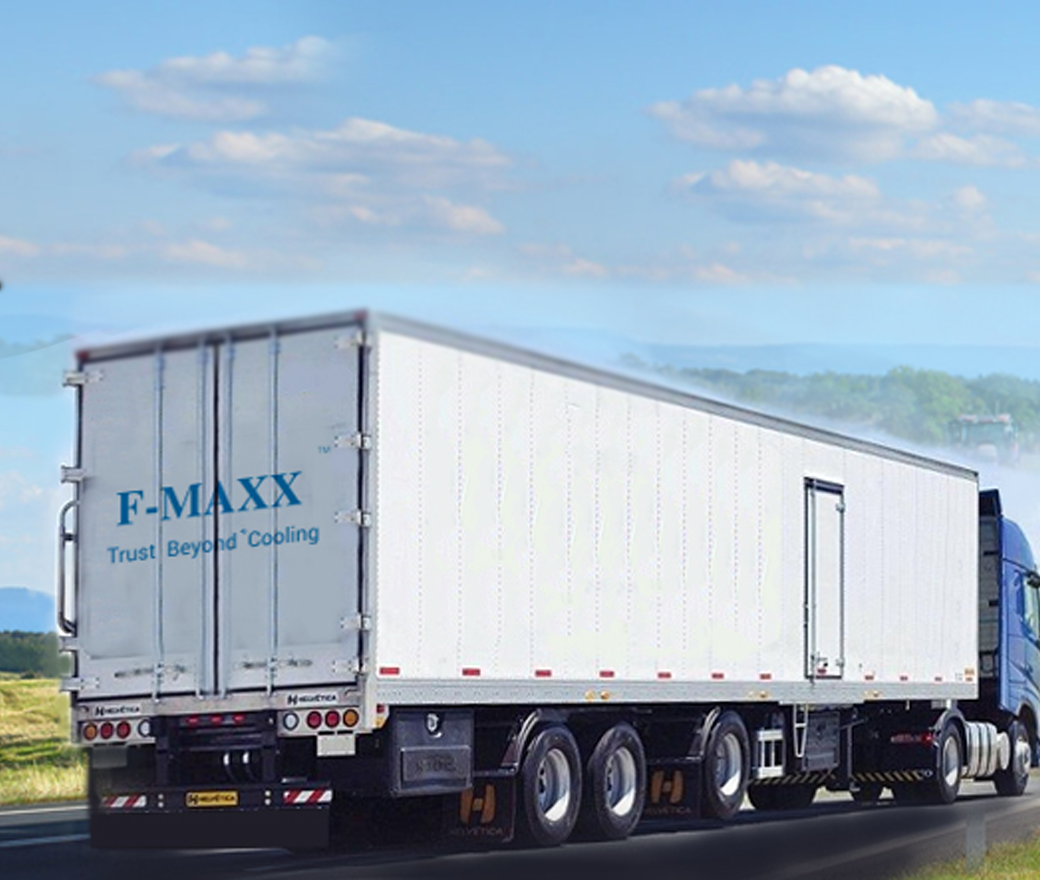
Transport refrigeration: Reefer truck bodies face ambient temperature challenges that change throughout a delivery route, from a cool morning departure to a hot mid-day parking lot with engine heat radiating nearby. Condensing unit selection for reefer applications must account for worst-case ambient, door-opening frequency, and product load.
For cold-chain projects in high-ambient regions, the right approach is to specify refrigeration equipment against actual site conditions, not just nominal catalog ratings. F-Max Systems India Pvt. Ltd. manufactures condensing units in both air-cooled and water-cooled configurations, engineered for heavy ambient conditions, at their Coimbatore facility. For a cold room or freezer operating in demanding ambient conditions, talk to a refrigeration specialist who can size the system against your site ambient, product load, storage temperature, and pull-down requirement.
Frequently Asked Questions
Yes. Higher ambient reduces the available temperature difference for heat rejection. The system responds by running at higher condensing temperature and pressure, which increases compressor work and can reduce available cooling capacity. The condensing unit may still run, but it delivers less cooling per hour and takes longer to reach target temperature.
Head pressure rises because the condenser must reject heat to hotter air. To keep heat moving out of the refrigerant, the condensing temperature and pressure must increase. ACHR News explains that when ambient increases, less heat can be rejected, so internal condenser temperature and pressure rise.
Not always. Low ambient can lower condensing pressure so much that the expansion valve does not receive enough pressure differential to feed refrigerant properly. Without head-pressure controls (fan cycling, variable-speed fans, flooding valves), low ambient can cause erratic operation, evaporator starving, and oil return problems.
Condenser split is the difference between the saturated condensing temperature and the air temperature entering the condenser. For example, 110°F condensing temperature minus 80°F ambient equals a 30°F condenser split. Copeland states that many air-cooled condensers are selected for 20 to 30°F TD at design conditions.
Absolutely. Dirt, blocked airflow, failed fans, and recirculated discharge air all reduce heat rejection and raise condensing temperature and pressure, producing the same symptoms as genuinely high ambient. The diagnostic difference is that condenser split will be abnormally high for the actual entering-air temperature, pointing to a condenser-side problem rather than weather.
It should be correctly selected for the design ambient, evaporating temperature, refrigerant, load, and operating hours. Oversizing without proper controls can create short cycling and low-load problems, while undersizing leads to high head pressure and poor pull-down. ACEEE notes that optimum condensing pressure depends on system characteristics, condenser size, controls, and load profile.
Often yes, because water can be cooler than daytime air and evaporative cooling towers can approach the wet-bulb temperature, which is always lower than the dry-bulb temperature. But water-cooled systems require adequate water supply, water treatment, cooling-tower maintenance, and may have regulatory requirements. They are a strong option where those conditions can be met.
The ORNL rule of thumb is about 1.5% more compressor power per °F increase in condensing temperature. A 10°C (18°F) rise in condensing temperature, which is realistic when comparing a mild morning to a hot afternoon, could mean roughly 25 to 30% more compressor energy. Condensers themselves also contribute to system energy, accounting for 15 to 20% of total industrial refrigeration energy consumption.
🌐 Get Online Quote at www.fmax.in/contact-us
📞 Call +91 94896 08022 to speak with our team.