TLDR
A mango ripening cycle is a staged recipe that controls pulp temperature, ethylene exposure, humidity, CO₂ removal, and airflow to bring mature fruit to a target ripeness on schedule. Planning the cycle starts with the dispatch date and incoming fruit condition, not with ethylene dosing. Automated controllers turn this plan into a repeatable, sensor-driven process with alarms, logs, and venting logic. In India, only ethylene gas (up to 100 ppm) is permitted for artificial ripening; calcium carbide is banned.
A mango ripening cycle is not a timer you set and forget. It is a controlled recipe, a sequence of chamber conditions designed to move mature, unripe mangoes to a specific ripeness stage by managing fruit temperature, ethylene concentration, humidity, airflow, and carbon dioxide removal. When automated controllers handle the process, these conditions become programmable stages with sensor feedback, timed transitions, alarms, and control outputs for refrigeration, humidification, ethylene dosing, ventilation, and remote monitoring.
According to UC Davis, applying 100 ppm ethylene for 12 to 24 hours at 20 to 22°C and 90 to 95% relative humidity accelerates and improves uniform ripening in mangoes, with the process completing in 5 to 9 days depending on cultivar and maturity. The Australian Mango Industry Association’s ripening manual adds that the actual schedule should be planned after checking fruit condition, prior handling, customer orders, and available room space. Planning a ripening cycle for mangoes using automated controllers means translating all of this into a working recipe the system can execute.
The question worth asking first is not “how much ethylene should I dose?” It is “what ripeness must these mangoes reach on dispatch day, and what condition are they in right now?”
What Is a Mango Ripening Cycle?
A mango ripening cycle is a timed plan for moving mature mangoes from an unripe state to a target ripeness by controlling five variables: temperature, ethylene, humidity, airflow, and CO₂ levels. The Australian Mango Industry Association’s ripening manual describes recommended ripening conditions that include temperature management, ethylene injection, humidity control, and room venting. UC Davis adds that CO₂ should be kept below 1% during the process.
Think of the cycle as having clear phases. The fruit arrives. Its temperature is brought into the ripening range. Ethylene is introduced. The room holds steady while the fruit responds. CO₂ is vented as respiration increases. Then the fruit is either held, slowed, or dispatched depending on the order.
Without a plan, the process becomes guesswork. With a plan and an automated controller, it becomes repeatable.
What Does an Automated Ripening Controller Actually Do?
An automated ripening controller is a PLC, microprocessor, or IoT-based unit that reads sensor data and adjusts chamber equipment according to a programmed recipe. It does not ripen the fruit. It holds the environment stable and responds to deviations.
Inputs the controller reads
-
Room air temperature sensor
-
Pulp temperature probe (or manual log entry)
-
Relative humidity sensor
-
CO₂ sensor
-
Ethylene sensor or analyzer (where fitted)
-
Door position and fan status
-
Power and alarm acknowledgment
Outputs the controller manages
-
Refrigeration compressor and evaporator
-
Heater (if warming is needed)
-
Humidifier or fogger
-
Ethylene generator or gas-dispensing solenoid
-
Exhaust fan and fresh-air damper
-
Circulation fans
-
Alarm beacon, SMS, or remote dashboard
For example, Chemtron’s auto-ripening controller monitors ambient temperature, pulp temperature, RH, ethylene (0 to 200 ppm), and CO₂ (0 to 3.2%), and it uses relay outputs for refrigeration, humidification, gas dispensing, and CO₂/fresh-air dampers. It also includes preset recipes with stages such as precool, dosing, venting, and post-cool, plus automatic fallback to time-based operation if a sensor fails. Interko’s RipePilot, now deployed across more than 100 sites covering over 300 ripening rooms, similarly manages temperature, humidity, and gas levels and includes a fail-safe mode if sensor data is interrupted, according to a 2026 FreshPlaza report.
If you are evaluating chamber systems and controller integration, understanding how to choose a modular cold room is a useful first step, because the controller can only perform well when the chamber, insulation, refrigeration, and airflow are engineered correctly.
Key Terms You Need Before Planning a Cycle
Before programming any controller recipe, operators should share a common vocabulary. Here are the terms that matter most.
Pulp temperature. The internal temperature of the fruit. It matters more than room air temperature because the fruit’s biological response follows pulp temperature. The Australian Mangoes manual notes that pulp can be 1 to 2°C above room air during ripening, so relying on the room display alone will mislead you.
Ethylene ppm. Parts per million of ethylene gas in the chamber air. This is the concentration target the controller or operator manages. FSSAI permits ethylene gas at concentrations up to 100 ppm depending on crop, variety, and maturity.
Shot dosing. Intermittent ethylene injection. The Australian manual gives an example of 100 ppm every 6 to 8 hours during the first 2 to 3 days.
Trickle dosing. Continuous low-level ethylene supply. The same manual describes 10 ppm continuous ethylene for the first 2 to 3 days.
Relative humidity (RH). The amount of water vapor in chamber air relative to the maximum at that temperature. UC Davis lists 90 to 95% as optimum for mango handling. Low humidity causes shriveling and weight loss.
CO₂ buildup. Carbon dioxide accumulates from fruit respiration. The Australian Mangoes manual warns that CO₂ above 1% can inhibit ripening. FSSAI’s India SOP sets the limit even lower, at 5000 ppm (0.5%).
Forced-air ripening. An airflow method that pushes or pulls air through vented containers for uniform fruit temperature. It only works when containers are properly vented and pallets are arranged to prevent air bypass.
Dry matter. A maturity indicator. The Australian manual’s troubleshooting section says dry matter should be above 14% to support good ripening outcomes.
Green-ripe. Fruit that has softened but shows poor skin yellowing. Causes include low dry matter, high ripening temperatures above 24°C, and CO₂ above 1%.
Sensor fallback. A controller safety feature where the system shifts to time-based operation if sensor data fails. This keeps the cycle running (imperfectly) rather than letting conditions drift unmonitored.
Calcium carbide. A banned artificial ripening agent in India. FSSAI states it is prohibited because of health risks and possible arsenic and phosphorus residues. It is not the same as ethylene gas.
Step 1: Plan Backward from the Required Dispatch Ripeness
The first step in planning a mango ripening cycle with automated controllers is defining the end point. What ripeness must the mangoes reach on the day they ship?
A retail customer wanting “ready-to-eat” mangoes needs a different cycle than a wholesale buyer who will hold fruit for two more days. A pulper needs fully ripe fruit. Each target changes the timeline, temperature hold, and dispatch readiness.
A ripening master profiled by Dawsongroup describes this reality directly: some customers need ready-to-eat mangoes while others can ripen for a few more days, so flexibility matters. He also notes that operators can slow the process by lowering temperature but cannot suddenly speed it up. This is worth remembering. Planning backward from the dispatch date builds in buffer time. If the order changes, you have a lever to pull (temperature down). If you start late and need to rush, there is no safe way to compress biology.
Build your controller recipe from the dispatch day backward: dispatch date, minus holding/cooling time, minus active ripening days, minus pre-conditioning time, equals the day you need to load the chamber.
Step 2: Assess Incoming Fruit Before Programming the Controller
A strong controller recipe starts with what walks through the receiving dock. Record the following for every lot:
-
Variety (Alphonso, Kesar, Tommy Atkins, Carabao, and others all behave differently)
-
Grower, packer, and lot number
-
Pack date or estimated fruit age
-
Arrival pulp temperature
-
External color and firmness
-
Signs of softening, yellowing, sap burn, rots, or mechanical damage
-
Maturity indicators such as dry matter, Brix, flesh color, and shoulder shape where practical
Why this matters: immature fruit will soften but will not develop pleasing flavor, regardless of how much ethylene you apply. Catalytic Generators’ mango program guidance states that maturity and ripeness can be judged by flesh color, firmness, SSC, dry matter, and fruit shoulder shape. The Australian manual reinforces this, noting that immature fruit softens slowly with poor skin color and poor flavor.
The controller implication is direct: create separate recipes or separate chamber runs for lots with different pack dates, temperatures, or maturity. Do not mix older, warmer fruit with cold hard-green fruit unless the goal is uneven ripening and customer complaints.
Step 3: Decide Whether to Store, Sort, or Ripen Immediately
Not every lot goes straight into a ripening cycle. The Australian Mango Industry Association provides a useful decision framework based on variety, ripeness, arrival pulp temperature, and days from packing:
|
Arrival Condition |
Suggested Action |
|---|---|
|
Hard-green, cool, recent pack date |
Store briefly at appropriate temperature, or schedule a later cycle |
|
Hot fruit, older pack date |
Pre-cool and ripen sooner |
|
Mixed ripeness within the lot |
Sort before loading the chamber |
|
Already softening or yellowing |
Ripen immediately or route to faster sale |
|
Immature fruit (low dry matter) |
Do not expect ethylene to create good flavor |
The manual specifically warns operators to select older pack dates and ripen that fruit immediately, and to store hard-green fruit only for a limited period depending on variety. Some lots offer 7 to 10 days of storage potential, others only 5 to 7, and some should be ripened right away.
For operations managing both pre-ripening storage and post-ripening holding, understanding cold storage requirements alongside ripening chamber design prevents bottlenecks.
Step 4: Set the Temperature and Pulp Temperature Target
Temperature is the single biggest driver of ripening speed, flavor development, color change, and decay risk. Get it wrong and the controller cannot compensate.
The Australian Mangoes manual recommends a room temperature of 18 to 20°C and a pulp temperature of 18 to 22°C during ripening. UC Davis describes ethylene treatment at 20 to 22°C with 90 to 95% RH. The two ranges overlap, and the right point within that range depends on variety, maturity, and how quickly you need the fruit ready.
Three temperature rules stand out from the literature:
-
Above 22°C increases rot risk and can accelerate ripening beyond control. Above 24°C can contribute to poor skin yellowing.
-
Below 18°C reduces yellowing and flavor development, producing fruit that softens but does not eat well.
-
-
Pulp temperature can run 1 to 2°C above room air, so checking the room display is not enough. Spot-check pulp temperature with probes in different pallet layers and different sides of the room.
The first stage of any automated controller recipe should be pre-conditioning: bringing fruit pulp into the target range before ethylene is introduced. Dosing ethylene into fruit that arrived at 8°C from a cold truck, or at 30°C from a hot holding yard, defeats the purpose of controlled ripening.
Reliable refrigeration units for controlled ripening rooms are the foundation for maintaining these narrow temperature bands, especially in India’s high-ambient conditions where room loads fluctuate significantly.
Step 5: Program Ethylene Exposure
Ethylene is a natural plant hormone that triggers ripening in climacteric fruits like mangoes. In a controlled chamber, it is introduced as a gas to initiate uniform ripening across the load. The goal is not “more ethylene, faster ripening.” The goal is the right concentration, at the right pulp temperature, for the right duration.
Different sources describe different ethylene schedules, and these are not contradictions. They reflect different equipment, varieties, and market targets:
-
UC Davis: 100 ppm for 12 to 24 hours at 20 to 22°C and 90 to 95% RH
-
Australian Mangoes, shot system: 100 ppm every 6 to 8 hours during the first 2 to 3 days
-
Australian Mangoes, trickle system: 10 ppm continuous ethylene during the first 2 to 3 days
-
Catalytic Generators / National Mango Board: 100 ppm for a 24-hour cycle in a four-day commercial process
-
Postharvest.biz: 100 to 150 ppm for about 48 hours, depending on maturity, season, origin, and variety
For India, the safe and compliant approach is to use approved ethylene gas at concentrations up to 100 ppm, as recognized by FSSAI. Ethylene sources in powder or liquid form must never directly contact the fruit. Calcium carbide is prohibited under all circumstances.
An automated controller with an ethylene sensor or analyzer can maintain the target concentration, compensate for leakage, and pause dosing during venting cycles. Without automation, operators must dose manually and guess at concentrations, which leads to inconsistency, waste, or overdosing.
Step 6: Control Humidity
Low humidity causes mangoes to shrivel, lose weight, and look unappealing. High humidity prevents these problems but creates its own risks: condensation on fruit can encourage decay, and standing moisture creates hygiene issues.
The target band across major references is consistent:
-
UC Davis: 90 to 95% RH
-
Catalytic Generators: 90 to 95% RH
-
Australian Mangoes: at least 85% RH
The controller should use RH feedback to switch humidifiers or foggers on and off, maintaining the setpoint without creating wet surfaces. If the chamber is poorly insulated or doors are opened frequently, RH will drop and the system will struggle to recover. Chamber envelope quality, including PUF panel insulation and airtight door seals, directly affects humidity stability and energy consumption.
Step 7: Automate CO₂ Venting
This is the step most manual operations get wrong. Mangoes respire heavily during ripening, producing CO₂ that accumulates in a sealed chamber. CO₂ above 1% inhibits ripening, according to the Australian Mangoes manual, and FSSAI’s India SOP sets the threshold at 5000 ppm (0.5%), requiring scrubbing or air exchange every 6 hours.
The venting logic in an automated controller should work like this:
-
CO₂ sensor detects levels crossing the threshold.
-
Exhaust damper opens.
-
Ventilation fan runs, flushing the room with fresh air.
-
Ethylene dosing pauses during venting to avoid wasting gas.
-
Once CO₂ returns to the safe range, dampers close and the recipe resumes.
-
The event is logged.
Without a CO₂ sensor and automated venting, operators must open doors on a timer (wasting ethylene, destabilizing temperature and humidity) or, worse, not vent at all and wonder why fruit ripens slowly. Automated CO₂ management is one of the strongest arguments for planning a mango ripening cycle using automated controllers rather than relying on manual intervention.
Step 8: Load the Chamber for Airflow
A perfect controller cannot fix bad loading. Uneven ripening is more often an airflow problem than a recipe problem.
The Australian Mangoes manual is specific here:
-
Forced-air systems only work when containers have adequate ventilation. At least 4% of the package side must be vented for proper airflow.
-
Air takes the path of least resistance. Gaps between pallets, misaligned vents, and cross-stacked cartons let air bypass the fruit entirely.
-
Insufficient airflow can make fruit inside a pallet rise 6°C warmer than outside fruit and become one ripeness stage ahead. That is the difference between a uniform load and a mixed box of hard and mushy mangoes.
-
Leave at least 10 cm around pallets for air circulation.
FSSAI adds that fruit should not occupy more than 75% of the chamber or crate volume during treatment, supporting uniform airflow and safe gas distribution.
Practical loading rules:
-
Same pack dates together.
-
Same container types together.
-
Align carton vents with the direction of airflow.
-
Place packages with the least ventilation closest to the fan or plenum.
-
Do not overfill the room.
-
Check pulp temperature in multiple pallet positions before and during the cycle.
Step 9: Monitor, Log, and Adjust Daily
Automation provides stable conditions and trend data. It does not inspect fruit. A controller that says “Day 3, Stage 3, all sensors normal” is only reporting the environment. The mangoes might still be too firm, spotted, or showing uneven color.
The Australian Mangoes manual recommends checking fruit daily during ripening: sample packages from different layers and opposite sides of pallets, and do not use the top three layers as representative samples (they are always ahead because warm air rises and they get the most airflow).
A ripening master profiled by Dawsongroup checks hardness and Brix regularly, adjusts temperature, and visits rooms manually, including on weekends. He says human monitoring remains vital and that automation supports skilled judgment rather than replacing it.
What to review daily:
-
Pulp temperature at multiple pallet positions
-
Firmness and external color changes
-
CO₂ and ethylene sensor trends from the controller log
-
Any alarm events since the last check
-
Signs of rots, spotting, or off-odors
-
Whether the load is progressing toward the dispatch target
Keeping sensors calibrated and equipment maintained is part of this discipline. Regular preventive maintenance of cold rooms and ripening chambers reduces the risk of sensor drift, fan failure, and refrigerant leaks that silently degrade cycle quality.
Example Controller Recipe: Four-Day Mango Ripening Cycle
This is an illustrative template, not a universal SOP. Actual settings must be adjusted for variety, maturity, fruit age, chamber design, local regulation, and customer requirements. The four-day structure aligns with Catalytic Generators’ commercial mango program and the Australian manual’s observation that ethylene-assisted ripening takes 4 to 6 days versus 6 to 12 days without ethylene.
|
Stage |
Approx. Timing |
Controller Objective |
Typical Controls |
Manual QA Check |
|---|---|---|---|---|
|
Stage 0: Receival and sorting |
Day 0 |
Decide whether to ripen now or store first |
Record lot data, fruit temperature, maturity, defects |
Check pulp temp, firmness, external color, flesh color or Brix |
|
Stage 1: Pre-condition |
Day 0 to Day 1 |
Bring fruit pulp into ripening range (18 to 22°C) |
Refrigeration or heating, fans, RH control |
Probe fruit in multiple pallet positions, not just the top layer |
|
Stage 2: Ethylene trigger |
Day 1 to Day 2 |
Trigger uniform ripening |
Ethylene dosing (up to 100 ppm), RH at 90 to 95%, CO₂ venting |
Confirm ethylene concentration; check CO₂ levels |
|
Stage 3: Active ripening |
Day 2 to Day 3 |
Maintain steady pulp temp and humidity while managing CO₂ |
Cooling, RH, fan cycles, automated venting, alarms |
Daily firmness and color checks; inspect pallets on different sides |
|
Stage 4: Hold or slow-down |
Day 3 to Day 4 |
Slow fruit if dispatch is later than expected |
Lower setpoint slightly; reduce or stop ethylene; continue humidity and venting |
Match lot to customer order; check for rots, green-ripe fruit, spotting |
|
Stage 5: Dispatch |
Dispatch day |
Deliver target ripeness |
Holding temperature appropriate to ripeness stage; maintain RH |
Inspect sample fruit; log final ripeness and defects |
The controller manages transitions between stages automatically based on time, sensor thresholds, or operator override. A well-designed system logs every setpoint, sensor reading, alarm, and stage change, creating the batch record that QA teams and retail customers increasingly expect.
Common Mistakes When Automating Mango Ripening
Even with a good controller, these errors cause losses:
-
Dosing ethylene before pulp temperature is ready. Ethylene injected into hot fruit (above 24°C) can cause skin spotting. Ethylene injected into cold fruit (below 15°C) barely works. Always pre-condition first.
-
Treating all varieties and maturities the same. An Alphonso at 16% dry matter and a Tommy Atkins at 12% dry matter need different recipes. Run separate batches.
-
Ignoring CO₂ buildup. If the venting system is not configured or the CO₂ sensor is uncalibrated, ripening can slow without obvious cause.
-
Overloading the chamber. Fruit packed beyond 75% of chamber volume restricts airflow and gas distribution.
-
Poor pallet stacking and blocked vents. Cross-stacking, misaligned vents, and packages with insufficient ventilation area (under 4% of the side) create temperature gradients of up to 6°C within a single pallet.
-
Skipping manual fruit checks. The controller monitors the room, not the fruit. Firmness, color, and Brix still need human hands and eyes.
-
Using calcium carbide or direct-contact ethylene sources. These are prohibited in India and create safety and compliance risks.
-
Not calibrating sensors. A drifting CO₂ or temperature sensor feeds bad data to the controller, which then makes bad decisions confidently.
-
Treating controller time as proof of ripeness. “The cycle ran for four days” does not mean the fruit is ready. Ripeness is confirmed by physical inspection.
-
Holding ripe fruit too long. Once mangoes reach target ripeness, every extra hour at ripening temperature increases rot risk. Move to dispatch or lower-temperature holding promptly.
India Safety Note: Ethylene Is Not Calcium Carbide
This distinction deserves a clear section because consumer confusion runs deep. Practitioners on Reddit’s r/india report that in many areas, calcium carbide (locally called “masala”) remains common, with one user stating “in my area everyone use carbide and I have no idea how to get mangoes without carbide.” Threads on r/indiasocial show similar confusion, with commenters struggling to distinguish ethylene packets from unsafe chemical ripeners.
Here is what FSSAI actually says:
-
Ethylene gas is permitted for artificial ripening at concentrations up to 100 ppm, depending on crop, variety, and maturity.
-
Calcium carbide is prohibited under Regulation 2.3.5 of the Food Safety and Standards Regulations. FSSAI’s April 2026 advisory reiterated this ban and directed inspections of mandis, storage facilities, wholesalers, and distributors.
-
Direct contact between fruit and ethylene sources in powder or liquid form is strictly prohibited. Ethylene must be applied as a gas in a sealed chamber, not sprinkled or sprayed onto fruit.
-
Ethylene is flammable. FSSAI guidance notes that concentrations above 27,000 ppm are explosive, and that gas-leakage monitoring should be installed in commercial ripening chambers.
An automated mango ripening controller should be treated as both a quality tool and a compliance tool. It maintains ethylene within the approved range, logs the concentration, vents CO₂, and creates a batch record that demonstrates compliant practice. For operations serious about replacing manual methods with documented, safe ripening, talk to F-Max about automated ripening chamber design.
When Should You Consider an Automated Controller?
Manual ethylene dosing works for small volumes and experienced operators. Automation becomes worth it when:
-
You run multiple ripening rooms with different fruits or customers.
-
You need batch logs and traceability for retail compliance or food safety audits.
-
CO₂ venting needs to happen automatically, not on a hope-and-a-timer basis.
-
Remote alerts matter because no one can be on-site 24/7.
-
Operator error from manual dosing, missed venting, or temperature drift is causing waste and rejections.
-
You need to hit different ripeness targets (ready-to-eat for retail, firm-ripe for wholesale) from the same variety.
A vendor case study from SmartHarvest illustrates the operational pain of old systems: Tropifruit’s previous controller required constant manual configuration, caused uneven ripening and increased wastage, lacked remote fault notification, and pulled staff into irregular on-site checks. After adopting an automated ripening control system, the operation reported a 35% reduction in total cost of operation and 96% reduction in wastage over six months. Those are vendor-reported numbers, not a universal guarantee, but they point to the scale of improvement possible when planning shifts from guesswork to sensor-driven recipes.
The industry is moving in this direction broadly. A 2026 report from Fructidor notes that modern ripening is increasingly managed through sensor data and real-time analysis rather than experience alone, with AI integration on the horizon for quality timing, energy use, and operational planning.
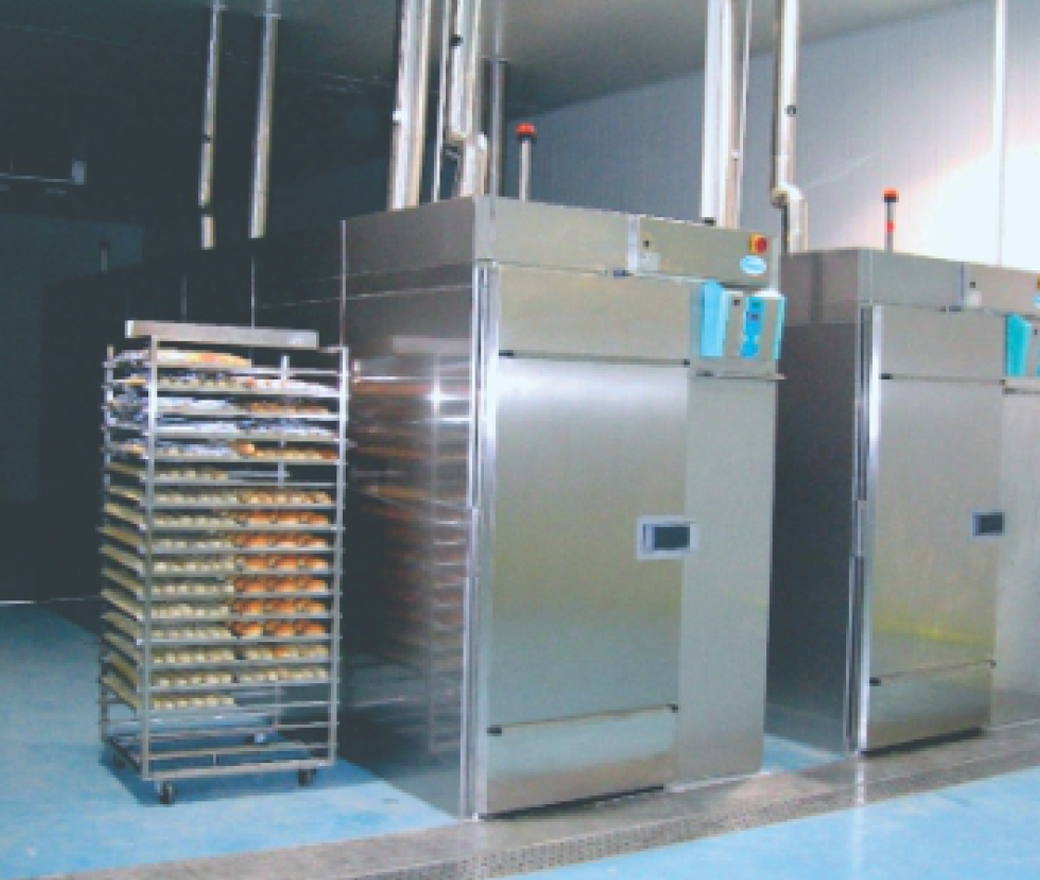
F-Max offers ripening chambers with manual ethylene dosing (with analyzer) or ethylene generators, as well as fully automated centralized controllers handling four-day cycles with minimal intervention. For operations evaluating a chamber project that integrates refrigeration, insulation, airflow, and control in one build, the advantage of a single-vendor approach is tighter coordination and fewer gaps between what the controller asks for and what the hardware delivers.
Troubleshooting Guide
Slow Ripening
Symptoms: Fruit takes more than 7 days from ethylene start to reach the sprung stage.
Likely causes: Immature fruit, low pulp temperature, CO₂ above 1%, faulty ethylene injection (empty cylinder, leakage, blockage).
Controller checks: Verify pulp temperature, review CO₂ trend and venting events, confirm ethylene dosing occurred, check sensor calibration, and check fruit maturity or dry matter.
Uneven Ripening
Symptoms: Variation within trays, between trays, between pallets, or across the room.
Likely causes: Variable fruit maturity, no ethylene, different pack dates, variable fruit temperature, insufficient package ventilation, cross-stacking, mixed packaging.
Controller checks: Compare pulp temperatures at multiple pallet positions, check fan operation, inspect pallet gaps and plenum seal, review ethylene and CO₂ logs.
Green-Ripe Fruit (Poor Yellowing)
Symptoms: Fruit softens but skin stays green or mottled.
Likely causes: Early-season low dry matter, excessive nitrogen in the grove, high ripening temperatures above 24°C, CO₂ above 1%.
Controller checks: Check whether temperature exceeded the recipe band, review CO₂ event history, confirm fruit was mature. More ethylene will not fix immature fruit.
Fruit Rots
Symptoms: Body rot, soft stem-end rot, or other decay.
Likely causes: Dormant field infections, poor packhouse fungicide treatment, ripening above 22°C, holding ripe fruit too long.
Controller checks: Review high-temperature alarms, check whether dispatch was delayed, track lot and grower history.
Skin Spotting
Likely causes: Sap issues during harvest and packing, or ethylene injected while fruit pulp was above 24°C.
Controller checks: Ensure the pre-conditioning stage completed before ethylene dosing began. Use pulp temperature confirmation as a gate before the gas stage starts.
Chilling Injury
Symptoms: Uneven ripening, poor color and flavor, surface pitting, scald-like discoloration, increased decay, and flesh browning.
Likely causes: UC Davis lists optimum storage at 13°C for mature-green mangoes and 10°C for ripe mangoes. Storing below these thresholds, or long cold-transport exposure, causes damage.
Controller checks: Separate storage recipes from ripening recipes. Do not overcool, and ensure post-ripening holding temperature matches the fruit’s ripeness stage. Protecting the cold chain after dispatch is where reefer trucks with reliable temperature control play a role.
Frequently Asked Questions
It depends on variety, maturity, pulp temperature, and ethylene exposure. The Australian Mangoes manual shows 4 to 6 days with ethylene and 6 to 12 days without ethylene. UC Davis describes 5 to 9 days with 100 ppm ethylene at 20 to 22°C and 90 to 95% RH. A typical commercial ready-to-eat program runs about four days.
Common guidance falls in the 18 to 22°C range. The Australian manual recommends room temperature of 18 to 20°C and pulp temperature of 18 to 22°C. UC Davis describes 20 to 22°C for ethylene treatment. Above 22°C increases rot risk; below 18°C reduces color and flavor development.
UC Davis describes 100 ppm for 12 to 24 hours. The Australian manual gives examples of 10 ppm continuous (trickle) or 100 ppm every 6 to 8 hours (shot dosing) for the first 2 to 3 days. FSSAI permits ethylene gas up to 100 ppm depending on crop, variety, and maturity. The right amount depends on your equipment, fruit condition, and target ripeness.
Mangoes respire during ripening and produce CO₂. Levels above 1% can inhibit ripening. FSSAI’s SOP says CO₂ should be maintained below 5000 ppm in artificial ripening chambers. Automated CO₂ venting, triggered by a sensor threshold, is one of the clearest advantages of controller-based systems.
No. Automation stabilizes the room environment, logs data, responds to deviations, and reduces operator error. But fruit maturity, defects, airflow problems, and market timing still require human judgment. Dawsongroup’s ripening master specifically says human monitoring remains vital even with remote-controlled cells.
Ethylene gas is permitted by FSSAI at up to 100 ppm depending on crop, variety, and maturity. Direct contact between fruit and ethylene in powder or liquid form is prohibited. Calcium carbide is banned. The safe approach is controlled ethylene gas in a sealed, ventilated chamber with monitoring.
Common causes include mixed maturity, different pack dates, insufficient ethylene exposure, poor airflow, blocked package vents, cross-stacking, and fruit temperature variation. The Australian manual reports that fruit inside a poorly ventilated pallet can become 6°C warmer than outside fruit and one ripeness stage ahead.
At minimum: room temperature, pulp temperature (probe or manual), RH, and CO₂. An ethylene sensor or analyzer is strongly recommended for verifying dosing. Door status, fan status, and alarm acknowledgment inputs round out a well-designed system. More advanced setups add remote dashboards and power-failure alerts.
Planning Your Mango Ripening Chamber
Planning a ripening cycle for mangoes using automated controllers is ultimately about converting fruit science into a repeatable, logged, adjustable process. The controller holds the environment steady. The recipe reflects the biology. The operator provides judgment. And the chamber, from insulation to refrigeration to airflow design, determines whether the controller’s instructions can actually be executed.
If you are evaluating a ripening chamber project that needs to get all of this right, from refrigeration units and insulated panels to automated controllers and ethylene management, contact F-Max to discuss a chamber design built around your fruit, your market, and your operations.
🌐 Get Online Quote at www.fmax.in/contact-us
📞 Call +91 94896 08022 to speak with our team.