TLDR
Walk-in freezer options for hotel kitchens are not a single product but a series of decisions about temperature, room layout, insulation, doors, refrigeration systems, controls, and maintenance plans. Hotel kitchens need frozen storage at -18°C or below per FSSAI guidance, and the right configuration depends on meal volume, delivery frequency, banquet demand, and staff traffic patterns. This guide defines every term a buyer needs before requesting a supplier quote, from PUF panel thickness to blast freezer distinctions to door gasket maintenance.
Why Hotel Kitchens Face a Different Freezer Problem
A 200-room hotel with banquet facilities, a breakfast buffet, room service, and two restaurants has storage demands that shift by the hour. Monday morning looks nothing like Saturday night. Frozen seafood for the grill station, ice cream for the dessert counter, pre-portioned meats for banquet service, frozen vegetables for the soup kitchen: all of it needs to stay at -18°C or below, which is the frozen storage anchor that FSSAI guidance establishes for food businesses in India (FSSAI Basic Catering Manual).
Most vendor pages treat walk-in freezers as a single product. Pick a size, get a quote. But walk-in freezer options for hotel kitchens actually involve at least eight categories of choices: temperature band, room configuration, construction method, refrigeration system, door design, installation location, monitoring and controls, and operational use case. Getting any one of these wrong leads to high electricity bills, frost buildup, food safety risks, or equipment that cannot keep up with banquet peaks.
This glossary covers every option and term you will encounter when evaluating cold storage for a hotel kitchen. If you want a broader purchasing framework first, the walk-in freezer buying guide covers the process end to end.
Quick Answer: Which Freezer Option Does a Hotel Kitchen Need?
|
Hotel kitchen need |
Best option |
Why |
|---|---|---|
|
Bulk frozen storage (meat, seafood, frozen vegetables) |
Walk-in freezer |
Holds frozen inventory at -18°C or below |
|
Fresh produce, dairy, chilled prepared foods |
Walk-in chiller |
Above-freezing refrigerated storage, typically 0°C to 5°C |
|
Both fresh and frozen storage in tight space |
Dual-temperature or combi cold room |
Shared footprint with thermally separated zones |
|
Freezing cooked or prepped food quickly |
Blast freezer |
Rapid pull-down, not just holding |
|
Daily line access for cooks |
Reach-in or undercounter freezer |
Reduces walk-in door openings |
|
High-value inventory with uptime risk |
Walk-in freezer with alarms, monitoring, and AMC |
Prevents costly spoilage events |
Core Definitions: Freezer, Chiller, Cold Room, and Blast Freezer
Before comparing options, the terms need to be clear. Vendors in India sometimes use “cold room,” “chiller,” and “freezer” interchangeably, which creates real confusion for buyers.
Walk-In Freezer
An insulated, room-sized freezer that staff can physically enter to store and retrieve frozen food in bulk. The U.S. Department of Energy defines a walk-in freezer as an enclosed refrigerated storage space that can be walked into and is refrigerated at or below 32°F (0°C) (U.S. DOE). In Indian hotel kitchens, the practical target is -18°C or below, per FSSAI requirements.
Why it matters for hotels: A walk-in freezer is the backbone of frozen inventory management. It holds bulk meat, seafood, frozen vegetables, bakery items, desserts, ice cream stock, and banquet reserves. Without one, a hotel kitchen either over-orders (waste) or under-stocks (menu disruption).
What to ask the supplier: Is the guaranteed holding temperature -18°C or below? What is the expected recovery time after door openings during peak service?
Walk-In Chiller (Walk-In Cooler)
A walk-in refrigerated room that holds food above freezing. Used for dairy, fresh produce, chilled prepared foods, and ready-to-eat items.
Key confusion point: One ranking supplier page lists a “cold room” temperature range of -5°C to 10°C (Sabari Kitchen). That range covers chiller territory, not proper frozen storage. If you need a walk-in freezer for your hotel kitchen, confirm that the design temperature is -18°C or below, not just “cold.”
Cold Room
A broad term for any insulated, temperature-controlled room. It could be a chiller, a freezer, a ripening room, or something else entirely. In India, vendors frequently use “cold room” as a catch-all. The buyer must always specify the target temperature, the products being stored, the expected load, and the use case. A cold room is not automatically a freezer.
Dual-Temperature or Combi Cold Room
A cold room arrangement with physically separated chilled and frozen zones, sometimes sharing a common structure. This makes sense for hotel kitchens with limited floor space that still need both fresh and frozen storage. The zones must be thermally independent, and airflow between them should not compromise product safety.
Blast Freezer
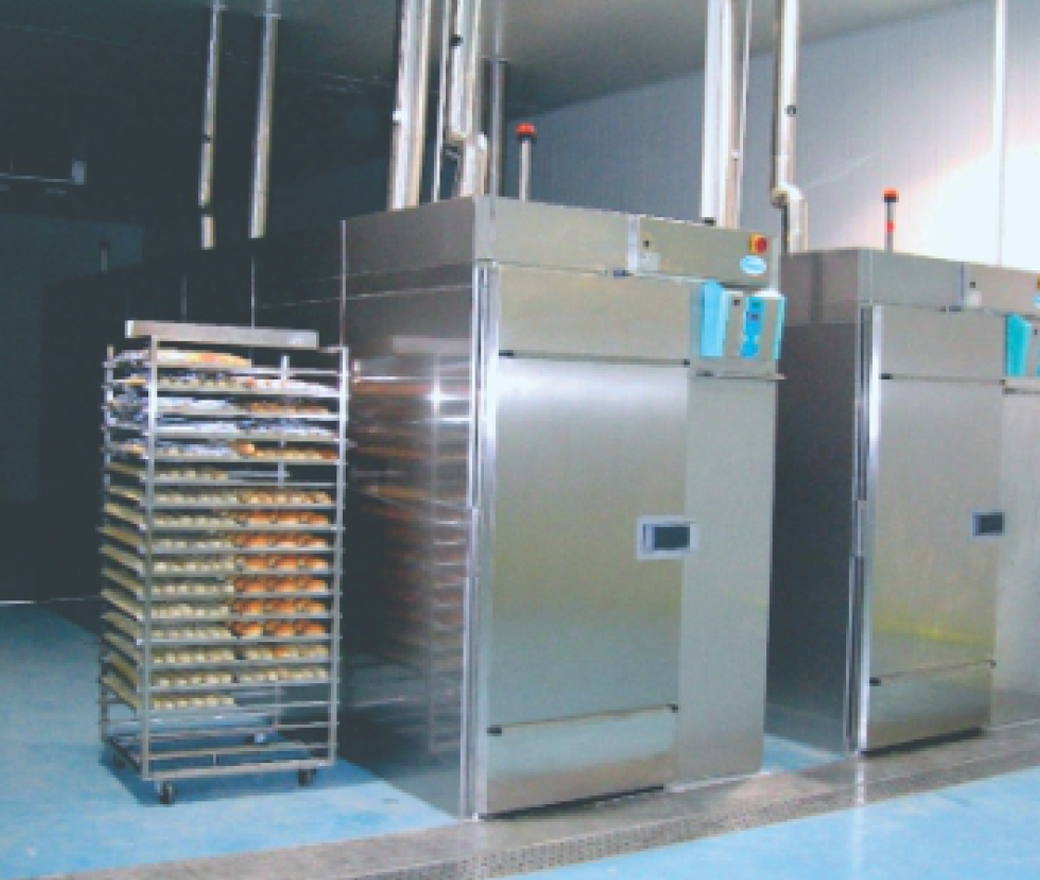
A rapid freezing system designed to pull product temperature down quickly, often to -35°C or -40°C at the air level. This is fundamentally different from a holding walk-in freezer.
FE&S, a leading foodservice equipment publication, explicitly states that walk-in coolers and freezers store inventory and should not be used to rapidly pull hot food temperatures down the way a blast chiller would (FE&S). Practitioners on Reddit echo this: a regular walk-in is for storing already frozen food, not for freezing room-temperature product loads.
If a hotel kitchen produces food that needs to be frozen or chilled quickly after cooking (banquet prep, sous vide production, bakery items), it needs a dedicated blast freezer. For a deeper explanation of how blast freezers work and when to specify one, see what is a blast freezer: how it works, types, and uses.
Reach-In Freezer
A standard upright or undercounter freezer that does not require walking into. Hotels often place reach-in freezers near the cooking line so that cooks can grab portioned items without opening the walk-in. This reduces walk-in door traffic, which (as covered below) is one of the biggest hidden costs in hotel kitchen freezer operations.
Temperature Options for Hotel Kitchen Cold Storage
Temperature is the first and most important decision. Get this wrong and the rest of the specification does not matter.
|
Storage category |
Practical target |
FSSAI anchor |
Common hotel use |
|---|---|---|---|
|
Chiller/cooler |
0°C to 5°C (product dependent) |
Cold storage for food below 5°C; refrigerators at 4°C or colder |
Fresh produce, dairy, chilled prep, sauces |
|
Refrigerated display |
4°C or colder |
4°C or colder |
Buffet display, pastry counter |
|
Freezer |
-18°C or below |
Frozen food at -18°C or below |
Meat, seafood, frozen vegetables, ice cream, banquet stock |
|
Deep freeze |
-25°C or below |
Product/HACCP specific |
Long-term seafood, specialty items |
|
Blast freezer |
Rapid pull-down, often to -35°C or -40°C air |
Cooling cooked food: 60°C to 21°C within 2 hours, then to 5°C within 4 more hours |
Post-cooking freeze, bakery, seafood processing |
Sources: FSSAI Basic Catering Manual, FSSAI 2024 Guidance
Ice cream and dessert storage is worth calling out separately. Many hotels store ice cream in the main walk-in freezer, but ice cream requires temperatures closer to -20°C to -25°C for proper consistency. If your hotel has a high-volume dessert program, consider a separate small freezer or a dedicated zone.
Room Configuration Options
Walk-in freezer options for hotel kitchens go beyond “one big cold box.” The right layout depends on kitchen workflow, available space, and how different food categories need to be separated.
Option 1: Freezer-Only Room
A single walk-in freezer dedicated to frozen storage. Simple and effective for hotels that have a separate walk-in chiller or use reach-in refrigerators for chilled items.
Option 2: Separate Chiller and Freezer Rooms
Two distinct walk-in units, each optimized for its temperature range. This is the most common setup in mid-size to large hotel kitchens. It provides clear separation and allows independent sizing.
Option 3: Freezer Inside a Chilled Ante-Room
FE&S notes that a freezer walk-in can be placed within a refrigerated walk-in, with the freezer door opening inside the chilled section rather than directly into the hot kitchen. This helps maintain more stable freezer temperatures because the contents are not exposed to ambient kitchen heat every time someone opens the door (FE&S). This configuration works well in hotel kitchens with high door traffic.
Option 4: Dual-Temperature Room
A single structure with separated chilled and frozen compartments. Useful when floor space is severely limited, but the thermal barrier between zones must be properly designed.
Option 5: Bulk Walk-In Plus Line Freezers
A bulk walk-in freezer near the receiving area for large-volume storage, combined with smaller reach-in or undercounter freezers near prep and cooking stations. This is often the best approach for hotels because it minimizes the number of times staff open the walk-in during service.
Option 6: Centralized Bulk Freezer for Banquet Hotels
Hotels with large banquet halls and irregular event schedules may need a larger centralized freezer to hold event stock. Banquet demand can spike dramatically, and if the freezer is sized only for daily restaurant operations, the hotel will run out of space during wedding season or conference weeks.
Raw and cooked segregation applies to every configuration. FSSAI guidance requires that raw and ready-to-eat or cooked food be stored separately (FSSAI Basic Catering Manual). In practice, this means either separate shelving zones within the walk-in (with raw below and cooked above), separate rooms, or at minimum separate sealed containers with clear labeling.
If you are evaluating custom cold storage configurations for a hotel project, the starting point should always be your menu, your meal counts, your delivery schedule, and your peak banquet capacity.
Construction Options: Panels, Insulation, Floors, Doors, and Finishes
The physical construction of a walk-in freezer determines how well it holds temperature, how long it lasts, and how much energy it wastes.
Modular Cold Room
A cold room assembled from prefabricated insulated panels on site. Modular construction is the standard for hotel kitchens because panels can be transported through corridors, assembled in existing spaces, and reconfigured or relocated if the kitchen layout changes. For a detailed comparison of modular versus built-in options, see how to choose a modular cold room.
PUF Panel (Polyurethane Foam Insulated Panel)
The workhorse of walk-in freezer construction. PUF panels reduce heat gain into the cold room. Panel thickness matters: thicker panels (100 mm, 120 mm, or more) provide better insulation for freezer temperatures, while thinner panels (50 mm to 80 mm) may suffice for chiller-range rooms.
Joint quality is just as important as thickness. Cam-lock joints create tight, repeatable connections between panels. Poor joints create thermal bridges, which are spots where heat sneaks through the insulation and causes condensation, frost, or energy waste.
For more on how panel properties affect cold storage performance, see the PUF panels benefits and cold storage efficiency guide.
Insulated Floor and Freezer Pad
Walk-in freezers need insulated floors. This is not optional. Horizon Equipment’s planning guide explicitly states that walk-in freezers must be installed on an insulated pad (Horizon Equipment).
Without floor insulation, the freezer slab absorbs heat from below, the compressor works harder, and in some cases the ground beneath can freeze and heave, cracking the floor structure.
Walk-in chillers sometimes use floorless designs (the existing kitchen floor serves as the base), but freezers operating at -18°C or below almost always require a proper insulated floor.
Vapor Barrier
A layer or system that reduces moisture migration into the insulation or freezer structure. Moisture infiltration is insidious. It degrades insulation over time, causes ice to form inside wall panels, and reduces thermal performance year after year.
Technicians on HVAC-Talk forums repeatedly connect frost and condensation problems with air leaks through seams, penetrations, and door seals, all paths for moisture to enter the freezer envelope (HVAC-Talk).
Freezer Doors: Swing, Sliding, and Heated
Swing doors are the most common for walk-in freezers. They should have heavy-duty hinges, a positive latch, a self-closer, and an internal safety release.
Sliding doors save space in tight corridors and are useful when carts need wide access.
Heated door frames prevent condensation and gasket freezing on freezer doors. FE&S lists heater wire control for freezer doors and port windows as a standard walk-in feature (FE&S). Without frame heaters, the gasket can freeze to the frame, making the door hard to open and damaging the seal over time.
Food-Grade Interior Finish
Interior surfaces should be smooth, non-absorbent, and easy to clean. Stainless steel or food-grade coated panels are standard. Georgia’s food-service design manual specifies that walk-in refrigerator and freezer floor-wall junctures should have approved coved junctures, with gaps and openings sealed or spaced for cleaning (Georgia Design Manual). Coved floor-to-wall junctions prevent food debris from accumulating in corners, which matters during hotel kitchen audits.
Refrigeration System Options
The refrigeration system is what actually makes the room cold. Walk-in freezer options for hotel kitchens typically come down to three main system types.
Self-Contained Refrigeration
The entire refrigeration system (compressor, condenser, evaporator) is packaged close to or on top of the walk-in unit. Installation is simpler and faster, making self-contained systems suitable for smaller rooms. The tradeoff: the condenser rejects heat into the surrounding space, adding to kitchen heat load and noise.
Remote Split Refrigeration
The evaporator sits inside the cold room while the condensing unit is located remotely, often on a rooftop, in a plant room, or in an outdoor area. This is the more common choice for hotel kitchens because it moves heat rejection, noise, and maintenance access away from the food preparation area.
FE&S notes that basic walk-in refrigeration systems are often either remote preassembled or self-contained precharged configurations, with compressor horsepower depending on walk-in size and application (FE&S).
For hotel kitchens in South India, where ambient temperatures regularly exceed 35°C and kitchen environments push even higher, the condensing unit’s ability to handle high ambient conditions directly affects cooling performance and energy consumption. If you are comparing refrigeration unit specifications, ask for the rated ambient range and how the system performs at peak summer conditions.
Standby or Redundant Systems
Hotels storing high-value frozen inventory (imported seafood, banquet prep for 500-cover events, premium dessert stock) should consider dual or N+1 refrigeration. If the primary system fails on a Saturday night during wedding season, the backup keeps the freezer cold while a technician is called.
Refrigerant Choice and India’s HFC Phasedown
This is a detail most hotel buyers overlook. India ratified the Kigali Amendment and will phase down HFC refrigerants in four steps from 2032 to 2047, with cumulative reductions reaching 85% by 2047 (Government of India PIB).
What this means for a buyer today: ask the supplier what refrigerant the system uses, whether service technicians and spare parts are available locally for that refrigerant, and whether the system aligns with India’s long-term phasedown timeline. A freezer installed in 2025 should still be serviceable in 2040.
How to Estimate Freezer Size Before Asking for a Quote
Sizing is where many hotel kitchen freezer projects go wrong. Too small, and the kitchen runs out of space during banquet weeks. Too large, and the hotel pays for cooling capacity it does not use.
Planning Rules of Thumb
Horizon Equipment’s planning guide offers a starting estimate of half a cubic foot per meal served per day, and 3 to 4 cubic feet per seat for fine-dining operations. It also notes that hotels with frequent deliveries can use less storage because stock is replenished more often (Horizon Equipment).
Georgia’s food-service design manual calculates walk-in refrigeration volume based on meals between deliveries and warns that only about 40% of a walk-in unit’s gross volume translates into usable storage space, once you account for aisles, shelving clearances, air circulation, and practical access (Georgia Design Manual).
FE&S recommends sizing from maximum inventory and shelving needs, not just from external room dimensions (FE&S).
A Simple Sizing Approach for Hotel Kitchens
-
Count the maximum meals or banquet covers you need to store frozen inventory for between deliveries.
-
List every frozen SKU by case size and stacking limits.
-
Separate raw meat and seafood from frozen vegetables, desserts, and ready-to-cook products (for hygiene and workflow).
-
Add aisle width for staff and cart movement.
-
Apply the 40% usable-volume rule: if you need 10 cubic meters of usable frozen storage, the room may need to be closer to 25 cubic meters gross.
-
Add a growth margin for menu expansion or increased banquet business.
-
Ask the vendor for a proper heat-load calculation. These planning rules get you to the right conversation, but final refrigeration sizing requires engineering.
Buyer warning: Do not size a walk-in freezer from room dimensions alone. A 3m x 3m room sounds big until you subtract shelving depth, aisle space, evaporator clearance, and door swing. Start from product volume and work outward.
Energy-Saving Options That Matter in Hotel Kitchens
Energy efficiency in a walk-in freezer is not just about the compressor. It is the sum of insulation quality, air-tightness, door behavior, lighting, fan motors, defrost control, and condenser placement.
ENERGY STAR notes that qualified commercial refrigerators and freezers are on average 20% more energy efficient than standard models, using features like ECM evaporator and condenser fan motors, hot-gas anti-sweat heaters, and high-efficiency compressors (ENERGY STAR).
Here are the specific energy choices that matter most for hotel kitchen walk-in freezers:
Panel thickness and seam quality. Thicker, well-joined panels lose less cold. Every watt of heat that leaks in must be pumped back out.
Door closers and strip curtains. A freezer door left open for 30 seconds during a busy dinner service lets in a surprising amount of warm, humid kitchen air. Automatic door closers and PVC strip curtains behind the main door reduce infiltration during high-traffic periods.
LED lighting. LEDs produce less heat than incandescent bulbs and last longer. In a freezer, less internal heat means less work for the refrigeration system.
EC or ECM fan motors. Electronically commutated motors use significantly less energy than shaded-pole motors in evaporator and condenser fans.
Condenser ventilation. A condensing unit in a poorly ventilated mechanical room or a rooftop with restricted airflow will consume more power and may not hold temperature on the hottest days. Clean condensers with proper airflow are a basic but often neglected requirement.
Defrost control. Over-defrosting wastes energy by repeatedly heating the evaporator coil. Under-defrosting leads to ice buildup, restricted airflow, and poor cooling. Properly timed or demand-based defrost is the goal.
Door-open alarms. These are not just a convenience. They catch doors left ajar during rush service, which is one of the most common causes of freezer problems in commercial kitchens.
The Hidden Energy Cost: Door Traffic
Practitioners on Reddit’s refrigeration forum consistently link poor freezer performance to door behavior, pointing to doors left open, damaged gaskets, and missing strip curtains as primary causes of ice buildup and high energy use (Reddit r/refrigeration). In a hotel kitchen, where stewards, chefs, and receiving staff may open the freezer dozens of times per shift, door discipline is not a minor detail. It is a design load.
FE&S confirms this, noting that typical heat-load calculations for walk-in freezers should account for kitchen humidity and door opening frequency (FE&S).
Buyer warning: A cheap walk-in freezer becomes expensive fast if it is undersized, badly sealed, or located where the condenser cannot breathe. Total cost of ownership, not purchase price, should drive the decision.
Food Safety Terms Hotel Buyers Should Know
Walk-in freezer options for hotel kitchens are inseparable from food safety. FSSAI requirements set the floor, and brand-standard audits (for hotel chains) often set stricter requirements.
FSSAI Temperature Control
FSSAI’s Basic Catering guidance establishes that frozen food must be stored at -18°C, refrigerators and refrigerated display units must be 4°C or colder, and cold storage must be provided for any food requiring storage below 5°C (FSSAI Basic Catering Manual).
Temperature Logging
Recording room or product temperature over time, either manually or with a digital data logger. FSSAI’s 2024 guidance calls for temperature and humidity monitoring where necessary (FSSAI 2024 Guidance). For a hotel kitchen walk-in freezer, a data logger with high and low alarms provides both audit evidence and early warning of refrigeration failure.
FIFO and FEFO
FIFO stands for First In, First Out. FEFO stands for First Expire, First Out. FSSAI recommends both for stored food, including raw materials, work-in-progress, and processed or packaged items (FSSAI Basic Catering Manual). In a busy hotel freezer with banquet stock, regular menu items, and seasonal ingredients, labeling and rotation discipline prevents waste and safety issues.
Raw and Ready-to-Eat Separation
Raw meat and seafood cannot share uncontrolled proximity with ready-to-eat desserts or cooked items. In a single walk-in freezer, this means dedicated shelving zones, sealed containers, and clear labeling. In larger hotels, it may justify separate freezer rooms.
Storage Off the Floor
FSSAI guidance requires food to be stored at least 15 cm (6 inches) off the floor (FSSAI Basic Catering Manual). Practitioners on Reddit’s KitchenConfidential forum have discussed this exact question, debating whether items can sit on the floor in a walk-in freezer. The formal answer for Indian hotel kitchens is clear: nothing stored directly on the floor.
Thawing Controls
FSSAI guidance specifies that meat, poultry, and fish should be thawed in a refrigerator at 5°C or in a microwave. Shellfish and seafood may be thawed under running potable water at 15°C or less, not exceeding 90 minutes. Thawed food should not be refrozen (FSSAI 2024 Guidance). This matters for freezer planning because a hotel kitchen needs enough chiller space (or a planned thawing area) to support safe defrosting practices.
Maintenance Terms That Prevent Freezer Breakdowns
A walk-in freezer that is not maintained will fail. The question is when and how much inventory it takes with it.
FE&S recommends a biannual planned maintenance program for walk-in coolers and freezers, with attention to door gaskets, condensing coils, doors, icing patterns, temperature fluctuations, and slow recovery as key warning signs (FE&S). For a detailed maintenance framework, see preventive maintenance of cold rooms.
Door Gasket
The flexible seal around the freezer door. A small gasket tear or misalignment lets warm, humid air stream into the freezer continuously. This causes frost buildup, longer compressor runtime, and eventually temperature failure. A LinkedIn post from an Indian hospitality maintenance company described refrigerator door gasket replacements at a Kochi hotel property, framing worn gaskets as a hidden efficiency problem because the refrigeration system runs even when kitchens slow down.
What to ask: What gasket type is used? Are replacements available locally? Is gasket inspection included in the AMC?
Condenser Cleaning
A dirty condenser is one of the most common and most easily preventable causes of poor freezer performance. Reddit refrigeration technicians, when diagnosing restaurant walk-in freezer problems, consistently recommend cleaning the condenser first before investigating anything else (Reddit r/refrigeration).
Defrost Cycle
A planned cycle that removes frost from the evaporator coil. Every walk-in freezer accumulates frost on the evaporator, and defrost heaters periodically melt it so the coil can work efficiently. Wrong defrost timing leads to either excessive ice (under-defrost) or unnecessary energy use and temperature spikes (over-defrost).
Practitioners on Reddit note that sensor placement during defrost can skew temperature readings, with return-air sensors near the evaporator showing spikes that do not reflect actual product temperatures (Reddit r/refrigeration).
Ice Buildup: The Symptom, Not the Disease
Ice inside a walk-in freezer is almost never just a “refrigeration problem.” HVAC-Talk technicians diagnosing freezer ice issues focus on door hardware, gasket leakage, threshold sealing, unsealed penetrations, strip curtains, and heated ventilator ports before looking at the refrigeration system itself (HVAC-Talk). Ice is a symptom of moisture getting in, and moisture gets in through air leaks.
AMC (Annual Maintenance Contract)
A scheduled service agreement covering periodic inspections, cleaning, component checks, and emergency response. For hotel kitchens, an AMC with guaranteed response times is not a luxury. A freezer failure during a 400-cover banquet can mean thousands of rupees in spoiled food, menu disruptions, and guest complaints.
Pull-Down Time and Recovery Time
Pull-down time is how long it takes to bring the room to target temperature from a warm start (such as after installation or a prolonged power outage). Recovery time is how long the room takes to return to -18°C after a door opening during normal operation. Do not confuse either of these with the ability to freeze warm product. A holding walk-in freezer may recover its air temperature quickly but is still not designed to freeze large loads of room-temperature food.
What to Ask a Walk-In Freezer Supplier Before Ordering
This checklist covers the questions that prevent under-specified quotes and post-installation surprises.
-
What holding temperature is guaranteed? Is it -18°C or lower?
-
Is this freezer designed for holding already-frozen inventory, or can it freeze warm product? (If the latter, it needs to be specified as a blast freezer.)
-
What heat-load calculation is the proposal based on? Does it account for Indian ambient conditions, kitchen humidity, and expected door openings?
-
What panel thickness and insulation density are proposed? What is the expected thermal performance?
-
Is the floor insulated? What is the floor load rating for racking and pallet jacks?
-
Are the freezer door frames heated?
-
What gasket, hinge, latch, and emergency safety release are included?
-
Are strip curtains or door-open alarms included?
-
Where will the condensing unit be installed? Is adequate ventilation and service access available at that location?
-
What refrigerant is used? Is local service support available for that refrigerant?
-
What temperature monitoring and data logging are included? Are high/low and door-open alarms standard?
-
What is the defrost method and control?
-
What is the electrical requirement, and does the hotel’s existing supply support it?
-
What civil and structural work is excluded from the quote?
-
What documentation is delivered at commissioning?
On documentation, India’s National Horticulture Board technical standards recommend that cold storage suppliers provide operation and maintenance instructions, as-built drawings, wiring diagrams, recommended spare parts lists, replacement part lists, and training covering safety and emergency procedures (NHB Technical Standards).
-
What warranty, AMC terms, spare parts availability, and emergency service response time are included?
-
For larger projects, is there a cold storage unit selection checklist that aligns with the supplier’s specification process?
Buyer warning: Do not accept a quote that specifies only dimensions and price. A proper proposal includes the heat-load basis, panel specification, refrigeration capacity, electrical scope, installation scope, exclusions, commissioning documents, and service terms.
How F-Max Supports Hotel Kitchen Freezer Projects
F-Max Systems India Pvt. Ltd. is a Coimbatore-based manufacturer of industrial refrigeration and cold-chain solutions. The company designs, manufactures, and installs cold storages, blast freezers, refrigeration units, PUF panels, insulated doors, and related systems, with in-house manufacturing of both panels and refrigeration components.
For hotel kitchens, this means a single vendor can handle the cold room structure, insulation panels, doors, evaporators, condensing units, and blast freezers as one integrated project rather than a patchwork of suppliers. F-Max supports custom cold rooms from +4°C down to -40°C, with a service footprint across Tamil Nadu, Kerala, Karnataka, and Andhra Pradesh.
If your hotel kitchen project requires walk-in freezer sizing, chiller-freezer combination design, or blast freezer specification, contact F-Max for a project consultation.
Frequently Asked Questions
A hotel kitchen walk-in freezer should hold frozen food at -18°C or below. FSSAI guidance consistently uses -18°C or below as the frozen food storage and receiving temperature anchor (FSSAI Basic Catering Manual). Some products (ice cream, certain seafood) may require even colder conditions depending on product labels or the hotel’s HACCP plan.
No. “Cold room” is a generic term that covers any temperature-controlled room. A chiller-range cold room operates above freezing. A walk-in freezer is specifically designed to hold frozen product at -18°C or below. Vendor pages sometimes use “cold room” loosely, so always confirm the target temperature and do not assume that any cold room can serve as a freezer.
Not safely or efficiently. A standard walk-in freezer is holding equipment. It maintains already-frozen inventory at -18°C or below. Blast freezers and blast chillers are designed for rapid temperature pull-down of freshly cooked or processed food. FE&S explicitly warns against using walk-in coolers or freezers to rapidly pull down hot food temperatures (FE&S). Hotels that cook and freeze food in-house need a separate blast freezer.
Start with meals between deliveries, banquet peak volumes, and your frozen SKU inventory. A rough planning rule from Horizon Equipment is half a cubic foot per meal served per day, or 3 to 4 cubic feet per seat for fine dining (Horizon Equipment). Remember that only about 40% of a walk-in’s total volume is usable storage space after accounting for shelving, aisles, and air circulation (Georgia Design Manual). These are planning heuristics, not engineering specifications. Final sizing requires a heat-load calculation.
Most hotels benefit from a combination. A bulk walk-in freezer near the receiving area handles large-volume storage. Smaller reach-in or undercounter freezers placed near the cooking line give cooks quick access to portioned items without repeatedly opening the walk-in. This reduces door traffic on the walk-in (saving energy and reducing frost) and improves kitchen workflow. A practitioner on Reddit’s KitchenConfidential described severe storage problems in a small hotel kitchen that relied solely on reach-in equipment, reinforcing the point that hotels should match freezer format to their actual service volume and patterns.
The most common causes are air infiltration issues, not refrigeration failures. Damaged door gaskets, doors left open, worn strip curtains, unsealed penetrations, and high kitchen humidity all allow warm moist air to enter the freezer, where it condenses and freezes. Defrost system problems (faulty heaters, blocked drain lines, incorrect timing) and dirty condensers are also frequent contributors. HVAC-Talk technicians consistently focus on checking door hardware, gaskets, thresholds, and penetrations before investigating the refrigeration system itself (HVAC-Talk).
A complete handover should include commissioning report, as-built drawings, wiring diagrams, controller settings, temperature logging setup, maintenance schedule, spare parts list, warranty and AMC terms, and user training records. India’s National Horticulture Board standards specifically recommend that suppliers provide operation and maintenance instructions, drawings, spare parts lists, and training (NHB Technical Standards).
There is no single right answer, but ask the supplier about the specific refrigerant, its availability from local service technicians, and its position relative to India’s HFC phasedown schedule (10% reduction by 2032, reaching 85% by 2047). A system installed today should use a refrigerant that will still be serviceable and affordable for the expected equipment lifespan.
🌐 Get Online Quote at www.fmax.in/contact-us
📞 Call +91 94896 08022 to speak with our team.