Ever wondered how frozen foods at the supermarket, like berries or shrimp, manage to stay perfectly separate and avoid turning into a sad, icy block? The secret often lies in a powerful piece of equipment. So, what is a blast freezer?
Simply put, a blast freezer is a specialized freezer designed to drop the temperature of food incredibly quickly. Unlike your home freezer that chills things gradually, a blast freezer uses powerful fans to circulate frigid air, often at temperatures of minus 30 °C to minus 40 °C, to rapidly freeze products to their core. This high speed process is the key to preserving food quality, safety, and shelf life far better than conventional methods.
Sometimes called a shock freezer or flash freezer, this technology is a cornerstone of the modern food industry, from large scale processing plants to local bakeries. It’s also used in critical non food applications like preserving pharmaceuticals and biological materials.
How a Blast Freezer Works
The working principle behind a blast freezer is all about rapid heat removal. It combines two key elements: extremely low temperatures and high velocity air. Here’s a breakdown of the process:
-
Intense Cooling: A powerful refrigeration system—like our refrigeration units—featuring a heavy duty compressor and evaporator, chills the air inside the freezer to very low temperatures, frequently reaching minus 40 °C.
-
High Speed Airflow: A series of strong fans then blasts this ice cold air directly across the products. This moving air, often traveling at 3 to 6 meters per second, is much more effective at pulling heat away from the food than still air.
-
Heat Extraction: As the cold air absorbs warmth from the food, the system continuously removes this warmer air and replaces it with freshly chilled air.
This creates a vortex of cold that uniformly freezes the product from all sides, driving its core temperature down to a safe storage level of minus 18 °C or lower. This entire cycle is engineered to be as fast as possible.
The Blast Freezing Process Explained
The goal of the blast freezing process is to move food through the critical ice crystallization zone (around minus 1 °C to minus 5 °C) as quickly as possible. When freezing happens this fast, it preserves the food’s structure.
The process is considered complete only when the product’s thermal center, or its very core, reaches the target temperature, typically minus 18 °C. For many products, this can happen in just a few hours. A key part of the process is rapidly cooling hot foods, like a freshly cooked stew, from around 70 °C down past the bacterial “danger zone” to a safe frozen state, something blast freezers can achieve in a matter of hours.
Temperature Range and Freezing Time
What is the Temperature Range in a Blast Freezer?
A blast freezer operates at significantly colder temperatures than a regular storage freezer. While a home freezer might be set to minus 18 °C, a blast freezer’s air temperature typically ranges from minus 30 °C to minus 40 °C during a freezing cycle. This extreme cold is what drives the rapid temperature drop in the food itself.
How Long Does Blast Freezing Take?
The freezing time depends heavily on the product’s size, density, and initial temperature. The results are dramatically faster than conventional freezing:
-
Small, individual items like peas, berries, or shrimp can freeze solid in as little as 10 to 15 minutes.
-
Larger items like trays of prepared meals or cartons of meat might take 2 to 4 hours.
-
Very large, dense loads, such as a pallet of boxed goods, could take 12 to 24 hours.
Even at its longest, this is a huge improvement over the several days it could take to freeze a large load in a standard walk in freezer.
The Science: Ice Crystals and Food Quality
The speed of freezing directly impacts the final quality of the food, and it all comes down to the size of the ice crystals.
-
Slow Freezing: In a conventional freezer, water molecules have plenty of time to form large, jagged ice crystals. These crystals act like tiny knives, puncturing and shredding the food’s cellular walls. This is why slowly frozen food often becomes mushy and loses a lot of moisture (drip loss) when thawed.
-
Blast Freezing: Because the freezing is so rapid, water molecules are frozen in place before they can form large crystals. Instead, tiny, smooth microcrystals are formed. These small crystals do not damage the cell structure.
The result? When blast frozen food is thawed, its texture, flavor, and nutritional content are remarkably close to its fresh state. Studies confirm that flash frozen foods retain more vitamins and minerals and experience significantly less drip loss.
Key Comparisons
Blast Freezer vs. Blast Chiller
While they sound similar, a blast freezer and a blast chiller serve different purposes.
-
A blast chiller is like a super powered refrigerator. Its job is to rapidly cool hot food down to a safe, chilled temperature, usually around positive 3 °C. It does not freeze the food.
-
A blast freezer is a super powered freezer. It takes food all the way down to a deep frozen state, typically minus 18 °C or colder.
Many modern units combine both functions, allowing operators to either blast chill for short term storage or blast freeze for long term preservation. For a detailed comparison, see Blast Chiller vs. Blast Freezer: Which One Does Your Kitchen Actually Need?
Blast Freezing vs. Conventional Freezing
The difference in quality and safety is stark. Conventional freezing is a slow process that damages food texture and allows more time for microbial activity before the product is fully frozen. Blast freezing, on the other hand, preserves quality by forming tiny ice crystals and enhances safety by moving food through the temperature danger zone in minutes instead of hours.
Interestingly, while blast freezers have a high power draw, their speed can make them more energy efficient overall. Some modern flash freezing equipment uses up to 30% less electricity per kilogram of food compared to older, slower methods because the run time is so much shorter.
Types of Blast Freezers
Blast freezers come in various designs to suit different production needs, primarily categorized by their operational style.
Batch vs. Continuous Operation
-
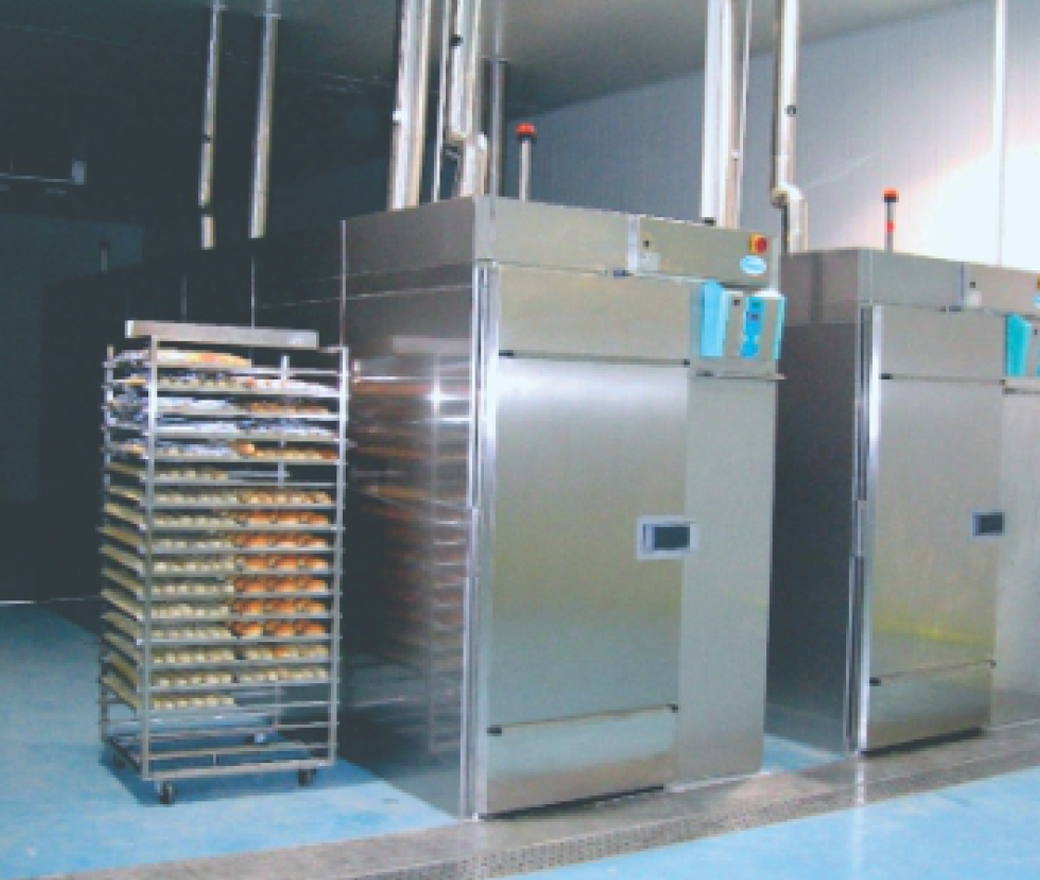
Batch Freezers: These units freeze food in separate, stationary batches. Products are loaded onto racks or carts, placed inside, and the freezing cycle is run. They are flexible and ideal for businesses with varied products or smaller volumes, such as restaurants or catering kitchens.
-
Continuous Freezers: Designed for high volume, assembly line style production, these freezers move products through a freezing zone on a conveyor system. They offer high throughput and require less manual labor, making them perfect for large food processing plants.
Tunnel Freezer
A tunnel freezer is a type of continuous freezer shaped like a long, linear tunnel. Products enter on a conveyor belt at one end and emerge fully frozen at the other. They are the workhorses of the frozen food industry, used to process tons of products like vegetables, poultry, and seafood every hour.
Spiral Freezer
A spiral freezer is another continuous design that uses a conveyor belt that spirals vertically, either up or down. This clever design allows for a very long conveyor length in a compact footprint, making it ideal for facilities with limited floor space but high production needs. They are commonly used for baked goods, prepared meals, and pizzas.
Rack, Tray, and Cart Freezers
These are all types of batch freezers, differentiated by how they are loaded.
-
Rack Freezer: Contains built in shelves or racks where trays of food are placed.
-
Tray Freezer: Designed with slots or guides where individual trays slide in directly, much like a bookshelf. This is very common in bakeries.
-
Cart Freezer: Built to accommodate entire wheeled carts or trolleys. An operator can load a full cart outside the freezer and simply roll it inside, saving significant handling time. This is a great choice for high volume kitchens and food service operations.
Related Freezing Methods
Individual Quick Freezing (IQF)
IQF is a specialized process, often using a blast freezer, where each individual piece of food is frozen separately. This is achieved by tumbling the items in a stream of cold air, preventing them from clumping together. The result is free flowing frozen products like bags of peas or shrimp, which are easy for consumers to portion.
Plate Freezing Method
Plate freezing is a different technique that uses direct contact instead of air. Products, typically packaged in uniform blocks, are sandwiched between hollow metal plates chilled by refrigerant. This method is extremely fast and energy efficient for block shaped products like frozen fish fillets or meat blocks.
Air Blast Freezing Method
This is the fundamental principle behind most of the freezers discussed here. The air blast freezing method is simply the process of using high velocity, low temperature air to freeze products. Whether in a tunnel, spiral, or batch freezer, it is the most versatile and widely used rapid freezing technology.
Core Components and Design
Compressor and Fans
The two most critical components of a blast freezer are the compressor and the fans.
-
The Compressor: This is the heart of the refrigeration system. Blast freezers use powerful, heavy duty compressors capable of achieving and maintaining the ultra low temperatures required for rapid freezing.
-
The Fans: These are not ordinary fans. They are high power axial or centrifugal fans designed to move a massive volume of air at high speed, creating the “blast” that gives the freezer its name.
(At F-Max Systems, we engineer our refrigeration units with robust compressors and low decibel fans specifically designed to perform reliably even in the high ambient temperatures of the Indian climate. Learn more about our industrial refrigeration solutions.)
Refrigerant Selection
The choice of refrigerant is crucial for performance and environmental impact. Large industrial systems often use natural refrigerants like ammonia (NH₃) or carbon dioxide (CO₂) for their efficiency at very low temperatures. Smaller commercial units may use modern HFC blends that have a lower global warming potential. The refrigerant must be able to operate effectively at temperatures as low as minus 40 °C.
Insulation and Enclosure
To maintain such extreme cold efficiently, a blast freezer’s enclosure must be exceptionally well insulated. They are typically built using thick polyurethane foam (PUF panels), often 150 mm or more, to prevent heat from entering. Doors must have airtight seals, and the overall construction needs to be robust and hygienic, often featuring food grade stainless steel interiors.
Applications of Blast Freezers
The benefits of rapid freezing make blast freezers essential in many industries.
Food Preservation and Safety
The primary application is to extend the shelf life of food while ensuring its safety. By halting microbial growth almost instantly, blast freezing is a critical control point in any HACCP (Hazard Analysis and Critical Control Points) plan. It allows food producers to safely preserve everything from fresh produce to fully cooked meals.
Seafood and Meat Processing
Seafood and meat are highly perishable. Blast freezing right after harvest or processing locks in freshness, prevents texture degradation, and preserves the flavor and nutritional value of fish, poultry, and meat. This technology is what makes the global trade of these sensitive proteins possible.
Bakery and Pastry Products
Delicate bakery items like croissants, cakes, and mousses benefit hugely from blast freezing. The rapid process preserves their light, airy structures without causing them to collapse or become soggy, allowing bakeries to produce in batches and maintain artisanal quality.
Pharmaceutical and Biotechnology
Beyond food, blast freezers are vital for preserving sensitive biological materials. They are used to quickly freeze vaccines, blood plasma, enzymes, and cell cultures to maintain their potency and viability for storage and transport.
Food Safety Standards: HACCP and Freezing
For any food business, using a blast freezer is a key part of complying with HACCP food safety standards. The rapid cooling step is often identified as a Critical Control Point (CCP) because it prevents the growth of dangerous bacteria. HACCP plans require strict monitoring of time and temperature, and a reliable blast freezer is the tool that ensures these critical limits are met consistently, batch after batch.
(F-Max Systems designs and installs blast freezers with integrated controls and monitoring to help your business meet stringent HACCP requirements and ensure product safety. Consult with our cold chain experts today.)
Advantages and Disadvantages of Blast Freezing
Key Advantages
-
Superior Quality: Preserves food texture, flavor, and nutrition close to its fresh state.
-
Enhanced Safety: Quickly stops bacterial growth, making food safer.
-
Longer Shelf Life: Extends the storage life of products by months.
-
Reduced Waste: Allows businesses to preserve surplus food, reducing spoilage.
-
Operational Efficiency: Enables batch production and streamlines kitchen workflows.
Potential Disadvantages
-
High Energy Cost: Powerful compressors and fans consume significant electricity during operation.
-
Initial Investment: The upfront cost of a blast freezer is higher than a conventional freezer.
-
Space Requirements: These units are often large and require dedicated space and infrastructure. If you’re planning a build, see our cold room installation step-by-step guide for layout and site prep tips.
-
Operational Training: Requires proper training to load and operate efficiently to avoid overloading or slowing down the freeze time. Consistent performance also depends on preventive maintenance of cold rooms.
Frequently Asked Questions about Blast Freezers
The main purpose of a blast freezer is to freeze food or other perishable products as quickly as possible. This rapid freezing process preserves the product’s quality, texture, and nutritional value while ensuring food safety by quickly stopping the growth of microorganisms.
Blast freezers are also commonly known as shock freezers or flash freezers. These terms all refer to the same rapid freezing technology.
No, a blast freezer is designed specifically for the rapid freezing process. Once products are frozen, they should be moved to a separate, standard walk-in freezer or storage freezer set to minus 18 °C or lower for long term storage. Using a blast freezer for storage is highly energy inefficient.
A standard freezer chills products slowly using static cold air, which leads to large ice crystals and quality degradation. A blast freezer uses high velocity, extremely cold air (down to minus 40 °C) to freeze products very rapidly, forming tiny ice crystals that preserve food quality and safety.
The cost of a blast freezer varies widely based on size, type (batch or continuous), and features. Small, commercial under counter units can start from a few thousand dollars, while large industrial tunnel or spiral freezers can be a major capital investment costing hundreds of thousands of dollars.
Yes, due to their high energy consumption, cost, and size, blast freezers are designed and intended for commercial and industrial applications. They are not practical or economical for household use.
🌐 Get Online Quote at www.fmax.in/contact-us
📞 Call +91 94896 08022 to speak with our team.