Designing compliant cold storage for pharmaceuticals with temperature monitoring is a multi-stage process centered on validation, risk management, and precise engineering. The process begins with meticulous planning and design, followed by a rigorous three-phase validation (IQ, OQ, PQ) to provide documented proof that the system is built and operates correctly. A crucial part of this is a detailed temperature mapping study to identify the warmest and coolest spots within the unit. The results of this study determine the optimal placement for sensors in a permanent, continuous monitoring system, ensuring the facility meets strict regulatory standards and protects product integrity.
For many modern pharmaceuticals, especially vaccines and biologics, maintaining a precise temperature from the factory to the patient is a non-negotiable part of healthcare. A single temperature slip can turn a life-saving medicine into a useless substance. This guide breaks down the entire process in detail, from initial build specifications to long-term compliance with standards like GDP and GMP. Mastering these concepts is key to protecting your products and ensuring patient safety.
The Foundation: Planning and Building Your Cold Room
Before a single panel is erected, a successful pharmaceutical cold storage project begins with meticulous planning. This foundational stage ensures the final build is fit for purpose, compliant, and ready for validation.
Starting with a Solid Plan: Site Survey and Layout
The first practical step is a site survey and layout documentation. This involves a thorough assessment of the physical location. An engineering team will measure the available space, check access points for equipment, and note environmental factors like nearby heat sources or the location of electrical hookups. They will also confirm the availability of adequate power, including connections for a backup generator.
This information feeds into detailed layout drawings that act as the blueprint. These documents specify everything: the placement of insulated panels, the location and type of door, the position of the indoor evaporator and the outdoor condensing unit, and the layout of any shelving. This detailed planning prevents installation surprises and ensures the design is optimized for both performance and regulatory compliance from day one.
Understanding Key Design Elements
A pharmaceutical cold room is an engineered environment designed specifically to maintain a stable, narrow temperature window. For most refrigerated medicines, this temperature range requirement is +2°C to +8°C. This isn’t just a suggestion; it’s a strict mandate based on the product’s stability data. Some vaccines can be ruined by a brief freeze, while others lose potency rapidly if they get too warm.
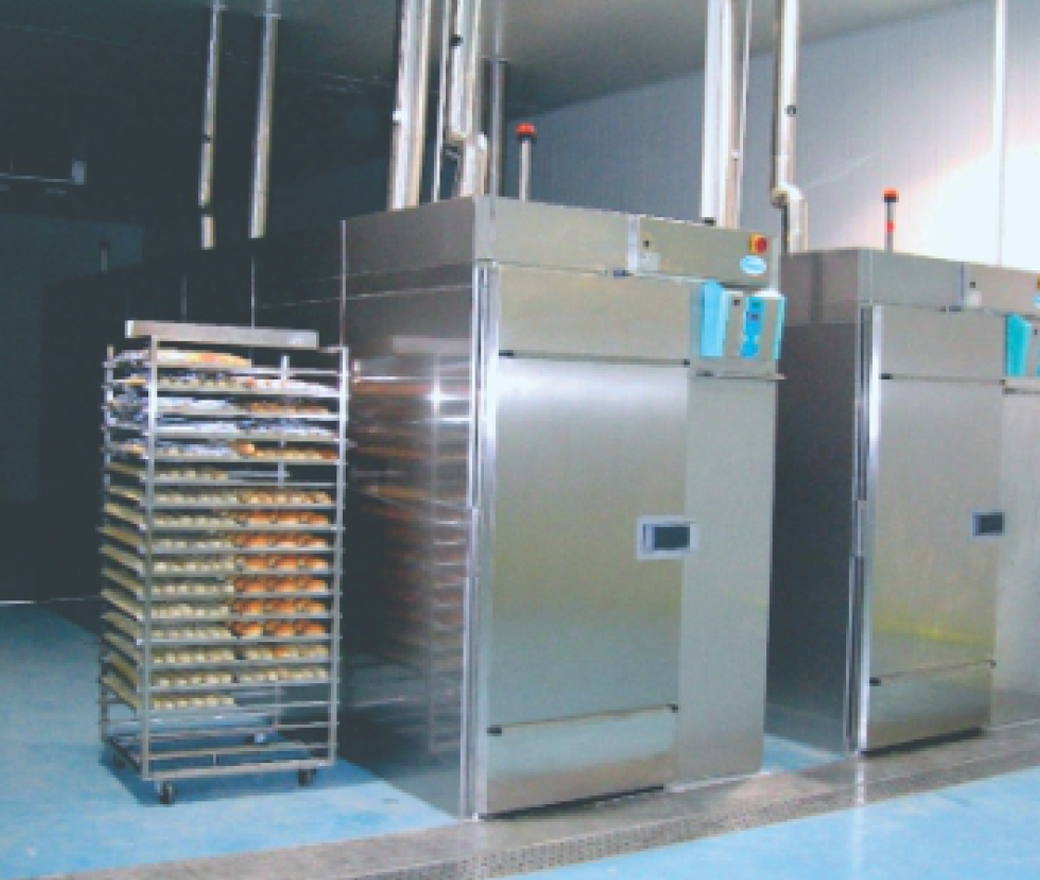
The design itself must account for this. It involves high quality insulated walls, often PUF sandwich panels, and a dedicated refrigeration system powerful enough to maintain stability even when external temperatures are high. For businesses in warmer climates, selecting a system built for high ambient conditions is crucial. Companies like F-Max Systems India Pvt. Ltd. specialize in designing custom cold rooms with refrigeration units engineered to perform reliably in demanding environments, ensuring standard models are also available with 2°C to 4°C temp conditions.
The Three Pillars of Validation: IQ, OQ, and PQ
A pharmaceutical cold room isn’t ready for use just because it’s built. It must undergo a rigorous, three-phase validation process known as IQ, OQ, and PQ. This provides documented proof that the room is installed correctly, operates as expected, and performs reliably under real-world conditions.
Installation Qualification (IQ): Is It Built to Spec?
Installation Qualification (IQ) is the first checkpoint. It’s a documented verification that the cold room and all its components have been installed correctly according to the design specifications. During IQ, inspectors create a checklist to confirm things like:
-
Are the correct models of refrigeration units, sensors, and control panels installed?
-
Are the insulated panels and door assembled as per the drawings?
-
Are electrical connections and backup power properly connected and rated?
-
Are all necessary documents, like manuals and calibration certificates for sensors, on file?
Essentially, IQ confirms that what was designed is what was built, providing the foundation for all further testing. A comprehensive IQ documentation package is a core part of a compliant project delivery.
Operational Qualification (OQ): Does It Work as Designed?
Once IQ is complete, Operational Qualification (OQ) begins. This phase tests whether the equipment functions correctly in a controlled environment, usually when the room is empty. OQ asks the question: does it do what it’s supposed to do?
Tests conducted during OQ often include:
-
Verifying that the refrigeration system cycles on and off correctly to maintain the setpoint.
-
Simulating a power failure to ensure the backup generator starts automatically.
-
Testing that high and low temperature alarms trigger at their designated setpoints.
-
Confirming that sensors and displays are providing accurate readings.
OQ provides confidence that all the control systems, safety features, and alarms are functioning as intended before any valuable products are introduced.
Performance Qualification (PQ): Can It Handle the Real World?
Performance Qualification (PQ) is the final and most critical phase. PQ validates that the cold room can consistently maintain the required temperature under normal, real-world operating conditions over an extended period. This means testing the room while it’s loaded with product (or a placebo equivalent) and while daily activities, like door openings, are occurring.
PQ often includes worst-case scenario challenges, such as running the test with the maximum intended product load or during the hottest season of the year. Throughout the PQ phase, the continuous monitoring system is scrutinized to ensure it reliably records and stores data. Successful completion of PQ provides the ultimate evidence that the cold room will protect product quality day in and day out, officially qualifying it for pharmaceutical storage.
The Core of Compliance: Temperature Mapping and Monitoring
At the heart of how to design cold storage for pharmaceuticals with temperature monitoring is the principle of “know your space”. You cannot control what you do not measure, and in a pharmaceutical cold room, measurement must be comprehensive and continuous.
Temperature Mapping: Your Blueprint for Thermal Performance
A temperature mapping study is a detailed exercise to profile the thermal behavior of the entire storage area. It involves placing multiple calibrated data loggers throughout the room in a three-dimensional grid. These sensors record the temperature over a set period, typically 24 to 72 hours, to create a complete picture of the environment.
The goals of this study are guided by a formal mapping protocol and acceptance criterion. The protocol outlines the entire plan, including the number and location of sensors and the test duration. The acceptance criteria define what success looks like, for example, a rule stating that all sensors must remain between 2°C and 8°C for the entire study.
The primary outcome of mapping is hot and cold spot identification. No room is perfectly uniform; some areas will be naturally warmer or cooler due to airflow patterns or proximity to cooling units and doors. Identifying these “worst-case” locations is a regulatory requirement and is essential for two reasons. First, it confirms that even the most extreme spots in the room stay within the acceptable range. Second, it tells you exactly where to place your permanent sensors for continuous monitoring.
Setting Up Your Continuous Monitoring System
Once mapping is complete, you can set up a robust monitoring system. This involves several key steps:
-
Sensor Placement: Permanent monitoring sensors should be placed in the hot and cold spots identified during the mapping study. This ensures that if any part of the room starts to drift out of specification, it will be detected immediately. EMA and WHO guidelines explicitly require that mapping results justify the placement of permanent monitoring probes.
-
Data Logger Selection: Choosing the right device is crucial. For pharmaceutical applications, data loggers must have a high accuracy, typically ±0.5°C or better. They should also have features like battery backup to prevent data gaps during power outages and the ability to send remote alarms via SMS or email.
-
Sensor Calibration: Accuracy is everything. Sensor calibration is the process of verifying a sensor’s readings against a traceable, high-precision standard. All sensors used for both mapping and continuous monitoring must be calibrated, typically annually, to ensure the data you are collecting is reliable. An expired or missing calibration certificate is a common and easily avoidable finding during a regulatory audit.
Day-to-Day Operations and Governance
A perfectly designed and validated cold room is only effective if it’s managed correctly. This requires robust procedures, a culture of compliance, and systems that ensure data integrity.
Running a Compliant Operation
Daily operations rely on clear, repeatable processes. Continuous temperature logging is the foundation, where automated systems record the temperature 24/7. This replaces sporadic manual checks and ensures every fluctuation is captured. If a temperature excursion does occur, a well-defined alarm management system is critical. This system should have both audible and visual alerts, as well as remote notifications to alert staff to take immediate corrective action before products are compromised.
All of these actions should be governed by a Monitoring SOP (Standard Operating Procedure). This document provides step-by-step instructions for staff on everything from daily temperature checks and alarm responses to sensor calibration schedules and record-keeping. It ensures consistency and is a key document reviewed during audits.
Meeting Regulatory Standards Head-On
All activities must align with GDP and GMP compliance requirements. Good Distribution Practices (GDP) and Good Manufacturing Practices (GMP) are sets of regulations that govern the quality and safety of pharmaceutical products during manufacturing and distribution. They mandate that storage areas be qualified, temperature-controlled, and continuously monitored to protect product integrity.
A major part of this is data integrity compliance, which falls under regulations like 21 CFR Part 11 in the US and EU GMP Annex 11. These rules ensure that all electronic temperature records are secure, trustworthy, and cannot be tampered with. Compliant systems must have features like unique user logins, secure audit trails that log every change, and electronic signatures.
Ultimately, all this documentation, from temperature logs to calibration certificates, must be organized and accessible. This is known as audit readiness and reporting. An inspector should be able to easily review your temperature mapping reports, alarm logs, and training records to verify compliance. A well-structured data management plan, which outlines how data is collected, stored, backed up, and archived, is essential for being perpetually audit-ready.
Preparing for Real-World Challenges
A truly robust design accounts for what can go wrong. Stress testing your cold room and having plans for long-term maintenance are crucial for ensuring uninterrupted compliance and product safety. An effective strategy for how to design cold storage for pharmaceuticals with temperature monitoring must include these real-world scenarios.
Stress Testing Your System
Two common challenge tests performed during qualification are the door opening test and the power failure response test. The door opening test simulates normal operational traffic by holding the door open for a set period to measure how quickly the temperature rises and, more importantly, how quickly it recovers after the door is closed.
The power failure response is even more critical. Facilities must have a backup generator appropriately sized to handle the full refrigeration load. The test involves cutting the main power to confirm that the backup system kicks in automatically and quickly enough to prevent a temperature excursion.
Long-Term Maintenance and Revalidation
Qualification is not a one-time event. Certain events, known as requalification triggers, require a new mapping study to be performed. GDP regulations favor a risk-based approach rather than a fixed schedule. Common triggers include:
-
Significant changes to the room’s layout or shelving.
-
Major repairs or upgrades to the refrigeration system.
-
A noticeable change in how the room is used (e.g., much more frequent door openings).
Additionally, many organizations perform seasonal mapping. This involves conducting mapping studies during both the hottest and coldest times of the year to ensure the cold room performs reliably under worst-case ambient conditions. This provides confidence that the system is robust enough to maintain its temperature range year-round.
The Overarching Strategy: Risk-Based Design
Tying all these elements together is the principle of risk assessment. Modern regulations like GDP require a proactive approach where you identify, analyze, and mitigate potential risks before they cause a problem. A thorough risk assessment is foundational to how to design cold storage for pharmaceuticals with temperature monitoring.
For a cold room, this involves considering factors like: Are there external heat sources near the room? Where are the HVAC vents? How will frequent door openings affect the area closest to the entrance? The answers to these questions inform the entire process, from the initial layout and the mapping protocol to the final placement of monitoring sensors and the setting of alarm limits. A design and validation plan based on a solid risk assessment is far more effective and defensible during an audit than one based on arbitrary choices.
A partner with deep experience in this area can be invaluable. For over two decades, F-Max Systems India Pvt. Ltd. has helped pharmaceutical clients across South India with end-to-end solutions, from the initial site survey and risk assessment to delivering a fully qualified, GMP-compliant cold room.
Your Partner in Pharmaceutical Cold Storage
Successfully navigating the complexities of how to design cold storage for pharmaceuticals with temperature monitoring requires expertise, precision, and an unwavering commitment to quality. From initial design and rigorous validation to continuous monitoring and long-term compliance, every step is critical to safeguarding valuable medical products.
If you are looking for a turnkey solution that meets the highest standards of GDP and GMP, reach out to the experts at F-Max Systems. Our team provides everything from custom design and in-house manufacturing to installation, qualification support, and after-sales service, ensuring your pharmaceutical products remain safe on their journey to the patient.
Frequently Asked Questions
While every step is important, the validation phase (IQ, OQ, and PQ), particularly the temperature mapping study, is arguably the most critical. It provides the documented evidence that the cold room can consistently and reliably maintain the required temperature, which is the ultimate goal.
Regulatory guidelines recommend a risk-based approach. A remapping is triggered by significant events like equipment changes, new shelving layouts, or changes in use. Many companies also conduct seasonal mapping (summer and winter) and may choose to remap on a periodic schedule, such as at least once every three years, as a best practice.
The core requirements include continuous temperature logging using calibrated sensors, a robust alarm system for any excursions, full validation of the storage area (IQ/OQ/PQ), and comprehensive documentation for all activities, including mapping reports, alarm logs, and calibration certificates.
21 CFR Part 11 (and its EU equivalent, Annex 11) is crucial because it governs the integrity of electronic records. It ensures that the digital temperature data you collect is secure, unalterable without detection, and trustworthy. Compliance requires features like secure audit trails, unique user access controls, and electronic signatures.
They are three distinct phases of validation. Installation Qualification (IQ) verifies the equipment is installed correctly. Operational Qualification (OQ) tests if the equipment functions correctly under controlled (empty) conditions. Performance Qualification (PQ) confirms the equipment performs consistently under real-world (loaded) conditions.
A risk assessment is the strategic foundation. It helps identify potential failure points (like a door that is frequently opened or a wall exposed to sunlight) and informs decisions on equipment choice, sensor placement for mapping and monitoring, alarm threshold settings, and what specific challenges to include during qualification tests.
🌐 Get Online Quote at www.fmax.in/contact-us
📞 Call +91 94896 08022 to speak with our team.